
Livraison le jour même ou le lendemain

Qualité garantie

Débloquez vos offres de bienvenue: Livraison GRATUITE | Jusqu'à -80 % | 30 jours d'essai gratuits à JoyPlus
Téléchargez l'application
A flawless lawn, mowed to perfection without lifting a finger? It's an appealing promise. That's the whole point of a wireless robotic lawnmower: no more burying a perimeter wire, installation is done in a flash, and mowing becomes completely autonomous. But be warned, the market is a jungle of models with disparate technologies. Without a bit of caution, the dream of autonomy can quickly turn into a nightmare.
To avoid buyer's remorse, here are the most common pitfalls to anticipate:
To sidestep these traps, forget the marketing slogans for a moment and focus on the technical specifications that truly matter.
To ensure your robot is an ally and not a source of problems, here are the three non-negotiable checkpoints.
Ditching the boundary wire relies on advanced guidance systems. Understanding their differences is crucial to making the right choice.
The latest models often combine several of these technologies for maximum reliability.
These two specifications must precisely match your garden.
A robotic lawnmower is, above all, a smart device. The quality of its mobile app is therefore just as important as its cutting capabilities. A good app should allow you to:
The search for the right wireless robotic lawnmower primarily depends on your specific needs. Here is a selection of models suited for different types of gardens and users.
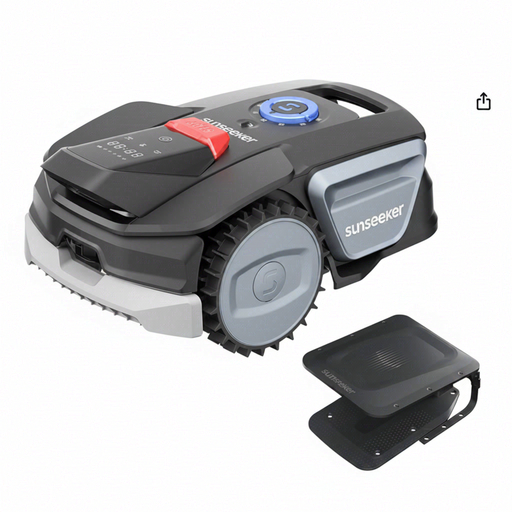
Why this model is a good fit: Perfect for small gardens (up to 300 m?) and users who want an effective, no-frills "plug-and-play" solution. Its compact size and simplicity make it an excellent first purchase.
It avoids the complexity trap with its "one-click mowing" promise and an app designed for beginners. Its AI vision navigation is well-suited for small spaces, where GPS signals can sometimes be unreliable.
Simplicity of setup and use: Designed for immediate out-of-the-box use via the app, without getting lost in complex settings.
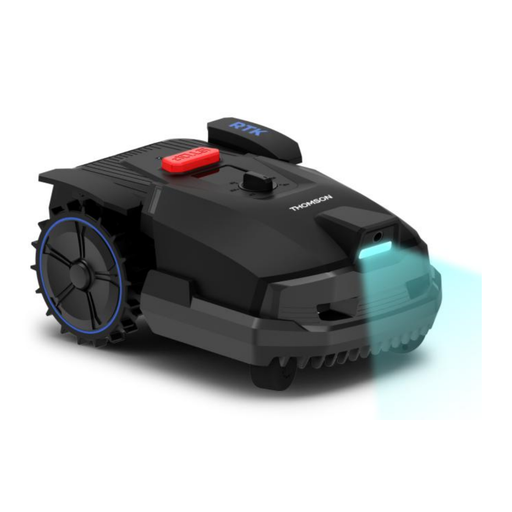
Why this model is a good fit: The perfect balance for suburban gardens up to 800 m?. It combines advanced navigation technologies with a comfortable mowing area, all controllable at your fingertips for fans of smartphone management.
It neutralises the risk of haphazard navigation by merging the precision of RTK for global mapping with an AI camera for real-time obstacle avoidance. This power duo ensures reliable, snag-free movement.
Intelligent hybrid navigation: The combination of RTK and AI gives it rock-solid reliability, both for optimising its paths and for navigating around a toy left on the lawn.
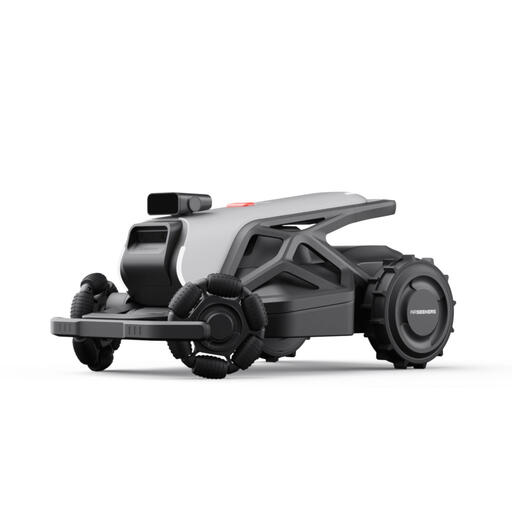
Why this model is a good fit: Built for challenges. Capable of covering 1800 m? and climbing slopes up to 65% (33°), it's aimed at owners of large gardens or properties with uneven terrain, where conventional models give up.
It demolishes the slope problem. Its ability to climb up to 65% isn't a marketing claim but a technical specification that guarantees its effectiveness on the toughest terrains, where the competition calls it quits.
Tough terrain performance: The winning trio: large coverage (1800 m?), exceptional slope management, and precise RTK navigation. An all-terrain solution for unforgiving gardens.
We have put together a complete selection of models that meet our performance requirements and current safety standards.
Yes, in most cases, the process is much simpler than for models with a boundary wire. A typical installation involves three steps:
AI vision systems are very effective at detecting medium to large objects like a ball, a watering can, or a pet. However, they may struggle to detect very small, flat objects (a tool, a small toy) or to operate optimally in very low light. It's therefore best to keep your lawn relatively clear to ensure a snag-free mow.
Several factors come into play. The lithium-ion battery is a key component; it is generally designed to handle several hundred charge cycles (equivalent to several years of use) before its capacity begins to decline. The cutting blades are consumables that should be replaced once or twice per season to ensure a clean cut. With regular maintenance (cleaning, dry storage for the winter), a quality robotic mower is an investment built to last for many years.