
Livraison le jour même ou le lendemain

Qualité garantie

Débloquez vos offres de bienvenue: Livraison GRATUITE | Jusqu'à -80 % | 30 jours d'essai gratuits à JoyPlus
Téléchargez l'application
A tidy entryway sets the tone for the rest of your home. Yet, finding the right wall-mounted coat rack is often more complex than it seems. Between marketing promises and harsh reality, it's easy to end up with a disappointing product. A coat rack that bends under the weight of a single winter coat, a wall hook whose paint chips after a few months… these are scenarios we know all too well.
As a Product Expert at Joybuy, my mission is to help you navigate the options. This guide breaks down the pitfalls to avoid and the essential criteria for choosing a storage solution that is functional, durable, and stylish.
Before you make a decision, it's crucial to know the hidden flaws that can turn a good deal into a regret.
To ensure a long-lasting purchase, focus on these three technical points. They are what separate a short-lived gadget from a durable investment.
The first question to ask yourself is simple: what will I hang on it? The load capacity, often indicated in kilograms (kg) per hook or for the entire unit, is the number one indicator.
The stability of your installation depends entirely on how it's attached to the wall.
A good designer coat rack must combine aesthetics with smart design. The edges of the hooks should be rounded to avoid marking or tearing clothes. For use in an entryway or bathroom, a finish with a protective varnish on the wood and an anti-corrosion coating on the metal is non-negotiable to ensure its longevity. The individual hook also remains an excellent option for creating a custom, more spacious storage layout.
Here are a few models that meet different needs, all selected based on our criteria for durability and functionality.
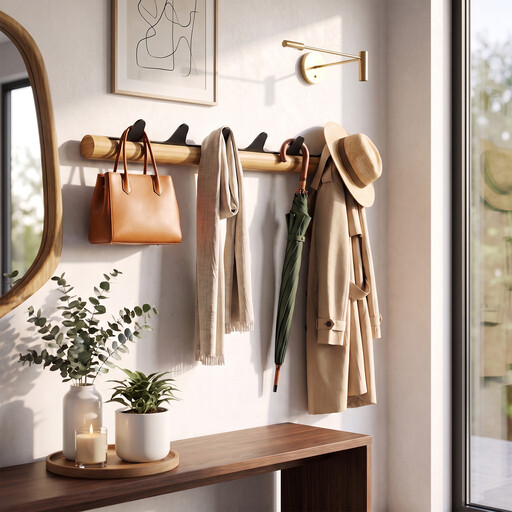
Why it stands out : Ideal for a frequently cluttered family entryway, this model offers ample storage for the whole family's coats, school bags, and accessories, all on a single, easy-to-install bar.
Its solid rubberwood structure and robust aluminium alloy hooks ensure it won't bend. The stated load capacity of up to 30 kg, if installed correctly, is more than enough for the heaviest loads.
It combines high capacity (6 hooks) with durable materials (FSC-certified wood and aluminium) and a meticulous finish, guaranteeing a long lifespan.
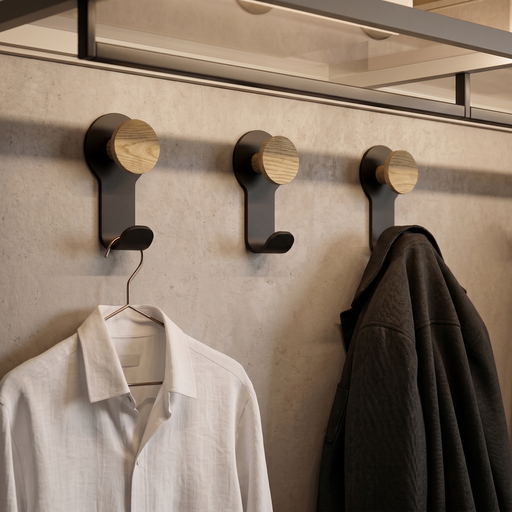
Why it stands out : Perfect for those who love to design their own space. This set of individual hooks can be arranged freely to create a unique and practical wall layout, whether in an entryway, bedroom, or kitchen.
With each hook mounted individually, the load is better distributed, ensuring excellent stability. The varnished aluminium alloy is designed to resist rust, and the rubber bumper prevents marking the wall.
Total layout flexibility and an award-winning dual-material design (wood and metal). Each double hook offers two hanging points, optimising every square centimetre.
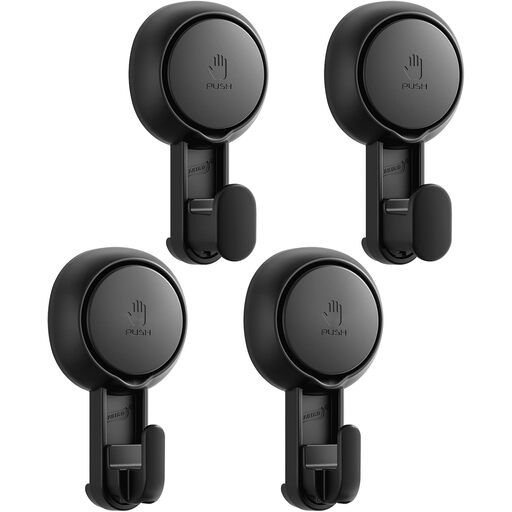
Why it stands out : The dream solution for renters or for delicate surfaces like bathroom tiles. Installation takes seconds, with no tools or marks, while offering a surprising load capacity for this type of mounting.
It bypasses the problem of risky wall fixings. Its patented suction cup technology ensures a powerful grip (up to 5 kg per hook, according to the manufacturer) on smooth surfaces, preventing falls and damage.
Ultra-fast installation, without drilling or damaging walls. The hook is 360° rotatable and infinitely reusable, offering maximum flexibility.
We have compiled a complete list of products that meet our strict selection criteria and safety standards.
Although the two terms are often used interchangeably, a wall hook generally refers to a single (or double) hook mounted individually to the wall. A wall-mounted coat rack, on the other hand, is most often a bar or plank on which several hooks are pre-mounted. The choice depends on whether you prefer an all-in-one solution or the freedom to create your own layout with multiple hooks.
Drywall (or plasterboard), which is very common, is also quite fragile. To securely mount a coat rack intended to hold weight, using hollow-wall metal anchors (like Molly bolts) is essential. They anchor firmly by expanding behind the plasterboard to distribute the load. A word of advice: never use the basic plastic anchors included in kits for this type of wall.
Yes, but on one crucial condition: the wood must be properly treated. Opt for models made of solid wood (bamboo, teak, rubberwood, etc.) that have received a water-repellent finish (marine varnish, protective oil). This will prevent the wood from swelling or moulding in the humid environment. Also, be sure to check that the metal parts are made of stainless steel or rust-treated aluminium.