
Livraison le jour même ou le lendemain

Qualité garantie

Débloquez vos offres de bienvenue: Livraison GRATUITE | Jusqu'à -80 % | 30 jours d'essai gratuits à JoyPlus
Téléchargez l'application
A toaster may seem easy to choose… until the slots are unsuitable for the bread you buy, crumbs start to build up or the browning varies from one slice to the next. To avoid buying the wrong model, it is better to compare the useful dimensions, functions and ease of cleaning rather than focusing solely on wattage or appearance.
Higher wattage can speed up heat-up time, but it does not guarantee even toasting on its own. Slot width, automatic centring and the design of the heating elements also play an important role.
A model rated at 1 200 to 1 500 W will suit a family making batch after batch, while a 650 to 900 W appliance can perfectly meet the needs of a student or couple. Also consider electricity consumption: a higher wattage used for longer may cancel out the benefit of a faster cycle.
A conventional 2-slot toaster will generally accommodate standard sliced bread, but it is less practical for country loaves, bagels or baguettes. For these uses, choose extra-wide slots or a baguette toaster with a long slot.
The number of slots does not tell the whole story. A 4-slice toaster can be convenient for a family, but it takes up more room and some models offer limited settings for the four slots. An appliance with one long slot, on the other hand, can accommodate several small slices or one large slice of bread.
A removable crumb tray makes cleaning easier, but it still needs to be emptied regularly. Bread residue can eventually burn after repeated use. Also check for non-slip feet, cord storage and an automatic shut-off function.
For use in France, make sure the appliance is compatible with the 220-240 V mains supply, check whether French-language instructions are provided when advertised, and look for the manufacturer’s or responsible person’s contact details within the European Union. A heating appliance should be placed on a stable surface, away from textiles and from upper or lower cabinets that could obstruct ventilation.
For standard sliced bread, two slots measuring around 30 to 35 mm wide may be sufficient. For thick slices, baguettes or certain pastries, an extra-wide model will be more suitable. Automatic centring keeps the slice at an even distance from the heating elements, helping to produce more uniform browning.
A variable browning toaster can be identified mainly by its browning control dial. Six or seven settings allow you to fine-tune the result gradually, although the type of bread and its moisture content also affect the colour.
The defrost function is useful for bread kept in the freezer. It extends the cycle to warm the slice before browning it. The reheat function brings a cooled slice of toast back to temperature without starting a full browning cycle again. The cancel button lets you stop the appliance immediately.
These controls are worthwhile in a household that alternates between different types of bread. They are less essential for someone who only toasts fresh bread every morning.
A stainless-steel toaster can fit easily into a contemporary kitchen and can be cleaned with a soft cloth. However, be aware that the steel may become hot during use. A metallic finish does not mean that the surface stays cool.
In a small kitchen, a compact model with cord storage will be easier to leave on the worktop. Measure the available space, particularly the clearance beneath cupboards and the area around the appliance.
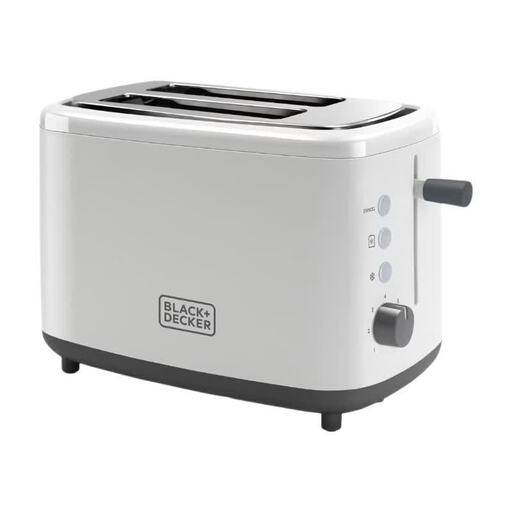
Why this choice suits this profile: With its compact design and straightforward controls, this model is a practical choice for a first toaster, ideal for everyday bread.
Its two slots, automatic centring and removable crumb tray reduce the usual compromises associated with entry-level appliances.
820 W, seven browning levels, defrost, reheat and cancel functions, plus cord storage.
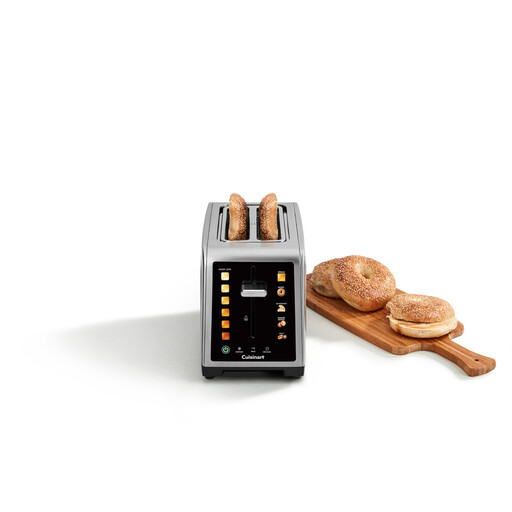
Why this choice suits this profile: It is aimed at people looking for precise control, good compatibility with different bread sizes and a smart look on the worktop.
Its 38 mm slots are designed for thick bread, while the front crumb tray makes it easier to collect crumbs.
Colour touchscreen, six settings, five programmes, defrost function and brushed stainless-steel finish.
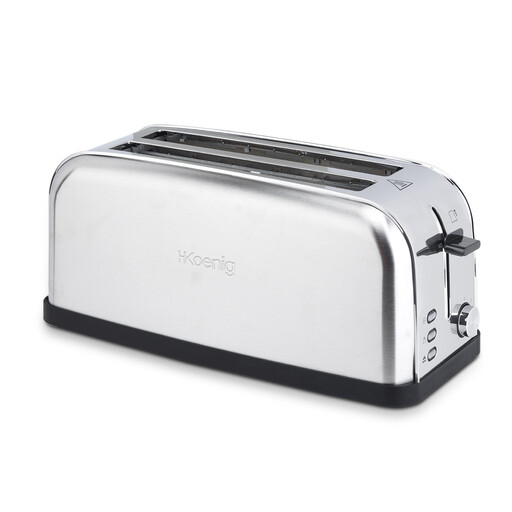
Why this choice suits this profile: Its stated capacity for two pieces of baguette or four slices of bread meets the needs of family breakfasts.
Its two-slot design is paired with 1 500 W of power and separate controls, reducing the need to adjust settings between batches.
Seven browning levels, defrost, reheat and cancel functions, plus a stainless-steel body.
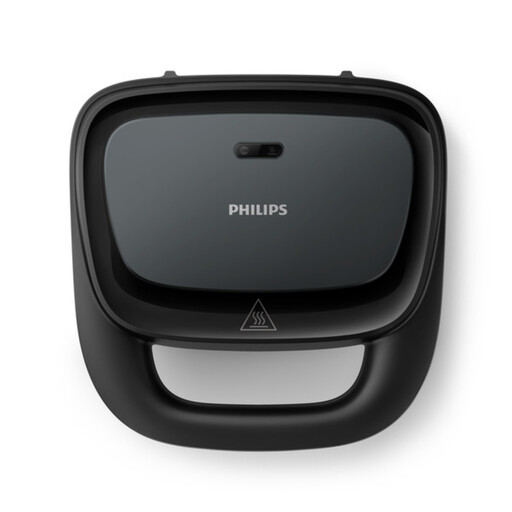
Why this choice suits this profile: This appliance is aimed at people looking for a sandwich toaster for making paninis and hot sandwiches at home.
It is not limited to bread placed in slots: its non-stick plates are designed for sandwiches and paninis.
750 W of power, non-stick plates, indicator lights, locking mechanism and upright storage.
We have put together a complete, real-time updated selection of products that meet these demanding criteria and European safety requirements.
Between 800 and 1 000 W, a model will generally suit one person or a couple. For making batch after batch or meeting a family’s needs, higher wattage can shorten the cycles. However, also check the number of slots and their width.
Its lifespan depends on how often it is used, how well it is maintained, the quality of its controls and whether the safety instructions are followed. Regularly emptying the tray, keeping the ventilation openings clear and avoiding unsuitable foods can help reduce wear caused by crumbs and heat.
A multifunction breakfast appliance can prepare sandwiches, paninis or waffles, depending on the plates supplied. However, it does not replace an oven or a larger cooking appliance. Before choosing, check the accessories included, the wattage, the storage space required and how easy it is to clean.