
Livraison le jour même ou le lendemain

Qualité garantie

Débloquez vos offres de bienvenue: Livraison GRATUITE | Jusqu'à -80 % | 30 jours d'essai gratuits à JoyPlus
Téléchargez l'application
Breakfast is a sacred ritual. And for many, that means a perfect slice of toast, crispy and golden brown. The problem? Your standard toaster stubbornly refuses that beautiful slice of baguette or that hearty piece of rustic bread. The result: awkward cuts and subpar toasting.
The solution is here: the long-slot toaster. Far more versatile than a standard model, it finally accommodates the diverse shapes and sizes of artisan breads. To help you sort through the many options on the market, our editorial team has analysed the most relevant models based on practical and objective criteria. Follow our guide to find the appliance that will transform your mornings.
Before diving into our selection, let's review the key criteria for finding the perfect appliance for your kitchen and your morning routine.
Their main advantage is, of course, the length of their slots, which determines their flexibility.
Modern toasters do more than just brown bread. Several features can make a real difference in your daily routine:
A toaster should be robust and easy to maintain. The stainless steel toaster is a reliable choice, valued for its durability and modern look. Another detail that's anything but minor is the removable crumb tray. It's a must-have for quick cleaning and impeccable hygiene.
Here are a few models that stand out for their features and their ability to adapt to various needs.
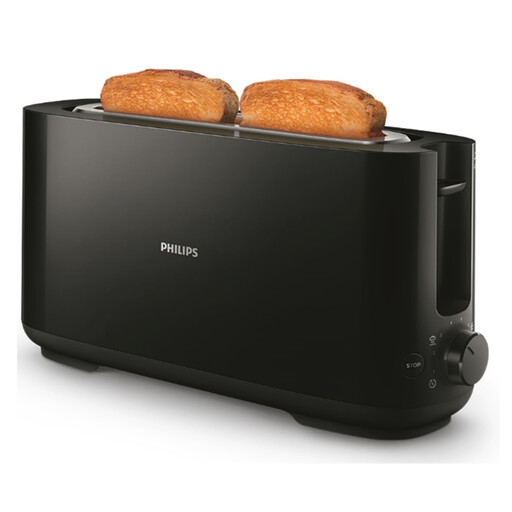
Why it stands out: This Philips model focuses on simplicity and versatility. Its single, extra-long slot is designed to accommodate virtually any type of bread. With 8 browning levels, it offers great precision to suit all tastes, from lightly golden to perfectly crispy. Its integrated warming rack is a practical asset for more indulgent breakfasts.
Pros:
Who is it for? For those looking for a versatile and user-friendly appliance in a compact design, capable of handling all their daily bread needs.
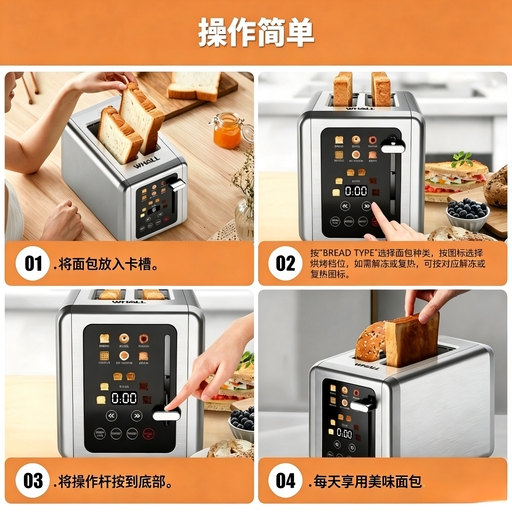
Why it stands out: The WHALL toaster brings a modern touch to the kitchen with its large colour touch screen. It not only offers 6 browning levels but also features 6 preset modes for different types of bread (classic bread, bagels, muffins, etc.). Its 1.5-inch (approx. 3.8 cm) slots are wide enough for thick slices. The memory function, which saves your last settings, is a welcome bonus for rushed mornings.
Pros:
Who is it for? For tech enthusiasts who appreciate precise settings and a modern design. It's the perfect wide 2-slice toaster for lovers of thick, artisan breads.
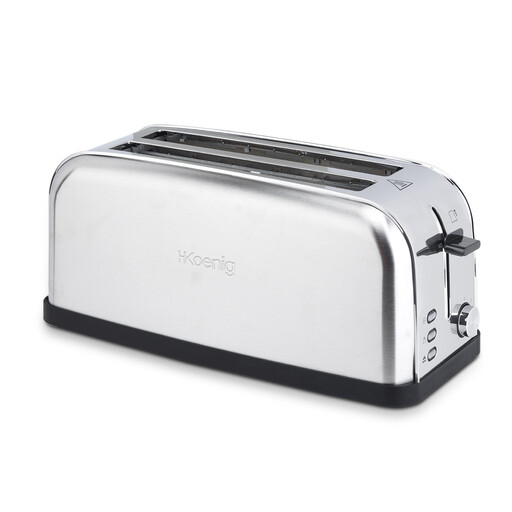
Why it stands out: The H.Koenig TOAS28 clearly positions itself as the baguette specialist. With its two long slots, it can accommodate two large pieces of baguette or up to four slices of sandwich bread. Its 1500W power ensures fast, even toasting, while its 7 thermostat levels allow for precise browning adjustment. Its stainless steel body gives it a professional look and excellent durability.
Pros:
Who is it for? For families and avid baguette lovers who need higher capacity to prepare multiple toasts at once.
Our selection covers several use cases, but choosing an appliance is a personal decision. If these suggestions haven't convinced you, or if you're looking for a specific design or feature, feel free to browse our full catalogue of breakfast appliances.
The main difference lies in the geometry of the slots. A classic toaster typically has two or four short, square slots designed for standard slices of sandwich bread. A long-slot toaster has one or two elongated slots, allowing it to accommodate larger and irregularly shaped slices of bread, such as those from baguettes or rustic loaves. It is therefore far more versatile.
Yes, most models are very versatile. The wide, long slots allow you to toast bagels, English muffins, slices of brioche, or even waffles. Many models also come equipped with a warming rack, a grate that sits above the slots to gently warm croissants and other pastries without direct contact with the heating elements.
To maintain the shine of your stainless steel toaster, always unplug the appliance and let it cool down completely. Empty the crumb tray very regularly (ideally after each use). For the exterior, use a soft, damp cloth, possibly with a drop of white vinegar diluted in water to remove fingerprints. Wipe in the direction of the stainless steel's grain, then dry with a clean microfibre cloth for a streak-free finish. Never use abrasive products or scouring pads that could scratch the surface.