
Livraison le jour même ou le lendemain

Qualité garantie

Débloquez vos offres de bienvenue: Livraison GRATUITE | Jusqu'à -80 % | 30 jours d'essai gratuits à JoyPlus
Téléchargez l'application
A toaster may seem straightforward to choose. Yet the differences between models have a direct impact on results, countertop space and maintenance. In a student studio, a two-slot appliance is usually enough. For a family, a 4-slice toaster or an extra-long-slot model can save everyone from waiting around at breakfast.
Before placing your order, take the time to distinguish the features you will genuinely use from marketing claims that add little value in everyday life.
A 1,200 W toaster will not necessarily brown bread more evenly than an 850 W model. Results also depend on slot width, slice centring, thermostat consistency and heat distribution.
Wattage mainly indicates maximum power consumption and the advertised heating capacity. For everyday use, focus instead on adjustable browning levels and automatic centring.
A compact toaster with narrow slots is perfectly suited to standard sliced sandwich bread. It will be less accommodating with farmhouse bread, sliced baguette or a bagel. Thick slices may become stuck or brown unevenly.
If you regularly buy bakery bread, choose a wide-slot toaster, an extra-long slot or openings approximately 35–38 mm wide. Also check the appliance’s overall length to ensure it will fit comfortably on your worktop.
Crumbs quickly build up beneath the heating elements. Without a removable crumb tray, cleaning can soon become a chore. This is particularly important when the appliance is used every day.
Place the toaster on a stable, dry and heat-resistant surface, leaving sufficient clearance on all sides. The KitchenCook TOASTEO Black manual specifically recommends at least 100 mm of clearance on each side. Always unplug the appliance before removing a stuck slice, and never insert a metal knife or fork into the slots.
A four-slice model is not necessarily deeper, but it is generally wider. Measure the available space, allowing room to operate the lever and remove the crumb tray.
An adjustable toaster should offer several clearly marked browning levels. Six or seven settings make it easier to fine-tune the result, although cycle times vary depending on the type of bread and its moisture content.
The following functions can be genuinely useful:
A touchscreen or dedicated programmes can make operation more comfortable, but they are not essential for making simple toast.
Stainless steel generally withstands repeated use well and is easy to clean with a soft cloth. A plastic housing is often lighter. In all cases, never immerse the toaster in water.
In France, check compatibility with a 220–240 V, 50–60 Hz power supply, confirm that compliance information is provided and ensure that a French-language manual is available. At the end of its service life, the appliance must be taken to a WEEE collection facility rather than disposed of with household waste.
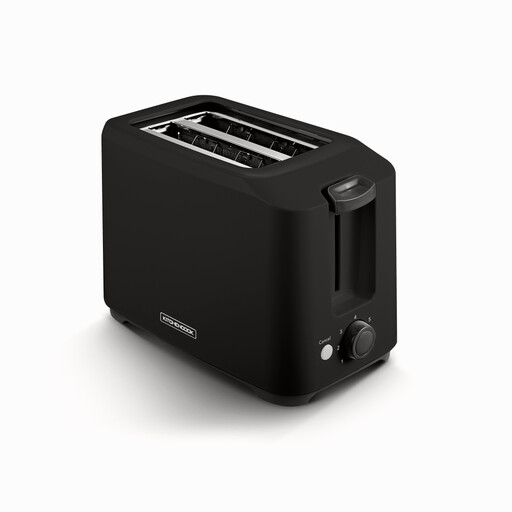
Why this model fits: Its two slots and 265 × 156 × 182 mm footprint make it well suited to a student kitchen or a compact worktop.
It combines 850 W of power with six browning levels, automatic centring and a removable crumb tray, without cluttering the design with unnecessary controls.
Cancel, reheat and defrost functions; 220–240 V power supply and a multilingual manual including French.
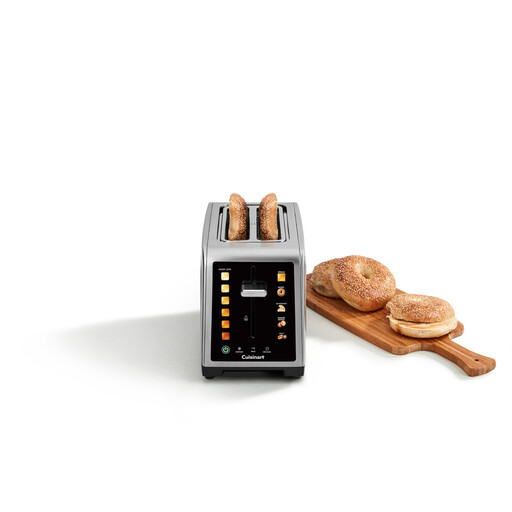
Why this model fits: With 38 mm slots and programmes for bread, bagels, sourdough and English muffins, it is designed for households that switch between different formats.
The stated width and high-lift lever make it easier to handle thick slices without forcing them into the slots.
Six browning levels, defrost function, front crumb tray and colour touchscreen.
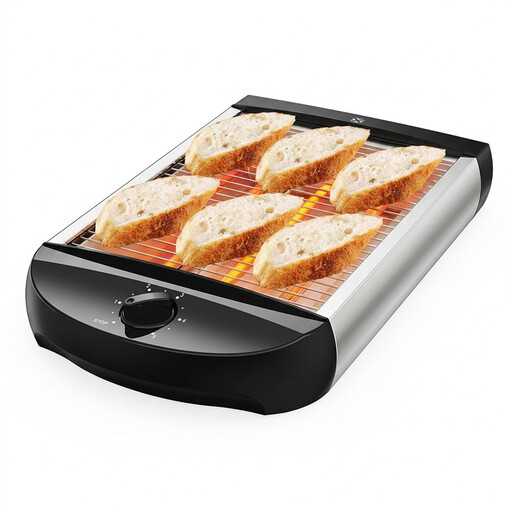
Why this model fits: Its four-slice capacity reduces the number of successive batches when several portions need to be prepared.
The removable tray and mechanical controls eliminate unnecessary adjustments. Overheat protection is also listed among the advertised features.
Three quartz heating tubes, mechanical timer, stop button and cool-touch exterior according to the technical specifications.
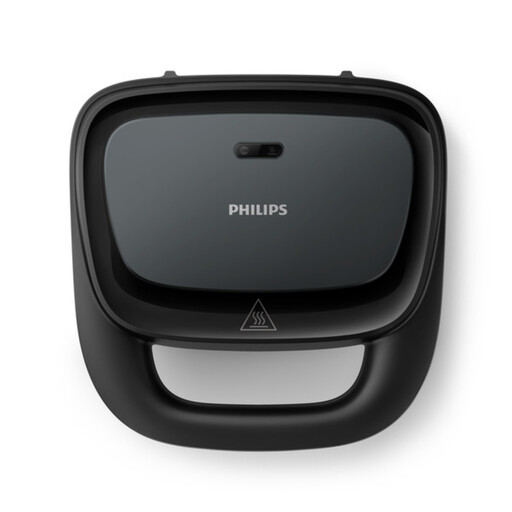
Why this model fits: It is aimed at those who want to prepare hot sandwiches, paninis and filled toasties rather than simply toasted bread.
The non-stick plates and locking mechanism prevent every preparation from turning into a cleaning chore.
Advertised power of 750 W, vertical storage, indicator lights, on/off button and integrated cable.
An appliance that combines a toaster, sandwich maker, panini press and waffle plates can also be a smart choice in a kitchen where every square centimetre matters. Before choosing a multifunction waffle maker, however, check whether the plates are removable and whether cleaning them will fit easily into your routine.
We have put together an updated selection of products that meet these practical criteria and the safety requirements applicable in France.
It is best to unplug it after each use, especially in a kitchen that is left unattended for long periods. This precaution reduces risks associated with a damaged cord, accumulated crumbs or accidental activation.
Its service life depends on how frequently it is used, how well it is maintained and whether the manufacturer’s instructions are followed. Empty the crumb tray regularly, allow the appliance to cool down and avoid filled foods or ingredients that could drip into the slots, unless the manufacturer explicitly states that such use is supported.
It depends on its power rating and cycle duration. An 850 W model consumes less per hour than a 1,200 W appliance, but a toasting cycle is still short. To compare running costs, consider the rated power, the number of daily cycles and your electricity tariff rather than relying solely on the figure printed on the packaging.