What should you check?
To complement raclette without imposing the same flavour on everyone, start with a simple recipe. Then check how the fish is presented, whether a second recipe would be useful and how much you actually plan to serve.
| Criterion | What to check | Who it matters to |
|---|
| Versatile recipe |
Compare the ingredients in a tin of sardines in spring water with those in a tin of sardines in olive oil, as well as how the sardines are presented. |
I want to serve sardines on bread or with potatoes without choosing a strongly flavoured option for everyone. Around 29% of consumers would prioritise this versatility. |
| Skin and bones |
Look for the wording “boneless” and, if needed, “skinless”; don’t assume either from the word “fillets”. |
When some people at the table avoid bones, I prefer a presentation that needs less preparation. This would be a priority for around 29% of consumers. |
| Variety of recipes |
Read the ingredients in a tomato or chilli recipe and serve it separately from a simple option. |
If I want to offer another flavour without preparing a condiment, a second, flavoured tin is enough. Around 21% of consumers would prioritise this variety. |
| Stock and leftovers |
Compare the quantity, best-before date and storage instructions before and after opening. |
When I prepare several tins, I want to avoid opening more than I need and know what to do with any leftovers. Managing stock would come first for around 21% of consumers. |
Sardines to serve with raclette
These options let you choose between a tin in olive oil, sardines with the backbone removed and flavoured recipes to serve separately. Compare the quantity in each tin and its storage instructions before deciding what to serve.
 Image unavailable
Connétable Sardines in extra virgin olive oil, 135 g
Serve these on bread or with potatoes if you’d like a recipe made with olive oil. Check the drained weight when planning portions, and check for skin or bones if these matter to your guests.
Once opened, follow the instructions for refrigeration and eating within two days given for this product.
View on Joybuy
 Image unavailable
Connétable Sardines in water, backbone removed, 98 g
This option may suit you if removing the backbone makes serving easier. However, it shouldn’t be taken to mean that the sardines are guaranteed to be skinless and completely boneless; check the wording if this is essential. The recipe also includes lemon.
Once opened, the instructions say to refrigerate and eat within two days.
View on Joybuy
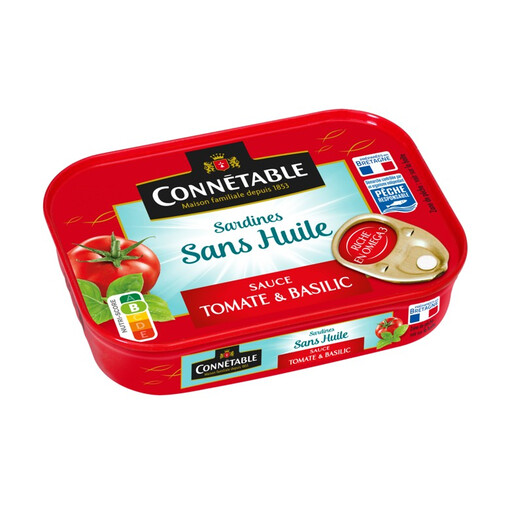 Image unavailable
Connétable Sardines with tomato and basil, 1/6 tin, 115 g
A flavoured recipe to serve alongside a simpler option, particularly on bread. Tomato and basil give this variety its distinctive flavour; check the full ingredients list and drained weight if you’re comparing portions.
Check the storage instructions on the tin. Once opened, the instructions say to refrigerate and eat within two days.
View on Joybuy
 Image unavailable
Connétable Sardines in olive oil with Espelette pepper, 1/6 tin, 115 g
This is a good separate option for guests who enjoy a little heat, as long as you know their preferences. Check the ingredients list and drained weight before comparing it with simpler recipes.
Check the storage instructions on the packaging. Once opened, the instructions say to refrigerate and eat within two days.
View on Joybuy
 Image unavailable
EL TATO Sardine fillets in olive oil, 115/81 g
Olive oil sardine fillets to consider for a sharing platter. The product name gives the weight as 115/81 g: check what each figure refers to when working out portions, and whether the product may contain bones if that matters to your guests.
For this product, the instructions say to refrigerate after opening and eat within 24 hours.
View on Joybuy
Frequently asked questions
Can I keep an opened tin of sardines for another meal?
Yes, as long as you follow the after-opening instructions for the product you’ve bought. Saupiquet and Connétable advise refrigerating the products mentioned here and eating them within two days; other tins may give a different time limit.
Are sardines “in spring water” always free from added oil?
Check the ingredients on the tin rather than relying on the recipe name alone. Saupiquet’s sardine fillets in spring water contain sardine fillets, water and salt, while a recipe in olive oil includes added oil.
How do I choose sardines for guests who avoid bones?
Look for an explicit “boneless” statement on the product you choose and, if needed, “skinless” too. A tin described as containing fillets, or one with only the backbone removed, may not meet the same needs.
What should I check before serving sardines stored in a cupboard?
Check the condition of the tin, its best-before date and the storage instructions. If you’re concerned about a recall, compare the exact identifying details on your product with the relevant notice. The notice issued by Carrefour in January 2026 concerned a specific batch of El Manar sardines, not the whole category.


