
Livraison le jour même ou le lendemain

Qualité garantie

Débloquez vos offres de bienvenue: Livraison GRATUITE | Jusqu'à -80 % | 30 jours d'essai gratuits à JoyPlus
Téléchargez l'application
Investing in a stand mixer can revolutionize your kitchen routine, saving you precious time and empowering you to tackle recipes that once seemed out of reach. But there's a catch: the market is saturated with models making tempting promises, and the risk of ending up with a disappointing appliance is very real. As a product expert at Joybuy, my mission is to help you decode the spec sheets to make an informed choice. To guide you, here are the most common mistakes to avoid.
The Wattage Myth: Many people are swayed by the wattage number, mistakenly believing that high power guarantees performance. This is a misleading oversimplification. An 800W DC (direct current) motor can be more efficient with better torque at low speeds than a 1500W AC (alternating current) motor, all while being quieter. The true strength of a powerful stand mixer lies in its ability to maintain a stable speed even with heavy doughs. It all comes down to the quality of the motor and its transmission, far more than the watts displayed on the label.
The Fragility of Plastic Components: To cut costs, some manufacturers opt for a sleek metal body that hides... plastic gears. This is the appliance's Achilles' heel. When subjected to the strain of a dense bread dough, they wear out incredibly quickly, resulting in a loss of power, excessive noise, and eventually, outright failure. An all-metal body and gears are the best guarantee of longevity.
Overlooking Planetary Mixing Action: A basic mixer simply spins on its own axis in the middle of the bowl. A true stand mixer is distinguished by its planetary mixing action: the attachment spins on its own axis while also orbiting the sides of the bowl. This dual rotation is the key to a perfectly homogeneous mix that leaves no trace of flour on the sides or bottom of the bowl. It's a non-negotiable feature for achieving pro-level results.
To ensure you're making the right investment, keep an eye on these three essential technical criteria.
As we've seen, don't be mesmerized by watts. Instead, look into the motor type. A direct-drive motor or a DC (direct current) motor is often a sign of superior quality. It delivers better torque, which is essential for a bread mixer or dough mixer worthy of the name, capable of kneading heavy, sticky doughs without overheating.
The bowl size is a crucial point. A 5L stand mixer is an excellent sweet spot for a family of four, ideal for preparing cakes and batches of bread. For larger quantities, a 6L bowl or more will offer greater comfort. Ensure the bowl is made of stainless steel: it's a hygienic, durable, and easy-to-clean material. Likewise, opt for a metal body (die-cast aluminum or steel), which ensures the appliance's stability even at full speed and guarantees better longevity.
A good stand mixer always comes with three essential attachments:
Some models transform into true multifunctional kitchen machines thanks to optional attachments (meat grinder, pasta roller, juice extractor...). If versatility is a key criterion for you, take a look at the range of compatible accessories and their availability.
Rather than an endless list, we've opted for targeted picks for different profiles, each meeting the quality criteria we've just defined.

Why this model? It's an excellent entry point into the world of baking without sacrificing the fundamentals. Its large 6L bowl lets you think big from the start, and its DC motor ensures quieter, more efficient operation with heavy doughs—a rare feature at this price point.
This model sidesteps the raw power trap by focusing on a 450W DC motor. With more torque and quieter operation than an AC motor with higher wattage, it proves that efficiency trumps numbers.
Its large 6-liter capacity and metal gear transmission offer an unbeatable durability-to-price ratio for getting started.

Why this model? For those who expect more from their mixer than just baking. It includes a meat grinder and a blender, making it a true culinary hub. Perfect for optimizing counter space and avoiding appliance clutter.
It avoids the "too good to be true" trap by offering real versatility. Here, you're not just investing in a brand, but in concrete features (grinder, blender) that expand its usefulness far beyond baking.
An ultra-complete 7-in-1 system, with a generous 6.2-liter bowl and a motor powerful enough to handle everything from kneading to making smoothies.
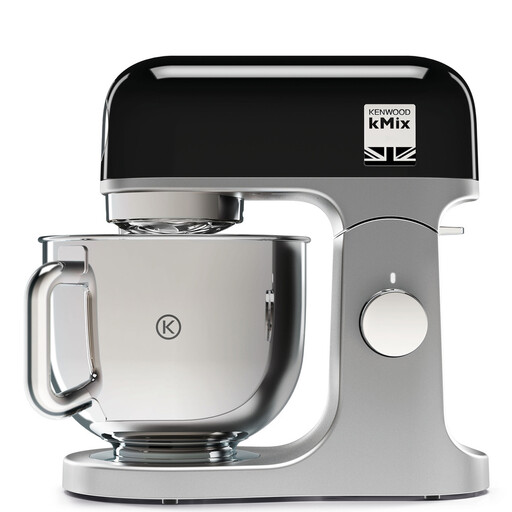
Why this model? The Kenwood kMix stand mixer is a true institution, renowned for its robustness and reliability. It's aimed at enthusiasts who want a high-performance, durable appliance with an iconic design, built to last for years.
It directly addresses the pitfall of fragile components. Its all-metal body and matching metal attachments ensure unbeatable durability and stability that fully justify its market position.
Its professional 1000W motor with electronic speed control and its gentle mixing function are guarantees of its renowned precision and reliability.
We have curated a full range of products that meet our demanding selection criteria as well as French safety standards.
1. What wattage is really necessary for a good stand mixer? Rather than focusing on a high wattage number, pay attention to the motor's technology. A 400W to 800W DC motor or a quality AC motor of at least 1000W, paired with a robust transmission, will be more than sufficient for intensive home use, including kneading bread dough. The ability to maintain a stable speed under load is a much better indicator of performance than raw power.
2. How long can you knead bread dough without damaging the mixer? It all depends on the mixer's robustness and the dough's consistency. On entry-level models, it's best not to exceed 5 to 10 minutes of continuous kneading. Sturdier mixers with a metal body and good ventilation can handle sessions of 10 to 15 minutes without issue. In any case, follow the manufacturer's recommendations and let the motor cool down if the appliance body starts to feel hot.
3. Tilt-head or bowl-lift: which one should I choose? The choice mainly depends on your preferences and your kitchen setup.