
Livraison le jour même ou le lendemain

Qualité garantie

Débloquez vos offres de bienvenue: Livraison GRATUITE | Jusqu'à -80 % | 30 jours d'essai gratuits à JoyPlus
Téléchargez l'application
A stand mixer can save you valuable time when preparing brioche, bread, cakes, pizza dough or whipped cream. You still need to choose the right model, though. Some purchases quickly become disappointing: the appliance may be too bulky, the bowl awkward to clean or the motor unable to cope with heavy doughs. To avoid unpleasant surprises, look beyond the marketing promises and focus on the features that really matter in everyday use.
High wattage does not guarantee that an electric dough mixer will cope with large quantities of dough. Depending on the manufacturer, it may refer to rated, maximum or “equivalent” power — figures that do not always reflect the appliance’s long-term performance.
When comparing two models, focus instead on:
A 5- or 6-litre family stand mixer can be perfectly suitable for several people. However, avoid filling the bowl to the brim with dense dough: the total volume is not necessarily the working capacity.
A stand mixer with 10 speeds allows more gradual adjustment than a 6-speed model, but this figure alone is not enough to judge the quality of the mixing. Soft start, consistent rotation and the “pulse” function also play an important role.
For the most common preparations:
Starting slowly prevents clouds of flour from covering the worktop and reduces the strain placed on the motor.
A stand mixer generally stays on the worktop. Before placing your order, measure the available depth, the height beneath cupboards and the space needed to lift the head. Weight also deserves your attention: a heavy appliance moves around less, but will be more difficult to store after every use.
Also check what is included in the box. A whisk, dough hook and beater already cover most recipes. A splash guard and removable bowl can also save you a few minutes of cleaning.
A stand mixer with a stainless-steel bowl will generally stand up well to food preparation and retain fewer odours than some more fragile materials. However, the stated capacity must be distinguished from the capacity that can actually be used.
Here are some useful guidelines:
The bowl’s volume does not replace the stated maximum flour quantity. Before kneading a firm dough, always consult the instructions.
With planetary mixing action, the attachment rotates on its own axis while travelling around the bowl. It therefore covers more of the bowl and incorporates ingredients more effectively. This system is common on stand mixers and bench mixers designed for a variety of preparations.
The dough hook is intended for yeasted doughs, the whisk for airy mixtures and the flat beater for soft doughs. If you are considering a multifunction food mixer, check carefully whether additional attachments are included or sold separately.
Non-slip feet, suction cups and a heavy base limit movement during kneading. As for noise-level figures, take them with a pinch of salt: the measurement varies according to the distance, selected speed and recipe being prepared.
Key features to look for include:
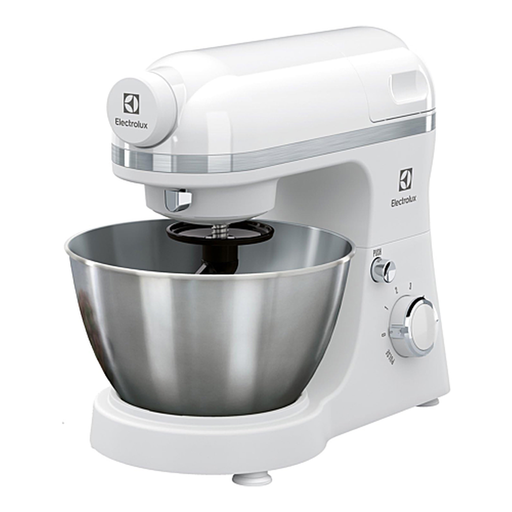
Why this is a good choice for this profile : with its 4.1 L stainless-steel bowl and format suited to everyday preparations, it is ideal for people starting out with home baking.
Its 6 speeds and pulse function are clearly specified, while the splash guard helps limit mess.
800 W, bowl and attachments stated as dishwasher-compatible, with dough hook, whisk and flat beater included.
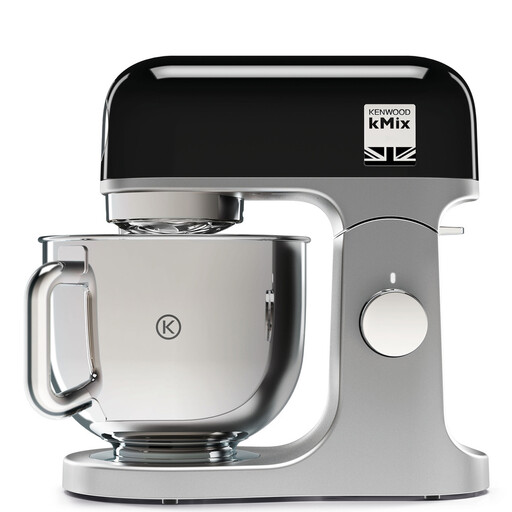
Why this is a good choice for this profile : its all-metal chassis, 5 L bowl and upgradeable attachments will appeal to enthusiasts who want to expand their repertoire.
The product details specify the stated kneading capacity, soft start and Gentle Mix function, which is suitable for delicate mixtures.
1 000 W motor, planetary mixing action, electronic control and the option to add more than 15 compatible attachments.
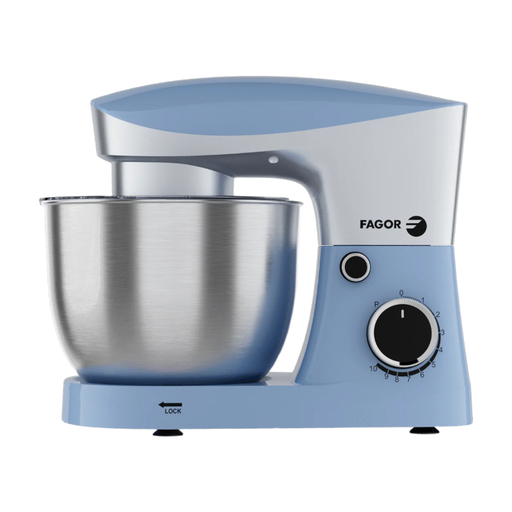
Why this is a good choice for this profile : its 6 L bowl and precise controls are designed for family-sized batches and dough prepared regularly.
The product details distinguish the total 6 L volume from the 5.7 L working capacity, helping you avoid overfilling the bowl.
Stated 1 500 W, 10 speeds with pulse function, stainless-steel attachments, safety lock and suction feet.
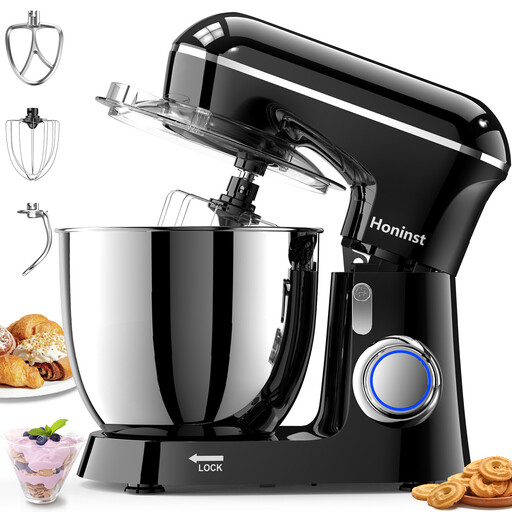
Why this is a good choice for this profile : its bowl, advertised at approximately 6.2 L, and three attachments cover the needs of a family kitchen.
The product details specify speed ranges according to the type of preparation and advise against exceeding 10 minutes with heavy dough.
10 speeds, stainless-steel bowl, planetary mixing action, tilt-back head, overheating protection and non-slip feet.
We have put together a comprehensive, real-time-updated selection of products that meet these exacting criteria, while also taking European safety regulations into account.
A 4- to 5-litre bowl is generally enough for cakes, creams and everyday quantities of dough. If you regularly make several loaves of bread or large batches, a model with a 6-litre capacity or more will be better suited. However, the maximum flour quantity is still the figure you should check first in the instructions.
Yes, provided there is enough room to lift the head and remove the bowl. Measure the appliance’s total height when open, then make sure you have a flat, dry surface. A heavy model with non-slip feet will be less likely to move around during kneading.
Consumption depends on the motor’s power, operating time and selected programme. A short preparation at moderate speed will generally use less electricity than prolonged kneading under a heavy load. To limit both electricity consumption and wear on the appliance, follow the stated capacities, start at low speed and unplug the mixer after use.