
Livraison le jour même ou le lendemain

Qualité garantie

Débloquez vos offres de bienvenue: Livraison GRATUITE | Jusqu'à -80 % | 30 jours d'essai gratuits à JoyPlus
Téléchargez l'application
Switching to stainless steel for food storage is an excellent move for both your health and the planet. It means saying goodbye to plastic in favour of a healthy and virtually indestructible material. But be warned: in a market flooded with options, not all claims are created equal. A stainless steel food container that looks perfect in photos can quickly prove disappointing in practice.
Before you take the plunge, here are a few common pitfalls to be aware of to prevent your investment from turning into a kitchen nightmare:
To make the right choice, looks and price aren't enough. A few simple technical criteria, which are very easy to check, will make all the difference.
Focusing on the right technical details is the best way to guarantee a product that will last you for years. Here are the key points you shouldn't overlook.
Not all stainless steels are created equal. For a stainless steel food container, two grades dominate the market:
A good container's weak point is often its lid. An effective locking system must have two key elements:
To optimise space in your cupboards and fridge, modularity is key. A good set of food containers should allow the empty containers to nest inside one another (like nesting dolls). Likewise, flat lids and a stable base allow them to be stacked securely when full. This means neat storage and a significant space-saver.
A solution for every need. Here is our selection, designed for different uses and based on the quality criteria we've just detailed.

Why we chose it: For those who refuse to compromise on material quality, this set checks all the boxes. It's perfect for storing any food, even the most acidic, without any risk of degradation or long-term corrosion.
Its high-grade 316 stainless steel knocks out the risk of rust or stains, even when faced with tomato sauce or a lemon vinaigrette.
Its unbeatable resistance to corrosion and rock-solid durability. The set of three sizes (600 ml, 1100 ml, 2200 ml) covers most needs.
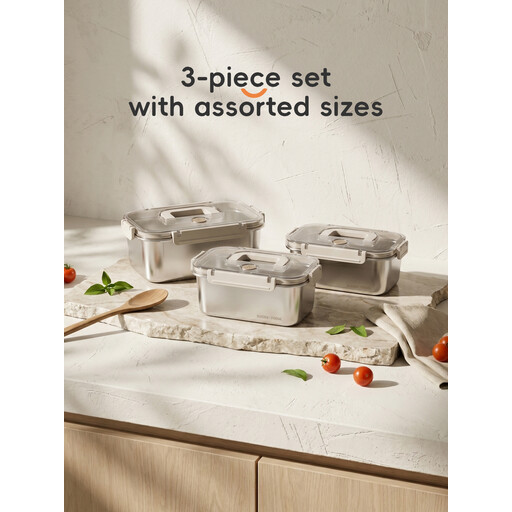
Why we chose it: With its large capacities (1700 ml, 2100 ml, 3200 ml), this set is perfect for storing leftovers from a family dinner or for meal prep enthusiasts organising their week's meals. The handle on the lid is a handy little extra for transport.
It tackles the dual challenge of storage and practicality. The containers are stackable, and the four locking clips guarantee a reliable seal to prevent accidents.
Its large sizes are perfect for family use. The 304 steel is a reliable choice for everyday needs. The removable silicone seal makes cleaning much easier.
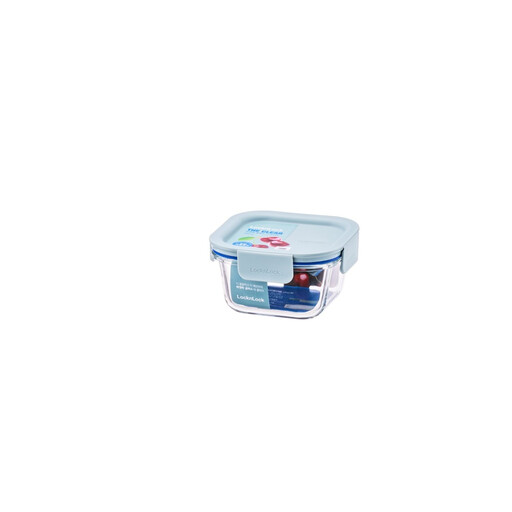
Why we chose it: This is the obvious alternative for those who want to reheat their meal directly in its container. The heat-resistant borosilicate glass is microwave-safe, which stainless steel, by its very nature, will never be.
It bypasses the main drawback of stainless steel for on-the-go use: the inability to reheat your meal at the office. Its clip-locking system also ensures a good seal.
Its ultimate versatility: microwave, oven (without the lid), and freezer safe. Glass is a perfectly neutral material that retains no odours or stains.
Explore our full selection of products that meet our quality criteria and the strictest safety standards.
The answer is no, and it's a categorical never. No metal object, including a stainless steel container, should ever go into a microwave. The metal reflects the microwaves, which can create electrical arcs (sparks), damage your appliance, or even cause a fire. To reheat your food, simply transfer it to a suitable container (glass, ceramic).
Good news: most high-quality stainless steel containers are dishwasher-safe. For hand washing, hot water, washing-up liquid, and the soft side of a sponge are all you need. To tackle limescale marks or a rainbow-like sheen (a normal and harmless phenomenon), a little white vinegar diluted in water works wonders. Remember to dry it well after washing to avoid water spots.
Yes, without a doubt. Grade 304 stainless steel is the food industry standard. It is known for its robustness and good resistance to corrosion in most situations. It's a perfectly safe and durable material for your everyday plastic-free lunch box. The 316 grade provides an extra layer of assurance, but 304 remains an excellent and more budget-friendly choice for the vast majority of users.