
Livraison le jour même ou le lendemain

Qualité garantie

Débloquez vos offres de bienvenue: Livraison GRATUITE | Jusqu'à -80 % | 30 jours d'essai gratuits à JoyPlus
Téléchargez l'application
Switching from plastic to stainless steel for your meals on the go is an excellent choice for both your health and the planet. The problem? The market is saturated with models and promises that don't always hold up. A stainless steel food container that leaks in your bag or rusts after three washes is a costly disappointment. To avoid buyer's remorse, it's best to know the most common pitfalls.
Here are the 3 key points that make all the difference between a sound investment and a purchase you'll regret:
hermetic food storage container lies in two things: the quality of its silicone seal and the engineering of its closure. The slightest flaw, and your soup of the day ends up all over your backpack.stainless steel food container worth its salt uses food-grade certified steel, designed to last and never alter the taste of your food.compartmentalised adult bento box is brilliant... as long as the salad dressing doesn't end up drowning the chocolate cake. If the dividers aren't perfectly sealed, the product's usefulness is close to zero.To avoid these disappointments, a few simple but essential technical points should be checked. They will guide you to the stainless steel lunch box or stainless steel food container set that will be a lasting part of your daily routine.
Stainless steel is an alloy whose composition directly affects its durability. For food use, two categories stand out:
For a plastic-free lunch box for on-the-go meals, being leak-proof is non-negotiable. Examine the lid from every angle:
A good stainless steel container should simplify your life, not complicate it. Be sure to check its compatibility with your appliances:
Rather than an endless list, we've selected models that meet specific needs while adhering to our standards for quality and practicality.

The Verdict: Perfect for getting started with a truly versatile stainless steel food container set. With three sizes (600, 1100, and 2200 ml), it covers every need, from a simple snack to family-sized leftovers.
This set checks the most important box: it's made from 316 stainless steel. This superior quality immediately eliminates the risk of rust or a metallic taste—the number one pitfall of entry-level models.
Unbeatable value for a set of three stackable containers that are freezer and dishwasher-safe, all made from ultra-durable steel.

The Verdict: The perfect solution for those who want to bring a hot stew, soup, or chili to the office or class and have lunch without relying on the microwave.
Its strong suit: a screw-on lid designed for transporting liquids. It provides a foolproof seal where clip-on lids often show their limits.
Its double-wall vacuum insulation keeps food hot (or cold) for hours. Bonus: its wide opening makes filling, serving, and cleaning a breeze.
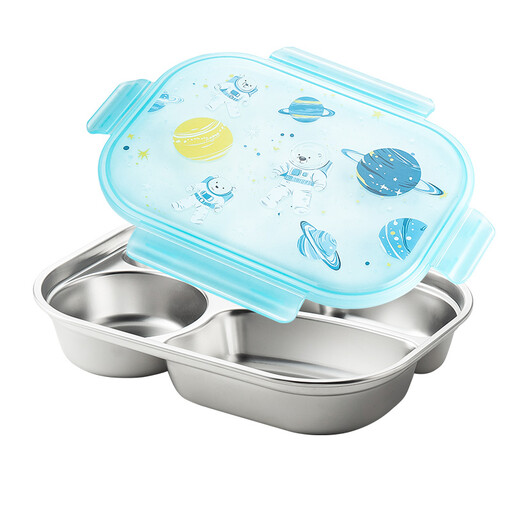
The Verdict: This is the dream tool for meal prep enthusiasts who love to create varied and balanced meals, ensuring every ingredient (protein, veggies, carbs, sauce...) stays neatly in its place.
It tackles the #1 problem of low-quality bento boxes: compartments that leak into one another. Here, the fixed dividers ensure that nothing gets mixed up during transport.
Its four-compartment structure is a real incentive to prepare complete meals. All housed in a 316 stainless steel casing—the best guarantee of hygiene and durability.
Discover our full selection of products that meet our quality criteria and food safety standards.
No, never. Metal, including stainless steel, should never be placed in a microwave oven. You risk causing sparks and damaging your appliance. To reheat a dish, always transfer it to a suitable container (glass, ceramic, etc.).
Most bases are dishwasher-safe (top rack recommended). However, hand-washing with hot water, dish soap, and a soft sponge is still ideal. To preserve the seal's integrity long-term, we advise always washing the lid and its silicone gasket by hand. Don't forget to dry the container thoroughly to prevent water spots.
To put it simply: 304 (or 18/8) stainless steel is the quality standard for cookware, offering excellent protection against rust. 316 (or 18/10) stainless steel is the superior version. It contains molybdenum, which makes it even more resistant to corrosion from salt and acids (vinaigrette, etc.). It's the best choice for heavy use and maximum durability.