
Same-day & Next-day Delivery

Quality Guaranteed

Unlock Your Welcome Offers: FREE Delivery | Up to 80% OFF | Free 30-day JoyPlus trial
Download the APP
The world of sparkling water is far more diverse than it first appears. Between naturally sparkling mineral waters, carbonated spring waters, flavoured options, and varying mineral contents, it's easy to get lost. Making the right choice isn't just a matter of taste; certain pitfalls can lead you to buy a product that meets neither your expectations nor your needs.
Before you fill your cart, here are the 3 most common mistakes to avoid:
To buy sparkling water online with confidence, focus on a few key parameters. They will help you decipher labels and select the product that's truly right for you.
This is the most important health criterion. A low-sodium sparkling water is preferable for daily hydration. The sodium content is listed in milligrams per litre (mg/L) in the mineral composition table.
The dry residue at 180°C indicates the total amount of minerals (calcium, magnesium, etc.) left after the water has been evaporated. This figure, expressed in mg/L, defines the water's character.
The mouthfeel depends on the size and origin of the bubbles.
To guide you, we've selected products that meet different needs, analysing their strengths against the essential criteria.
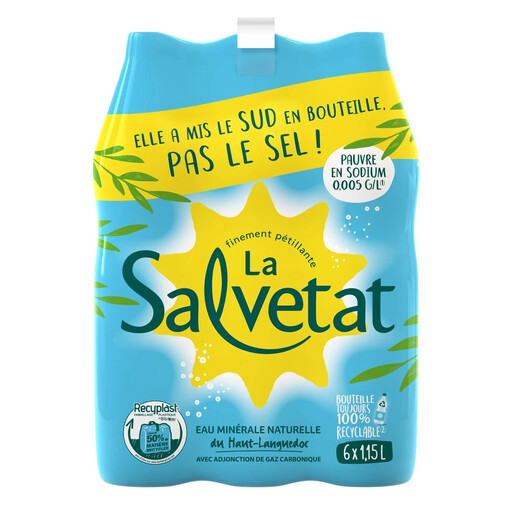
Why we chose it: Ideal for those who watch their salt intake or drink sparkling water every day. Its very low sodium content (5 mg/L) makes it the perfect choice for regular, worry-free hydration.
It directly counters the hidden sodium trap. With one of the lowest salt contents on the market, it's a clear and safe choice for low-sodium diets.
Naturally sparkling with fine bubbles and a light minerality (dry residue of 520 mg/L), it's very thirst-quenching.
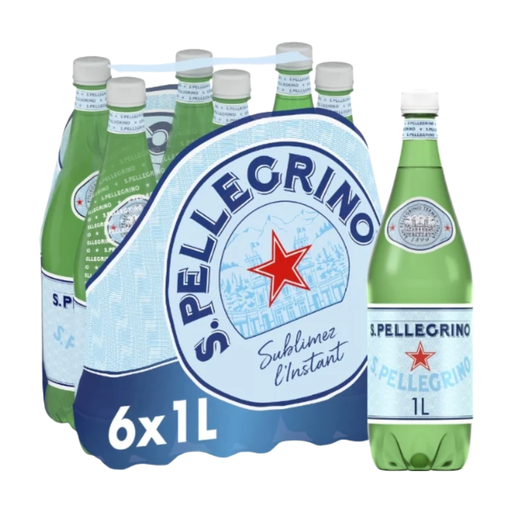
Why we chose it: Perfect for food lovers. Its lively bubbles and balanced minerality (dry residue of 854 mg/L) are renowned for enhancing the flavours of dishes without overpowering them, making it a classic at fine dining tables.
It avoids the pitfall of vague positioning. San Pellegrino isn't marketed on health claims, but on a specific taste experience, recognised in the world of gastronomy.
Fine, persistent bubbles that cleanse the palate; a distinctive minerality that pairs well with a wide range of dishes.
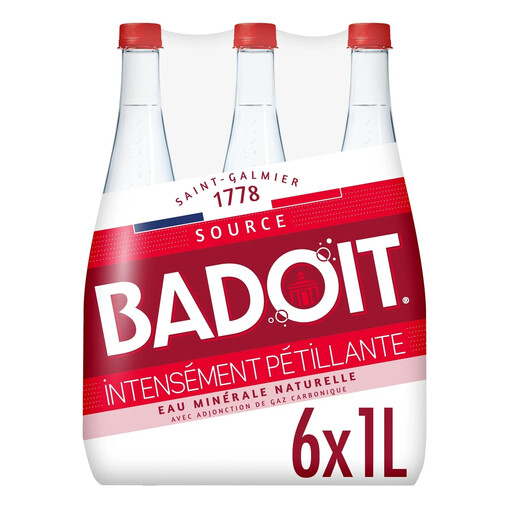
Why we chose it: Designed for those seeking a truly pronounced sparkle. If you find classic sparkling waters too gentle, Badoit Red offers reinforced carbonation for a maximum fizz in every sip.
It avoids the one-size-fits-all trap. By offering an "Intense" version, Badoit clarifies its product line and allows you to choose your level of fizziness, unlike brands that offer only a single intensity.
Intense carbonation for an invigorating experience, while retaining Badoit's characteristic mineral taste.
Explore our complete selection of sparkling waters, tested and approved by our editors based on these same criteria.
To find the sparkling water with the least salt, the rule of thumb is simple: check the "Sodium" or "Na+" line on the label. Waters considered low in sodium generally contain less than 20 mg/L. Among the available options, Salvetat (5 mg/L) and Evian Sparkling (6.5 mg/L) are excellent choices. Conversely, waters like Badoit (180 mg/L) or St-Yorre (1708 mg/L) are significantly saltier.
Yes, for most people, sparkling water is an excellent alternative to still water for staying hydrated. It contains no calories and hydrates just as effectively. However, there are two points to keep in mind:
It's all a matter of bubble intensity. Both come from the same mineral source in Saint-Galmier.
The choice between the two is therefore simply a matter of taste and the desired sensation.