Hosts looking for a dry base for toppings
If the rusk format isn’t essential, crisp multigrain and seeded toasts offer another base for cold toppings. The EPI D’OR product featured by E.Leclerc includes whole rye, bran and seeds.


For Friday night drinks, choose a multigrain and seeded rusk if you want to stick with a classic format, or a crisp toast if you’d prefer a dry base to add toppings to. A cracker is another option if you’re mainly looking for something to spread for drinks, but it won’t necessarily be a seeded rusk: check the ingredients and allergens for the product you choose.
If the rusk format isn’t essential, crisp multigrain and seeded toasts offer another base for cold toppings. The EPI D’OR product featured by E.Leclerc includes whole rye, bran and seeds.
You want to serve classic rusks while trying different grains and seeds. The two Pasquier recipes featured by Auchan show why it’s worth comparing their ingredients rather than relying on the words ‘with seeds’.
When several guests are sharing drinks and nibbles, check the recipe on the packet you’re serving. The products described by Auchan and Carrefour list cereals containing gluten and sesame, and may also mention possible traces, depending on the product.
Start by choosing a base that works with your toppings, then compare the ingredients of specific products.
| What to consider | What to check | Who should consider it? |
|---|---|---|
| Format and crunch | Check whether it’s a rusk, crisp toast or cracker, then choose the format that suits the topping you have in mind. | If I’m preparing spreads, I first want to choose a base in a format that works for serving them. Around 36% of consumers prioritise this. |
| Grains, seeds and fibre | Read the ingredients and compare the fibre per 100 g, as well as the amount of seeds if it’s listed. | When I want to mix things up for drinks, I first look at which grains and seeds the product contains. The ingredients are a priority for around 29% of consumers. |
| Allergens | Check the packet for cereals containing gluten, sesame and any warnings about possible traces. | When I’m hosting guests with allergies, I need to be able to identify the exact recipe before serving it. This is the top priority for around 21% of consumers. |
| Local availability | Check whether the product is available at your chosen shop or for click and collect before planning your drinks and nibbles around it. | If I’m planning drinks for Friday, I first want to be sure I can buy the product I’ve chosen. Around 14% of consumers make this their priority. |
According to the E.Leclerc and Auchan product listings, EPI D’OR crisp toasts contain 22 g of fibre per 100 g, compared with 5.5 g for Pasquier rusks with 6 grains and seeds. The recipe name is no substitute for the nutritional information.
Compare the fibre per 100 g and the ingredients list for the products you’re interested in.
The recipes reviewed by Auchan and Carrefour don’t all contain the same ingredients or carry the same warnings about possible traces. Similar-looking products aren’t necessarily the same as the one you’ll be serving.
Ask your guests about their dietary requirements and check the label on the packet you’ve bought, paying particular attention to highlighted allergens.
Other figures matter too when you’re comparing products. Auchan lists 13 g of sugars per 100 g for Pasquier Crousti’Déj, while both the Auchan and E.Leclerc listings show 1.4 g of salt per 100 g for Pasquier rusks with 6 grains and seeds and EPI D’OR crisp toasts.
Compare the ingredients and nutritional values on the same basis, per 100 g, and don’t judge the overall quality from a single figure.
The Carrefour Bio multigrain and seeded rusks listing says the product is unavailable for click and collect. So a product listing alone isn’t enough to plan your shopping at your chosen store.
Check availability shortly before you shop, and have another product in your preferred format in mind.
Without checking, you may have to change your choice at the last minute.
E.Leclerc offers crisp toasts made with multigrain and seeds, including whole rye. They’re a different format from classic rusks.
Auchan lists two different rusks: a recipe with 6 grains and seeds, and Crousti’Déj with 5 grains and seeds.
Carrefour’s listing describes organic multigrain and seeded rusks, including wheat, rye and barley.
Carrefour describes wholewheat crackers for spreading and serving with drinks or at the table. They aren’t seeded rusks.
This product is a cracker option for drinks, rather than a rusk or crisp toast.
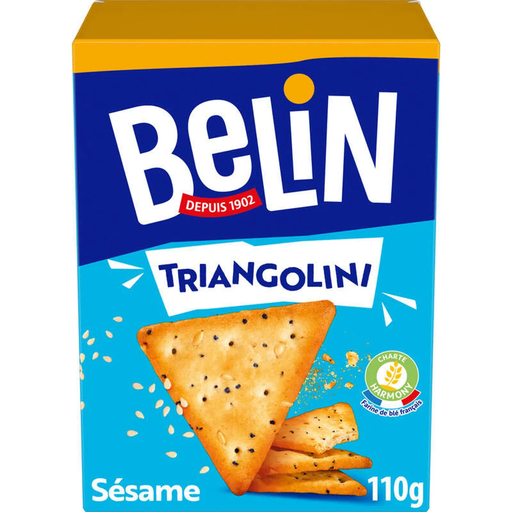 Image unavailable
Worth considering if you’d like to serve crackers with drinks instead of seeded rusks. The pack contains 110 g; check the allergens on the label before sharing.
No. The presence of seeds alone doesn’t tell you how much fibre a product contains. The E.Leclerc and Auchan listings give EPI D’OR crisp toasts as containing 22 g of fibre per 100 g, compared with 5.5 g per 100 g for Pasquier rusks with 6 grains and seeds. Compare the figures for the exact product you’re considering.
First check for cereals containing gluten and sesame, which feature in several recipes listed by Auchan and Carrefour. Then look for any warnings about possible traces on the packet you’ve chosen. In France, the DGCCRF says that allergenic ingredients must be clearly highlighted on food labels.
No. Even if a product displays a Nutri-Score, check the ingredients list, allergens and nutritional information that matter to you. To check the ingredients in the product you’re serving to a guest, refer to the packet you bought.
Reseal the packet carefully and follow the storage instructions on it. The Pasquier products listed by Auchan should be stored in a cool, dry place; also check the best-before date on your packet.