People taking a snack with them after a workout
If you keep your snack in a bag until your session ends, check the weight of each packet, that it’s intact and the best-before date before relying on this format.


If you’d like to take a savoury biscuit with you after exercise, choose a pack with the right number and weight of individual packets for the portion you want, then check that they’re intact and look at the best-before date. Convenient packaging alone doesn’t mean a product is right for you after exercise. Compare the nutritional information, ingredients and allergens for the exact product, as well as its Nutri-Score if one is displayed.
If you keep your snack in a bag until your session ends, check the weight of each packet, that it’s intact and the best-before date before relying on this format.
The nutrition table lets you compare things such as fat, sugars, protein and salt per 100 g. Then work out how these values relate to the amount you expect to eat.
Check the ingredients and allergen information for the variety you’ve chosen, even if you’re already familiar with another recipe from the same brand.
Start by distinguishing a single small pack from a multipack of individually packed portions. Then compare products in the same category using their labels, without assuming that the packaging alone makes one more nutritious.
| What matters | What to check | Who is it for? |
|---|---|---|
| Nutritional composition | Compare the values per 100 g, including fat, sugars, protein and salt. Check the Nutri-Score if it’s shown on comparable products. | If I want to choose between two crackers, I need to read their nutritional values rather than rely on the product name alone. Around 29% of consumers are said to make this their priority. |
| How the snack fits in after exercise | Relate the nutritional values to the portion you’ll eat, and take into account the meal and drinks you’re planning after your session. | After a workout, I might want a savoury snack without assuming it meets all my dietary needs on its own. Around 29% of consumers are said to prioritise this distinction. |
| Format and storage | Check the number and weight of the packets, that they’re intact, the best-before date and any storage instructions. | When I want to put a portion in my bag, I look for a packet that’s the right size and stays sealed until I’m ready to eat it. Around 24% of consumers are said to put this need first. |
| Ingredients and allergens | Read the ingredients list and allergen information for the exact recipe and format. | If I need to avoid certain ingredients, another flavour in the same range doesn’t give me enough information to make a choice. Around 18% of consumers are said to prioritise this check. |
In France, displaying the Nutri-Score is voluntary, according to information published by the ministry responsible for the economy. The DGCCRF notes that the nutrition declaration on prepacked foods lets you compare values per 100 g, among other things.
Use the Nutri-Score when it appears on comparable products, then read the nutrition table and estimate how much you’ll actually eat.
Auchan sells crackers in three 100 g packets. This packaging doesn’t necessarily match the portion you want to take with you after exercise. Small packets of crisps mentioned in other offers don’t prove that a savoury biscuit is available in the same format either.
Check the product category, the number of packets and the weight of each one.
Vico lists peanuts in its Curly Cacahuète Original recipe. This doesn’t tell you what’s in a savoury biscuit or another variety.
Check the ingredients and allergen information on the packaging for the exact product.
The fact that a savoury biscuit is easy to carry doesn’t, by itself, tell you how it fits into your diet after a workout.
Look at the portion and its nutritional information in the context of what you plan to eat and drink afterwards.
These examples help you distinguish product types and packaging formats. A brand or retailer name doesn’t confirm the characteristics of a particular recipe.
Vico offers crisps, Curly products and nuts, among other things. Its range includes multipacks of small crisp packets, which aren’t savoury biscuits.
Auchan’s range includes a variety of savoury biscuits, including crackers.
Carrefour’s range includes mini crackers and crackers under the Carrefour and Carrefour Classic’ brands.
These savoury crackers illustrate two options for a snack to take with you after exercise: a 100 g pack containing four small packets and a 30 g pack. The number of inner packets alone doesn’t confirm that they’re individually sealed, so check the packaging for the product you choose.
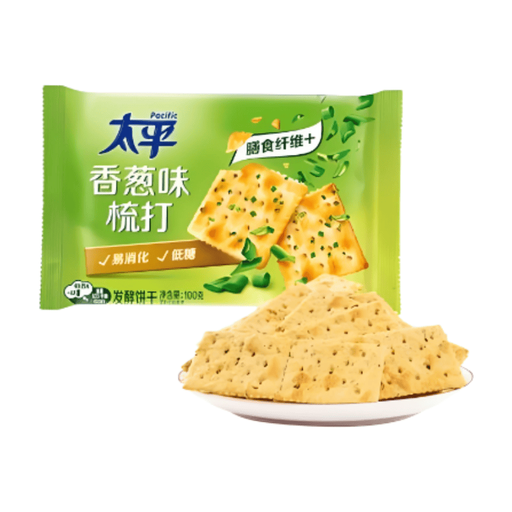 Image unavailable
This format may suit you if you’d like to spread a pack of savoury biscuits over several occasions.
The pack contains four small packets, weighing 100 g in total. Before relying on them as separate portions to take with you, check the weight and seal of each packet, as well as the best-before date on the packaging.
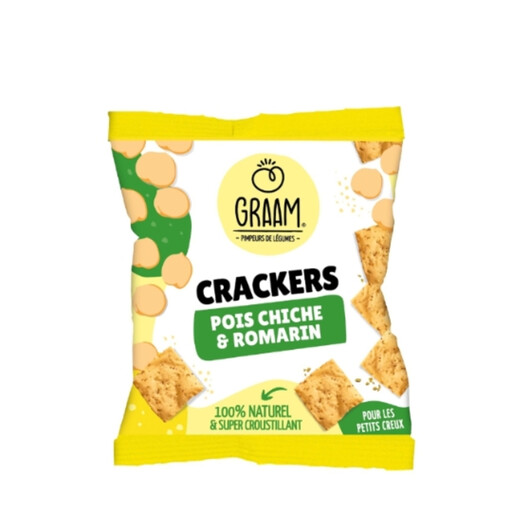 Image unavailable
The 30 g pack is a savoury cracker option to consider if you’d like to take a small snack with you.
Check that the pack is intact and look at the best-before date. If you need to avoid an ingredient or allergen, check the label for this exact product.
No. The ministry responsible for the economy says that displaying it remains voluntary in France. The DGCCRF distinguishes this logo from the nutrition declaration required for the relevant prepacked foods. Compare the nutritional values even when no Nutri-Score is shown.
Check that the packet is intact, look at its best-before date and follow the storage instructions on the packaging. Check its weight too if you’re looking for a particular amount.
You can’t tell from its format or category alone. Read the nutritional values for the portion you’ll eat, and consider the snack as part of everything you plan to eat and drink after exercise, rather than treating it as a complete solution.
No. Check the ingredients and allergen information for the flavour and format you’re buying. The composition of one recipe, even from the same brand, doesn’t necessarily describe other varieties.