People who check labels to plan their meals
You want to compare the recipe, carbohydrates and sugars, salt, fat and drained weight before deciding what to serve with your sardines.


If you’re shopping for someone living with diabetes, there’s no need to rule out canned sardines: French Health Insurance recommends eating a varied diet in appropriate quantities. Choose plain, boneless or oil-packed sardines according to your preferences and the meal you have in mind, then compare the carbohydrates and sugars, salt, fat and drained weight on the specific tin.
You want to compare the recipe, carbohydrates and sugars, salt, fat and drained weight before deciding what to serve with your sardines.
You’re looking for a tin to pair with other foods to make a meal, rather than treating the tin on its own as a complete meal.
You’re choosing between whole sardines, fillets and boneless options. Ease of eating matters, but you should compare the salt content of each product.
When choosing sardines to keep in the cupboard, start with the meal you’re planning, then check the figures per 100 g and the drained weight. The priorities below highlight what may matter most to different shoppers.
| Criteria | What to check | Who is it for? |
|---|---|---|
| Carbohydrates in the meal | Compare “carbohydrates” and “of which sugars” per 100 g, as well as the ingredients in any sauce or marinade. Remember to factor in your side dishes too. | If I’m having bread or starchy foods with my sardines, I want to understand how the tin fits into the meal as a whole; around 31% of consumers put this question first. |
| Salt | Check the salt per 100 g and consider it in relation to the portion you plan to eat; “plain” on its own doesn’t tell you how much salt the product contains. | If I need to watch my salt intake, I compare the tins rather than relying on their product descriptions. This is the top priority for around 31% of consumers. |
| Recipe and fat | Check which oil is used, the energy and fat per 100 g, and then how much you’ll eat. | I may prefer a recipe in oil while still wanting to consider how it fits into my meal; around 23% of consumers prioritise this balance. |
| Size and storage | Check whether the sardines contain bones, the drained weight and the storage instructions after opening. | If I want to use a small tin easily or plan for leftovers, the size matters most; this is the top priority for around 15% of consumers. |
Values vary between products: E.Leclerc lists 0.6 g of salt per 100 g for its Pêche Océan plain whole sardines, while Auchan’s product page for Connétable plain skinless and boneless sardines lists 1 g per 100 g.
Compare the “salt” figure on the products you’re actually considering, and take your portion and any personal medical advice into account.
The Connétable sardines in olive oil featured on Joybuy contain 0 g of carbohydrates, but also 12 g of fat and 204 kcal per 100 g. The French National Authority for Health recommends considering energy, carbohydrate and fat intake together.
Check the energy, fat and salt too, and take the rest of the meal into account.
Figures per 100 g make it easier to compare nutritional information, but don’t tell you how much fish is in the tin you’ve chosen.
Check the net drained weight to choose a size that suits the meal you’re planning.
The best-before date applies to an unopened tin. Once it’s been opened, follow the product’s storage instructions.
Plan how you’ll use any leftovers and follow the label’s instructions on refrigeration and how long the product will keep once opened.
The range includes whole sardines and skinless, boneless options, including plain sardines.
Its sardine recipes include plain and seasoned options, which you can distinguish by checking the ingredients.
The brand offers plain whole sardines and fillets, among other options.
This E.Leclerc brand includes plain whole sardines, among other products.
Carrefour offers plain sardines and a recipe in extra virgin olive oil under this brand.
These tins contain sardines in oil, including a truffle recipe. To choose between them for the meal you have in mind, compare the recipe, size and nutritional information for each product.
 Image unavailable
A recipe in olive oil to consider if it suits the meal you have in mind. For this product, the Joybuy listing gives 0 g of carbohydrates, 12 g of fat, 204 kcal and 0.9 g of salt per 100 g; compare these figures with the amount you plan to eat.
 Image unavailable
Another size for shoppers looking for a recipe in extra virgin olive oil. Check the drained weight on the label if the amount of fish matters to you.
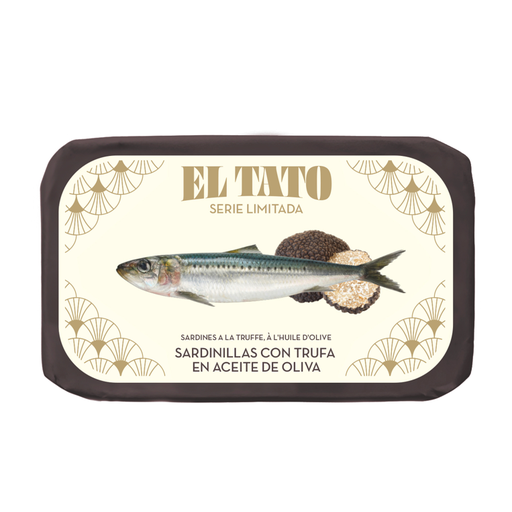 Image unavailable
For a different flavour, this product pairs sardines with olive oil and truffle. The product name gives a weight of 115/81 g; check the nutritional information for this product and its storage instructions after opening before planning your meal.
 Image unavailable
This olive oil option can be part of a meal made from cupboard staples. The product name gives a weight of 115/81 g; compare the recipe and figures per 100 g with the other tins you’re considering.
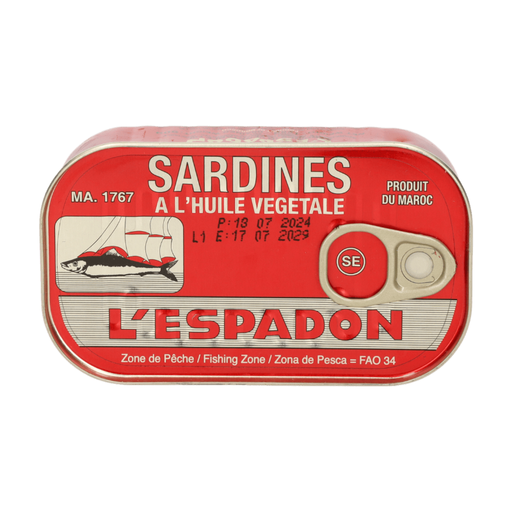 Image unavailable
A 125 g tin of sardines in oil to consider if this recipe suits the meal you have in mind. Check the type of oil, nutritional information and drained weight on the listing or label to compare it with other sizes.
No, sardines aren’t automatically off the menu: French Health Insurance recommends eating a varied diet in appropriate quantities. Choose the recipe and portion with the rest of your meal and any personal advice you’ve been given in mind.
Start with the ingredients list, then compare carbohydrates and sugars, salt, energy and fat per 100 g. Also check the net drained weight so you can relate these figures to the amount you plan to eat.
Follow the instructions on the tin and refrigerate any leftovers if directed. How long the product keeps after opening depends on the specific product: don’t rely on the date given for an unopened tin.
A past-best-before date doesn’t automatically mean you have to throw a tin away: France’s Directorate General for Competition Policy, Consumer Affairs and Fraud Control (DGCCRF) explains that the packaging must remain intact and the taste may have deteriorated. Check the tin and how it has been stored; this guidance doesn’t replace the instructions to follow once the product has been opened.