People keeping an eye on added sugars
If you want a simple recipe for dinner, check both the ‘of which sugars’ figure per 100 g and the ingredients list. Tomato sauce or a marinade deserves just as much scrutiny as a plain recipe.


If keeping sugar to a minimum is your priority, start by comparing plain sardines. Saupiquet plain fillets contain less than 0.2 g of sugars per 100 g of drained product, with sardines, water and salt as the only listed ingredients. A sardine recipe in sauce may be more convenient to serve as it is, but check its ingredients and nutritional information: Connétable sardines in tomato sauce, with no added oil, contain sugar and have 1.0 g of sugars per 100 g.
If you want a simple recipe for dinner, check both the ‘of which sugars’ figure per 100 g and the ingredients list. Tomato sauce or a marinade deserves just as much scrutiny as a plain recipe.
A lemon, basil or tomato recipe can save you the effort of making a sauce. However, compare the sugars, salt and fat in your chosen recipe rather than relying on its flavour alone.
To make serving easier, look for an explicit ‘boneless’ claim. Then check the ingredients: this feature alone tells you nothing about the oil or sugars in the recipe.
To choose between plain sardines, sardines in sauce or sardines in oil, start with what matters most for your meal, then compare the ingredients and per-100 g figures on each tin.
| What to compare | What to check | Who is it for? |
|---|---|---|
| Sugars in the recipe | The ‘of which sugars’ figure per 100 g and whether any sweetening ingredients are listed. | I want to put together dinner without unknowingly adding a sugary sauce. Around 46% of consumers would prioritise sugars and ingredients. |
| Seasoning that’s ready to serve | The type of sauce or marinade, followed by its ingredients and salt per 100 g. | If I don’t feel like making a sauce, I’m looking for a tin that’s already seasoned and ready to serve with my side dish. Around 27% of consumers would put ready-to-serve flavour first. |
| Oil and salt | Whether oil is used and what type, as well as the fat and salt per 100 g. | I prefer to decide separately on oil and salt, without assuming that a recipe with no oil is also sugar-free. Around 18% of consumers would prioritise these features. |
| Bones | The ‘boneless’ claim, followed by the ingredients in that specific recipe. | To make serving dinner easier, I look first for boneless sardines. Around 9% of consumers would prioritise ease of eating. |
No added oil tells you nothing about the sugar content of a sauce. Connétable’s tomato recipe with no added oil lists sugar among its ingredients and has 1.0 g of sugars per 100 g.
Compare the ingredients and the ‘of which sugars’ figure first; then use the ‘no oil’ claim to choose the type of preparation.
The total weight also includes the liquid the sardines are packed in. So two tins of the same weight may contain different amounts of sardines to serve.
Check the drained weight if you want to compare the amount of fish, and check what the nutritional information is based on.
Carrefour’s listing for Connétable boneless sardines in olive oil shows that they contain 21% extra virgin olive oil and have 12 g of fat per 100 g. Being boneless doesn’t tell you everything about what’s in the tin.
Once you’ve confirmed the ‘boneless’ claim, check the oil, sugars and salt in the exact product you’re considering.
The Ministry of Agriculture distinguishes between a best-before date, commonly used on tinned foods, and a use-by date. After a best-before date, some of a product’s qualities may change; the condition of the tin is still essential.
Read the date wording and the manufacturer’s instructions. Don’t eat tinned food if its packaging is damaged.
Its plain sardine fillets are a useful point of comparison for a recipe without sauce.
The brand offers a range of recipes, including plain, no-oil, tomato and lemon varieties, as well as boneless options.
Its sardines in tomato sauce are a useful way to see what a ready-made sauce brings to a recipe.
The retailer offers plain sardines and a lemon-and-basil recipe with no added oil, among other options.
E.Leclerc offers plain sardines, sardines in olive oil and a lemon-and-basil recipe with no added oil under its own-label brand.
This selection includes sardines packed in water and two recipes in oil. To choose what suits your dinner, compare how they’re prepared and check the sugars and drained weight on the tin.
 Image unavailable
Worth considering if you want to serve boneless sardines and choose the seasoning yourself. These sardines are packed in water; check the sugars and drained weight on the tin before comparing them with another recipe.
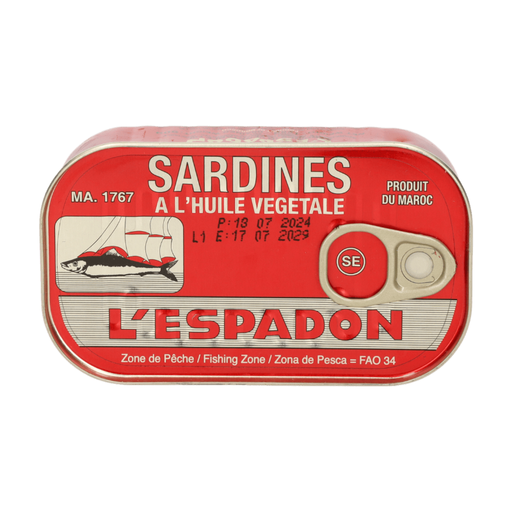 Image unavailable
Worth considering if you prefer a recipe in oil to serve with dinner. The stated pack size is 125 gr; check the packaging for the type of oil, sugars and the basis for the nutritional information per 100 g.
 Image unavailable
Worth considering if you’d prefer a recipe in extra virgin olive oil rather than one packed in water. The stated pack size is 140 g; check the sugars, fat and drained weight for this product.
Don’t assume so from the recipe name: check the ingredients and the ‘of which sugars’ figure on the tin you’ve chosen. Saupiquet plain fillets list sardines, water and salt, and have less than 0.2 g of sugars per 100 g of drained product; this figure doesn’t apply to all plain sardines.
No: ‘no oil’ describes how the sardines are prepared, not their sugar content. Connétable’s tomato recipe with no added oil lists sugar among its ingredients, so compare the nutritional information and ingredients before choosing.
A tin can count as a portion: Manger Bouger gives around 100 g as a guide for a portion of fish and lists a tin of sardines as an example. Check the weight of the tin you’re serving; Manger Bouger also recommends varying the species and sources of fish.
A past best-before date doesn’t, by itself, mean you should throw the tin away or eat its contents. The Ministry of Agriculture explains that the product’s qualities may change after this date: check that the tin is intact and follow the manufacturer’s instructions; don’t eat food from a damaged tin.