
Livraison le jour même ou le lendemain

Qualité garantie

Débloquez vos offres de bienvenue: Livraison GRATUITE | Jusqu'à -80 % | 30 jours d'essai gratuits à JoyPlus
Téléchargez l'application
A damp patch on the ceiling? Water seeping down a wall? A leak is always a source of anxiety for a homeowner. When faced with an emergency, the market is flooded with solutions, but not all are created equal. Choosing the wrong roof waterproofing coating can not only prove ineffective but also lead to additional expenses and much more significant damage in the medium term.
As a product expert at Joybuy, my role is to help you see things more clearly. Let's break down the pitfalls to avoid and the essential criteria for a repair that lasts.
DIY marketing often promises the world: simplicity, immediate results... Yet, it's the technical details, often overlooked, that make all the difference between a simple patch-up and long-lasting protection.
To avoid falling into these traps, a few technical characteristics should be inspected closely. They are the guarantee of a smart purchase and restored peace of mind.
The non-negotiable point: the product's ability to accommodate the substrate's movements. Materials (concrete, tile, metal) "move": they expand and contract with heat and cold.
Your leak could be coming from a cracked tile, a chimney flashing, a gutter, or a wall. A good anti-leak product must be able to adhere to a wide range of materials, whether porous or non-porous.
In an emergency, every hour counts. Ease of use is therefore a key criterion for the DIYer.
Rather than a long list, let's focus on a specific case to illustrate how a well-chosen product solves the problems we've discussed.
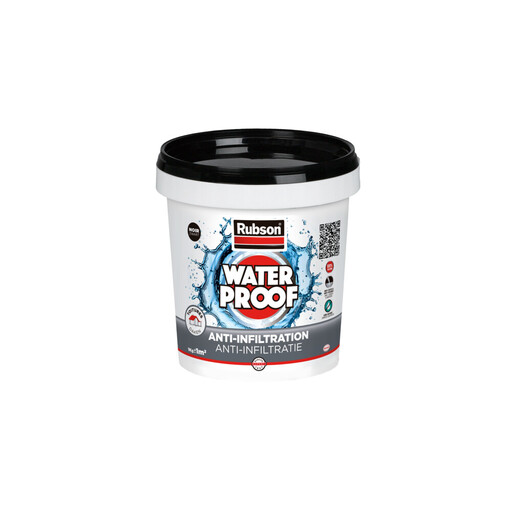
Why it's the right choice: Ideal for a quick and effective intervention. Its ready-to-use formula allows you to immediately seal a leak on a roof, gutter, or wall crack, without being a construction expert. It's the trusted solution for an emergency repair.
Its silicone-based formula ensures high elasticity, which prevents cracking (pitfall #1). Designed to withstand weather and UV rays (pitfall #2), it can be applied directly with a brush, making it accessible to everyone (pitfall #3).
Versatility: Adheres to most substrates (tiles, slates, zinc, concrete).
Quick Drying: Rainproof in 1 to 3 hours, a decisive advantage in unpredictable weather.
For larger projects or specific cases, discover our complete selection of products that meet the same quality criteria and current standards.
The longevity of a liquid waterproofing membrane depends on the quality of the product (especially its UV resistance), the preparation of the substrate, and the care taken during application (respecting the recommended thickness). A high-quality solution, applied correctly, can provide effective protection for over 10 years.
As a general rule, no. Almost all products, including formulas like Rubson Anti-Leak, require a clean, dry, and dust-free surface for perfect adhesion. Applying to a damp or wet surface compromises the bond and therefore the effectiveness of the waterproofing. Always read the manufacturer's instructions carefully.
It all depends on the product and the substrate. Ready-to-use solutions like the one presented above are often formulated for direct adhesion, without a primer, on most materials. However, on very porous, crumbly, or specific substrates (certain metals), a bonding primer is often recommended by the manufacturer to guarantee a flawless, long-lasting hold.