
Livraison le jour même ou le lendemain

Qualité garantie

Débloquez vos offres de bienvenue: Livraison GRATUITE | Jusqu'à -80 % | 30 jours d'essai gratuits à JoyPlus
Téléchargez l'application
A leaky pipe, a dangling cable, a torn tarp… When faced with these small daily hassles, the first instinct is often to reach for a roll of repair tape. Yet, who hasn't cursed at a tape that peels off after just a few hours, especially outdoors or on a tricky surface? The market is saturated with products making tempting promises, but not all are created equal.
As a product expert at Joybuy, my role is to guide you through this jungle. Together, we'll break down the common pitfalls and essential criteria for choosing an adhesive tape that truly lives up to its promises, without wasting your time and money.
Before you choose, it's crucial to recognise the false promises and overrated features that lead straight to disappointment.
To make an informed choice, focus on these three parameters. They are the true indicators of an extra-strong repair tape's performance.
The foundation of a good duct tape is its structure. A cloth-backed adhesive tape is made of three layers: a top polyethylene layer for moisture protection, a fabric scrim (cotton or polyester) for tensile strength, and an adhesive layer.
Tensile strength indicates the force required to break the tape. A high value is essential for applications under tension, such as repairing a strap or securing heavy objects. Likewise, check the operating temperature range. A standard tape can lose its grip below 0°C or above 40-50°C, making it ineffective for repairs on a hot water pipe or in direct summer sun.
A tape's ability to hug curved, irregular, or textured surfaces is a key factor in its durability. A tape that is too rigid will create stress points and eventually "lift" at the edges. For this type of use, tapes made from more flexible materials like polyurethane are often more effective.
Rather than an endless list, here are targeted options for specific needs, chosen for their proven relevance and effectiveness.
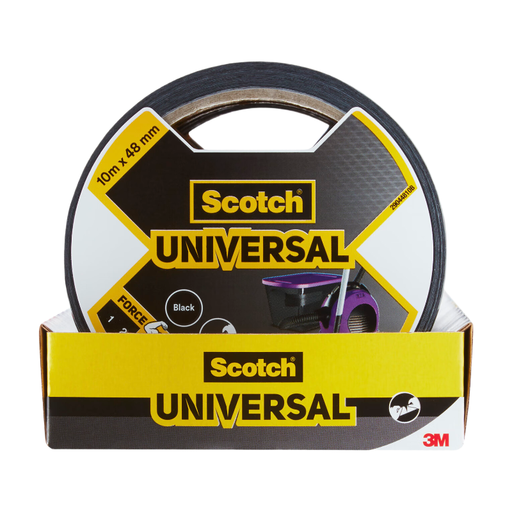
Why we recommend it: This is the Swiss Army knife of adhesive tapes—the one you're always glad to have in your toolbox. Perfect for common repairs, bundling cables, or temporary fixes. Its 10-meter length is ideal for light-duty use.
It doesn't promise extreme strength, but rather reliable adhesion for general use. Its cloth-backed structure is a mark of quality compared to simple plastic tape, avoiding the trap of unnecessary thickness.
It tears easily by hand, making it very practical for quick jobs without needing to find scissors. Its surface can be written on, a bonus for organisation.
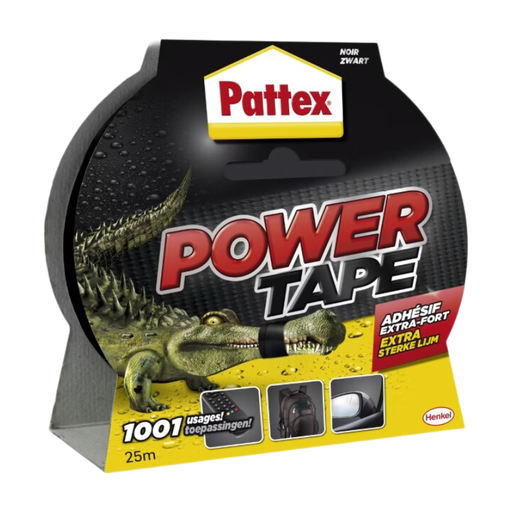
Why we recommend it: For repairs that allow no compromise. Ideal for outdoor applications, sealing leaks, or securing heavy objects, thanks to a design focused on durability and strength.
It clarifies the promise of being waterproof. According to Pattex, its polyethylene outer surface is 100% waterproof, which distinguishes it from tapes that are merely "water-resistant." Its 3-layer technology is a concrete technical benefit.
Its triple-layer structure gives it very high resistance to tension and water, making it suitable for heavy-duty use both indoors and outdoors. Pattex states it can hold up to 17 kg.
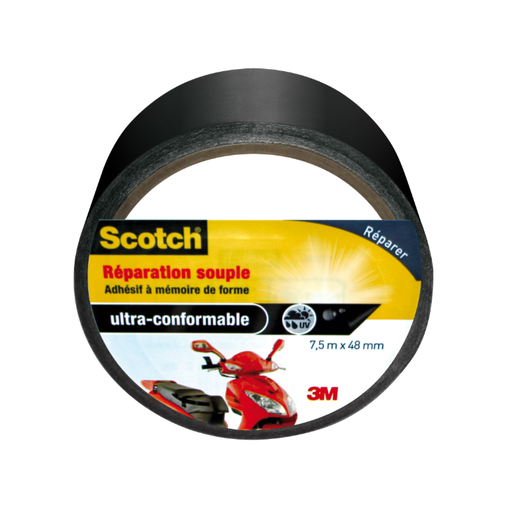
Why we recommend it: Perfect for repairing objects with irregular shapes, like a flexible vacuum hose, a curved tool handle, or sports equipment. Where a standard tape would wrinkle and peel, this one adapts.
It sidesteps the "multi-surface" trap by specialising. Rather than promising everything, it excels in a niche: conformability. It's designed for situations where flexibility is more important than brute force.
Its ultra-flexible polyurethane material allows it to perfectly hug contours and non-flat surfaces, ensuring a lasting bond without lifting at the edges.
What is the shelf life of a repair tape? It all depends on storage and application. Stored in a cool, dry place away from sunlight, a roll can last for several years. Once applied, its longevity depends on surface preparation (clean, dry, grease-free) and exposure conditions (UV, humidity, temperature). An indoor repair can last for years, while an outdoor application will require regular monitoring.
Can you use duct tape to seal a water leak? Yes, but it's a temporary fix, not a miracle solution. For a small, low-pressure leak, a high-quality waterproof multi-surface adhesive can hold for a while. However, for a leak on a pressurised pipe, it's an emergency measure until a permanent repair can be made by a professional. The tape must be specifically designed to be waterproof, not just water-resistant.
How do you remove extra-strong repair tape without leaving residue? This is the great dilemma of heavy-duty adhesives. To remove it without leaving half the glue behind, a gentle approach is key. Gently heating the tape with a hairdryer can soften the adhesive and make it easier to peel off. Pull slowly and at a low angle. For stubborn glue residue, use a specific adhesive remover or isopropyl alcohol on a cloth, testing first on an inconspicuous area to avoid damaging the surface. Note that some tapes, especially the strongest ones, are not designed for clean removal.