
Livraison le jour même ou le lendemain

Qualité garantie

Débloquez vos offres de bienvenue: Livraison GRATUITE | Jusqu'à -80 % | 30 jours d'essai gratuits à JoyPlus
Téléchargez l'application
Want to protect your privacy on your balcony, terrace, or in your garden? A total-blockout privacy screen is the perfect solution to shield you from prying eyes, wind, and even the sun. But be careful—the market is flooded with products that make tempting promises but often deliver disappointing quality. Our mission: to help you see clearly and make an informed choice by navigating the most common marketing traps.
An attractive price can hide flaws that will render your purchase useless after just one season. Here are the points to check to avoid throwing your money down the drain.
To be sure of the quality of your future privacy screen, three technical specifications must be scrutinised. These are what guarantee the product's performance and longevity.
Grammage is arguably the number-one criterion. It measures the material's mass per square metre (g/m?) and directly determines its opacity and strength.
The choice of material is crucial for the longevity of your installation.
The sturdiness of a balcony privacy screen depends as much on its fabric as on the quality of its finishings. Pay close attention to the edges: are they hemmed and reinforced with an extra strip of fabric? Are the eyelets metal (aluminium, brass) and securely crimped? Regular spacing (every 50 cm to 1 m) is also a sign of quality: it allows for even tension distribution and prevents the screen from deforming or tearing.
Rather than an endless list, we have selected products that meet specific needs while adhering to the quality criteria we've just discussed.
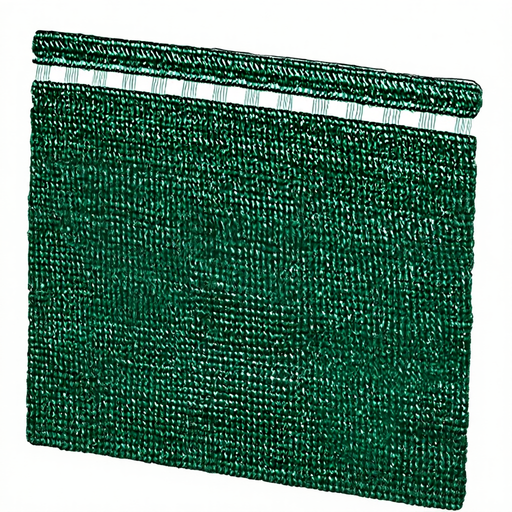
Why we chose it : With its 1 m by 5 m dimensions, this roll is perfect for a standard balcony or a small section of fence. Easy to handle and install, it's an excellent choice for getting started.
It features buttonholes on the edges for simple and reliable fastening, which avoids the common problem of fixings that give way quickly.
Its run-resistant woven mesh can be cut to size without fraying, offering maximum flexibility for a perfect fit.
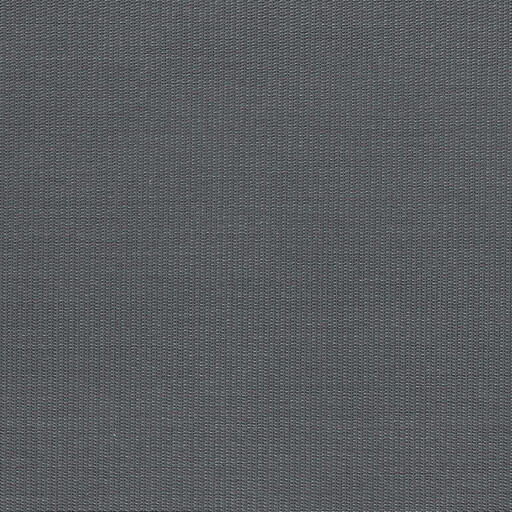
Why we chose it : For those who demand both aesthetics and robustness. Its steel grey colour and woven texture add a modern, elegant touch to a contemporary terrace or garden.
With a record-breaking grammage of 580 g/m?, it smashes the density criterion. This product is designed to withstand everything: tearing, weathering, and all for the long term.
Made of Textilene (polyester and PVC), it is run-resistant and can be cut without fraying. Its aluminium eyelets guarantee a fastening that is as strong as it is durable.
Why we chose it : The 50-metre roll is the ultimate cost-effective and uniform solution for covering long garden fences or large perimeters. Its anthracite grey colour is both modern and discreet.
With a weight significantly higher than standard nets and an ultra-compact weave, it guarantees total blockout and high tear resistance. Say goodbye to problems with low grammage and fragility.
Its meticulous construction ensures a uniform mesh for perfect visual coverage and excellent wind resistance. The pre-installed eyelets greatly simplify installation.
We have compiled a complete selection of products that meet our quality criteria and current safety standards.
Its longevity depends on three factors: the quality of the material (a UV-treated HDPE or a Textilene will last much longer), its exposure to sun and wind, and the quality of the installation. A well-made product, correctly installed, can easily last between 5 and 10 years.
For a successful installation, ensure your support structure (fence, wire mesh, railing) is solid. Unroll the privacy screen and secure it with plastic cable ties, galvanised wire, or dedicated staples. Ideally, place a fastener in every eyelet (or at least every 50 cm), pulling the fabric slightly taut to limit its wind load. A well-tensioned screen is a long-lasting screen.
For absolute privacy, aim for a grammage of at least 220 g/m? for an HDPE model. The densest products, approaching 300 g/m? or more (like the Tenax Coimbra Dark or the Texstyle Privé), will block almost all prying eyes.