
Livraison le jour même ou le lendemain

Qualité garantie

Débloquez vos offres de bienvenue: Livraison GRATUITE | Jusqu'à -80 % | 30 jours d'essai gratuits à JoyPlus
Téléchargez l'application
An outdoor privacy screen can sometimes be enough to turn an open space into a true secluded corner. But you need to pick the right model. After a few months, some screens sag, their colour fades, their fixings give way under gusts of wind, or their level of privacy falls well short of what was promised.
Before buying a garden privacy screen, a balcony model or a screen for a fence, there are three pitfalls to avoid.
A dense shade net strongly limits visibility, while an open-weave windbreak net allows more air to circulate. The best choice therefore depends directly on the location.
On a balcony exposed to draughts, a semi-privacy mesh can reduce wind resistance compared to a solid screen. For a fence overlooking a street or close neighbours, a denser solution will provide a clearer visual separation.
Claims like "90% shade" or "100% privacy" should be taken as stated product features, not as a guarantee that works in every situation. Colour, viewing angle, brightness and distance also affect the result.
Polyethylene, PVC and polyester are the most common materials for outdoor screens. Expressed in g/m², the weight gives an indication of the screen's density, but it alone is not enough to assess its lifespan.
In particular, check for UV protection, the stated weather resistance and the quality of the reinforced edges. A privacy screen for a fence with evenly spaced eyelets makes installation easier and prevents tension from concentrating on just a few points.
The accessories must be suited to the support: UV-resistant cable ties for a wire mesh fence, hooks for a rigid structure, or a system specifically designed for a balcony. A privacy screen should never be used as a load-bearing barrier, balustrade or safety device.
Start by measuring the length you need to cover, then allow a small margin for fixing and tensioning. A height of around 1 m is often suitable for a low fence or a railing. To create a more pronounced separation in a garden, a screen of 1.5 to 2 m will generally be more appropriate.
For outdoor sun protection, some models can be installed horizontally. However, this use must be compatible with the instructions and the supporting structure. A screen fixed above a patio or swimming pool is subject to different stresses than a simple vertical panel.
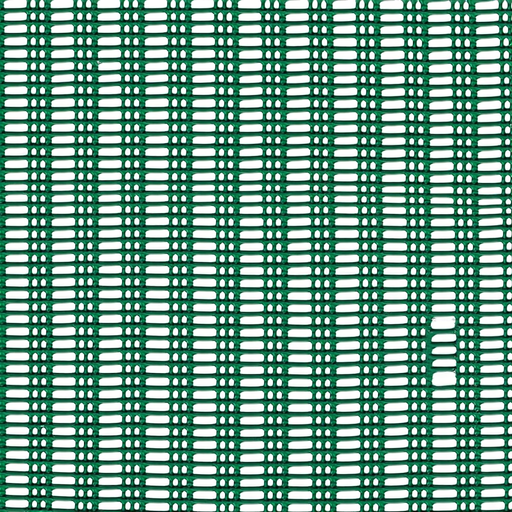
Why this choice suits this profile: With its 1 × 5 m roll, this model is ideal for first-time installations on a balcony, in a small garden or on a fence, especially when reducing wind resistance matters as much as visual separation.
Its open mesh avoids installing a completely solid screen in an area exposed to gusts. However, fixings must still be regular and secure.
A rectangular-pattern mesh, stated UV protection and dimensions that are easy to work with for a residential installation.
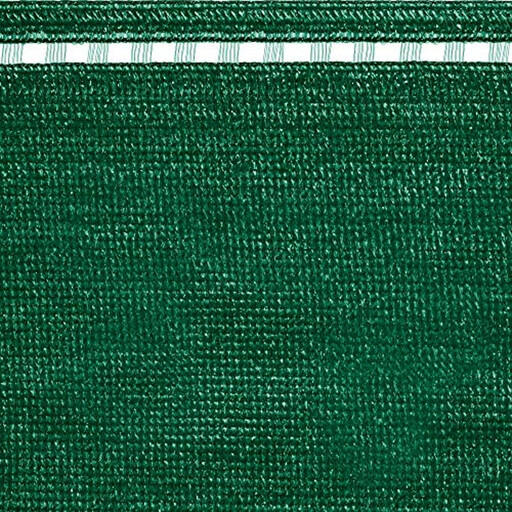
Why this choice suits this profile: Its 2 m height and 5 m length are ideal for projects that need a clear separation in a garden, on a patio or along a fence.
The description states a dense knitted fabric of 230 g/m², eyelets on the edges and customisable cutting without reported fraying.
Stated 100% privacy, UV resistance and the possibility of installation both vertically and horizontally, depending on the support.
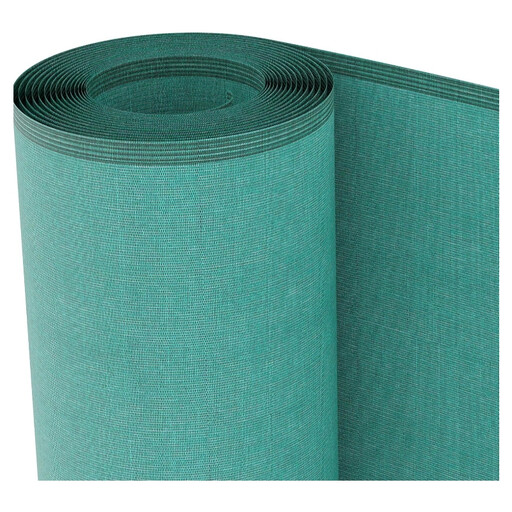
Why this choice suits this profile: With its 10 m length, this roll is designed for large fences, sports areas and projects that require extensive coverage.
Its long format reduces the number of joins. The reinforced edges are also presented as designed to limit tears and mesh unraveling.
A height of 1.50 m, a length of 10 m and stated 90% shade, all in a UV-resistant polyethylene screen.
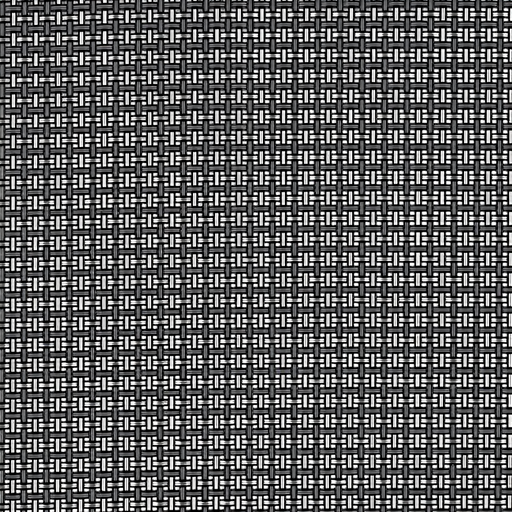
Why this choice suits this profile: This semi-transparent solution is ideal for patios and balconies where the aim is to filter views and light without completely blocking the outlook.
Its privacy level is stated as low. This avoids confusing decorative screening with total privacy, a distinction to keep in mind before buying.
A textilene made from 70% PVC and 30% polyester, a stated weight of 700 g/m² and metal eyelets spaced 30 cm apart.
We have compiled a complete, real-time updated selection of products that meet these demanding criteria and the applicable European safety regulations.
Before you start fitting, check the condition of the fence, wall or railing. Fragile supports need to be reinforced. Fix the screen at the points intended for this purpose, without spacing the fixings too far apart, especially in regions exposed to strong winds, Atlantic gusts or bad weather.
For a clean and long-lasting installation:
Cleaning with clean water, possibly with a mild detergent, is usually sufficient. Avoid solvents, abrasive brushes and storage in a damp place. An artificial hedge like the Tenax Divy Laurus Pro also requires regular checking of its grid and fixings, even though it needs neither watering nor trimming.
UV-resistant cable ties or ties are the most commonly used. Distribute them along the edges and in the centre of the screen. In a very windy area, place the fixing points closer together and check regularly that they are not cutting into the material.
Start by choosing a height that is compatible with the railing and the building's regulations. An open-weave windbreak net may be suitable for an exposed balcony. A denser outdoor privacy screen will provide better visual separation, but will potentially increase wind resistance.
It all depends on the material, its UV protection, the quality of the fixings and its exposure. A check at the beginning and end of the windy season allows you to spot distortions, loose eyelets or the first signs of weakening before they get worse.