
Livraison le jour même ou le lendemain

Qualité garantie

Débloquez vos offres de bienvenue: Livraison GRATUITE | Jusqu'à -80 % | 30 jours d'essai gratuits à JoyPlus
Téléchargez l'application
Prepping poultry is a real pleasure... until your equipment fails you. A slipping blade, a handle that hurts your hand, shears that bend on a simple bone—who hasn't felt the frustration of an inadequate tool? The market is saturated with models that promise the world but often prove disappointing in practice.
As a product expert at Joybuy, my mission is to help you cut through the noise. Let's break down the common pitfalls to avoid and the criteria that truly matter, so you can choose poultry shears that will become a trusted ally in your kitchen, not just another gadget collecting dust in a drawer.
To make an informed choice, focus on the technical specifications that truly impact performance and longevity.
The quality of the blade is the number one factor. Rather than relying on a simple "stainless" mention, look for more precise specifications. Steels like 3Cr13, 30Cr13, or 40Cr13 are often used for quality cutlery. These codes indicate a composition that offers a good balance between hardness (to hold an edge), flexibility (to prevent breaking), and corrosion resistance. Thick, sturdy blades are essential for heavy-duty kitchen shears capable of cutting through small bones effortlessly.
Handling must be comfortable and secure. A well-designed ergonomic handle fits the shape of your hand, allowing you to apply considerable force without pain or excessive fatigue. Non-slip materials (like PP or silicone coatings) are a significant plus. Finally, a solid safety lock is imperative. It should be easy to operate with one hand but firm enough not to open accidentally in a drawer. Some models include a spring-loaded mechanism that assists in reopening the blades, reducing effort during repetitive cuts.
The overall sturdiness, particularly of the pivot joint, determines whether your shears can handle demanding tasks. Chicken bone shears must have a reinforced pivot that won't loosen over time. The general design should inspire confidence and feel dense and solid from the very first grip.
Instead of an endless list, we've identified models that meet specific needs for different user profiles, all while avoiding the classic pitfalls.
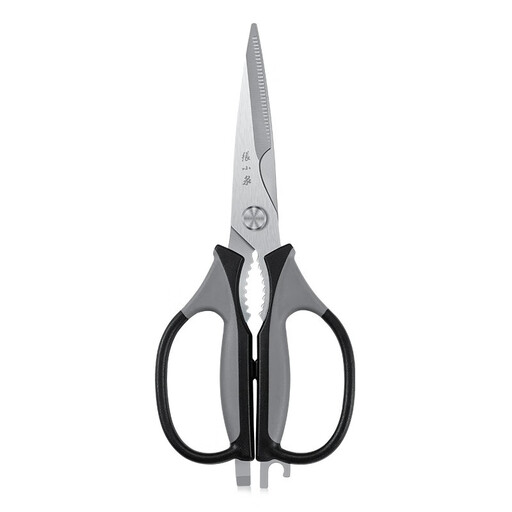
Why we chose it: For those seeking a simple, reliable, and effective tool for everyday kitchen cuts, including poultry, without being weighed down by superfluous features.
This model focuses on one thing: cutting. It avoids the multi-tool gadget trap by offering a streamlined, sturdy design centered on blade performance.
A simple, proven design that ensures good cutting performance for a variety of uses, from snipping herbs to cutting small pieces of meat.
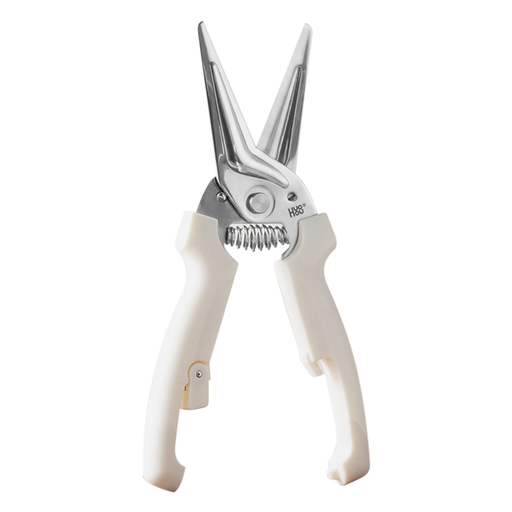
Why we chose it: Perfect for those who regularly prepare whole poultry, pork ribs, or other cuts of meat that require powerful, precise cutting, like for a barbecue or Sunday roast.
Specifically designed as chicken bone shears, it sidesteps the poor ergonomics trap with its non-slip handle, safety lock, and spring-loaded mechanism that reduces fatigue.
The cutting power is amplified by the spring, making the task of cutting bones and cartilage significantly less strenuous. The 3Cr13 steel ensures a durable edge.
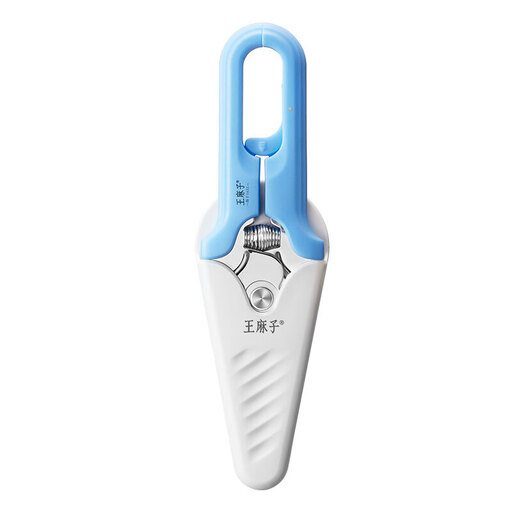
Why we chose it: For the passionate cook looking for a high-performance tool capable of going from spatchcocking a duck to deveining shrimp, with superior durability and sharpness.
It avoids the low-grade steel trap by specifying the use of 30Cr13 steel, a grade renowned for its corrosion resistance and its ability to hold a sharp edge longer.
The superior quality steel and robust construction make it a long-lasting investment for a wide range of tasks—a near-professional tool for demanding cooks.
We've compiled a comprehensive list of products that meet our strict selection criteria and current safety standards.
Maintenance is simple but crucial. Wash them by hand with hot, soapy water immediately after use, especially after cutting raw meat. Dry them thoroughly to prevent any risk of corrosion, even on stainless steel. Avoid the dishwasher at all costs: it dulls the blades and can damage the pivot. Periodically check the tightness of the pivot screw and sharpen the blades as soon as you notice a decrease in performance.
Yes, but only with models designed for that purpose. Heavy-duty kitchen shears or dedicated chicken bone shears have thicker blades, a reinforced pivot, and often a notch on the blade to hold the bone in place while cutting. Attempting to cut bones with standard kitchen scissors is likely to damage them permanently.
For occasional cuts, it's not essential. However, for repetitive tasks or cutting through tough materials like bones or cartilage, a spring-loaded mechanism significantly reduces hand fatigue. It allows the blades to reopen automatically, making the motion smoother and less tiring. It's a highly valued feature for heavy users.