
Livraison le jour même ou le lendemain

Qualité garantie

Débloquez vos offres de bienvenue: Livraison GRATUITE | Jusqu'à -80 % | 30 jours d'essai gratuits à JoyPlus
Téléchargez l'application
By the Joybuy Editorial Team, August 26, 2026
Carving a roast chicken or prepping a holiday turkey can quickly turn into a chore. A slipping knife, standard kitchen scissors bending against the carcass... It's a frustrating and, above all, dangerous situation. The result: a messy cut and a disproportionate amount of effort for poor results.
Faced with the sea of poultry shears flooding the market, it's hard to sort through the options. They all promise incredible efficiency, but how can you find the right one without falling for marketing traps? Because behind a sturdy appearance, flaws that only reveal themselves with use are often hiding.
To avoid buyer's remorse, here are the 3 most common pitfalls to avoid:
To ensure you're investing in a tool that will stand the test of time, a few technical points need to be checked. These are the details that make all the difference between a gadget and a true kitchen ally.
The material is the non-negotiable feature. You absolutely must aim for high-quality stainless steel bone shears. A steel like 3Cr13, for example, offers an excellent balance of hardness, edge retention, and corrosion resistance.
Their shape also plays a crucial role. Slightly curved blades better hug the contours of the poultry to reach the joints. One of the blades is often micro-serrated to grip the skin and bones, preventing the tool from slipping.
An ergonomic handle is essential for prolonged use without fatigue. Look for non-slip materials like polypropylene (PP), which ensure a firm grip even with greasy hands. The size of the loops should be large enough to fit your fingers comfortably, with or without kitchen gloves.
The highest-performing models are similar to kitchen secateurs. They integrate a spring mechanism that automatically reopens the shears after each cut. This assistance significantly reduces the effort required and hand fatigue.
Finally, a safety lock is an essential peace-of-mind feature. It keeps the blades closed when not in use, preventing accidental cuts when rummaging through a drawer and protecting the cutting edge.
Rather than an endless list, here are our targeted recommendations, all validated against our quality and safety criteria.
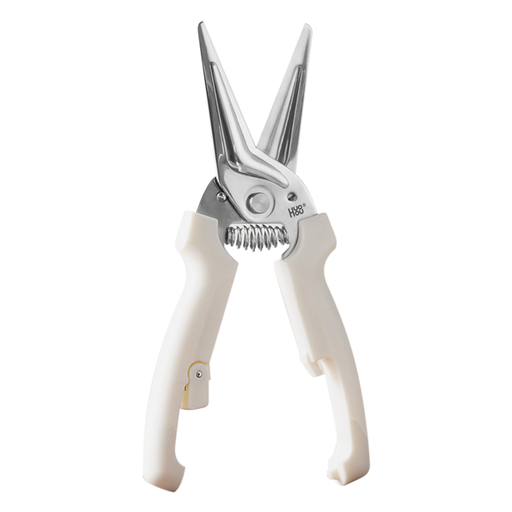
Why it's the right choice: Perfect for those who frequently cook poultry and want a specialized, reliable, no-fuss tool. It does one thing, but it does it perfectly, simplifying everyday meal prep.
Its 3Cr13 stainless steel blades are built for cutting bone and won't bend. It focuses on a single function, a guarantee of sturdiness compared to fragile multi-function models.
The spring-loaded mechanism cuts the effort in half and lets you break down a whole bird without fatigue. The safety lock ensures risk-free storage.
Why it's the right choice: BBQ prep often means cutting through pork ribs or separating chicken drumettes. The power of these shears is ideal for tackling not only poultry but also tougher meats and their cartilage.
The non-slip ergonomic PP handle is a game-changer when handling marinated or greasy meats. It prevents the tool from slipping and causing an accident.
Its robust design allows it to cut through small and medium-sized bones without damaging the blades. It's a versatile tool for all barbecue meat prep.
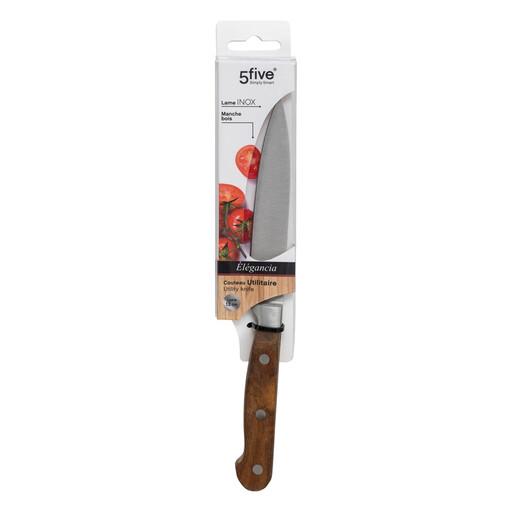
Why we're showing you this: To clearly illustrate the difference. A paring knife is a precision tool, ideal for deboning or slicing flesh, but it is absolutely not a force tool designed for cutting bones.
Trying to cut a bone with this type of thin blade can cause it to slip dangerously or chip. It's the perfect example of the right tool for the wrong job.
Its 13 cm blade is perfect for precision cuts, like filleting or trimming meat. It's the ideal complement to professional kitchen shears—each has its role!
Discover our full selection of utensils that meet our strictest quality and safety standards.
To preserve the blade edge and prevent rust, rinse them immediately after use to remove meat and fat residue. Even if some models are dishwasher-safe, hand washing is always better to protect the cutting edge and spring mechanism. Dry them meticulously before storing, and don't forget to engage the safety lock.
It all comes down to sturdiness and design. Poultry shears have thicker, stronger blades that are often curved, with a reinforced pivot capable of handling the pressure needed to cut through bone. They very often include a spring to assist with reopening. Standard kitchen shears, on the other hand, are made for light tasks: cutting herbs, packaging, or butcher's twine.
Yes, and it's even recommended for quality models. Some can also be taken apart to simplify sharpening each blade. It's best to use a sharpener specifically designed for scissors to avoid damaging the cutting angle. Regular maintenance will guarantee a perfect cut for years to come.