
Livraison le jour même ou le lendemain

Qualité garantie

Débloquez vos offres de bienvenue: Livraison GRATUITE | Jusqu'à -80 % | 30 jours d'essai gratuits à JoyPlus
Téléchargez l'application
Prepping poultry for a family meal or a barbecue with friends should be a pleasure, not a chore. Yet, we've all known the frustration: struggling with an unsuitable knife or low-quality kitchen scissors, only to get disappointing results, put in way too much effort, and make a complete mess on the countertop.
As a Product Expert at Joybuy, my mission is to help you see clearly and find utensils that truly deliver on their promises. Before you fall for a model with flashy packaging, let's review the pitfalls to avoid so you won't regret your purchase.
Don't be fooled by appearances: many models look sturdy on the shelf but reveal their weaknesses after just a few uses. Here are the most common flaws:
To equip yourself with a high-performance, durable tool, you just need to focus on a few key technical features. This is what makes all the difference between a simple gadget and a true kitchen ally.
The longevity of your shears depends entirely on the quality of their blades. The term "stainless steel" is a catch-all that hides wide disparities. For stainless steel kitchen shears that will last for years without failing, opt for steels renowned for their robustness and corrosion resistance.
A material like 3Cr13 stainless steel offers an excellent balance between hardness, edge retention, and rust resistance. It's a reliable standard for kitchen utensils intended for heavy use.
The sturdiness of kitchen shears isn't just about the material, but also their smart design.
The shape and material of the handles are essential for both comfortable and safe use. Look for ergonomic handles that fit well in the palm of your hand. Materials like polypropylene (PP) are a good choice: not only are they resistant to heat and corrosion, but they also provide a non-slip surface, ensuring a stable grip even with wet hands.
Here are a few products that check all the boxes, each designed for a key step in your prep work.
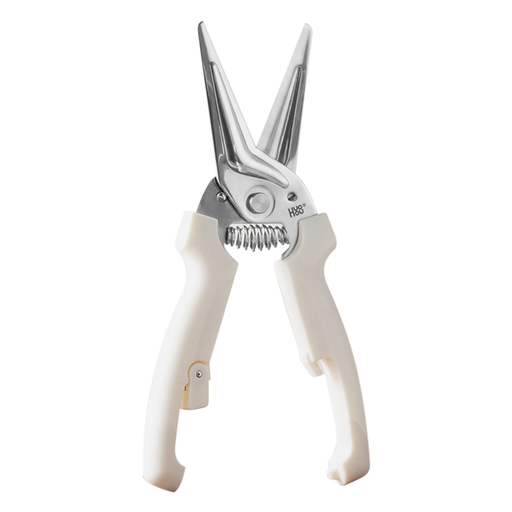
Why it's a great choice: Designed for those who regularly cook poultry, ribs, or grilled meats. This tool allows you to cut through bones and thick meats effortlessly, even for those with less hand strength.
Its 3Cr13 stainless steel blades are not afraid of corrosion. The spring-loaded mechanism is designed for a smooth, durable rebound, while the ergonomic, non-slip PP handles reduce fatigue and prevent your hand from slipping.
The combination of the high-elasticity spring and the safety lock provides a cutting experience that is powerful, controlled, and safe from start to finish.
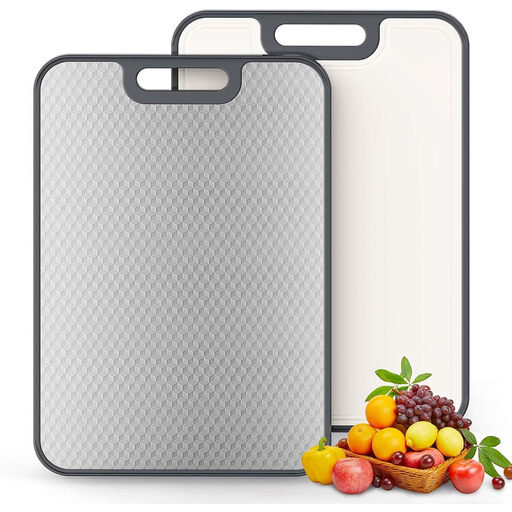
Why it's a great choice: After cutting raw meat, it's essential to use a clean work surface to prevent cross-contamination. This board is the ideal solution for keeping foods separate.
It bypasses the problem of wooden boards, which are often porous and difficult to disinfect. Its stainless steel surface is non-porous, won't retain odours or bacteria, and cleans in an instant for impeccable hygiene.
Its double-sided design is very clever: one stainless steel side for meat, the other wheat straw side for vegetables. And to top it off, it's dishwasher-safe.
We have put together a complete selection of products that meet our quality criteria and European safety standards.
1. How do I maintain my poultry shears to make them last? The key is to act fast! Wash your shears by hand with warm, soapy water right after use, especially after handling raw meat. Dry them meticulously with a cloth, paying close attention to the pivot to remove all moisture. Once dry, engage the safety lock and store them. A word of advice: avoid the dishwasher, which can dull the blades and damage the spring over time.
2. Can I use my poultry shears for other things? Of course! While they excel with poultry, these heavy-duty kitchen shears are incredibly versatile. Feel free to use them to break down pork ribs, fillet fish, snip fresh herbs, or even cut a pizza into slices. Their power makes them a formidable multi-purpose tool where classic scissors would struggle.
3. What's the difference between classic kitchen scissors and poultry shears? It all comes down to power and design. A pair of kitchen shears for poultry is built for strength. Its blades are thicker, often curved, and its pivot is reinforced to handle the pressure needed to cut through bone. It very often includes a spring-loaded mechanism to reduce effort and a special notch for breaking small bones. These are all features you won't find on standard kitchen scissors.