Who is this choice for?

People comparing sugar content

You’d like to have a filled biscuit after training, but the difference between ‘sugar-free’ and ‘no added sugars’ matters to your choice. The ‘of which sugars’ figure and the portion size tell you more than the claim on the front of the pack.

People putting together a post-workout snack

You want to consider the biscuit as part of a snack or meal, rather than choosing based on sugar content alone. Anses points out that our diet provides carbohydrates, fats and proteins, among other nutrients. The biscuit’s nutritional information only describes part of what you’ll consume.

People who pay close attention to ingredients

If you need to avoid an allergen or keep an eye on certain sweeteners, check the ingredients list for the specific product you buy. A sugar-related claim alone won’t tell you whether these ingredients are present.

Which criteria should you compare?

Start with the claim that matches your goal, then read the nutrition table and ingredients list for the specific product. If you’re having a biscuit after exercise, also consider what else is in your snack or your next meal.

Criterion What to check Who is it for?
Sugar content The exact claim and the ‘of which sugars’ figure, per 100 g and for the portion you’re considering. If I want to enjoy a filled biscuit without confusing ‘sugar-free’ with ‘no added sugars’, I look at the stated sugar content first. Around 42% of consumers would make this their main criterion.
What’s in your snack? The portion, energy and protein figures, and what’s included in your next meal. If my next meal is still a while away, I want to think about my snack as a whole, not just the claim on the pack. Around 33% of consumers would prioritise the contents of their snack.
Ingredients to avoid The ingredients list, declared allergens and sweeteners in the product you’ve chosen. If I need to avoid certain ingredients, checking whether they’re present matters more than the sugar claim. Around 25% of consumers would make this their main concern.

Common misconceptions to avoid

  • Assuming ‘sugar-free’ means low in calories

    Sugar content doesn’t tell you everything about a product’s nutritional values. Auchan’s product page for Gerblé no-added-sugars cocoa and hazelnut filled biscuits lists 453 kcal and 22 g of fat per 100 g.

    Compare the energy and fat content per 100 g, then for the portion you plan to eat.

  • Confusing ‘no added sugars’ with ‘sugar-free’

    A product with no added sugars may still contain naturally occurring sugars. For example, Auchan’s product page for Gerblé cocoa and hazelnut filled biscuits lists 3,9 g of sugars per 100 g.

    If total sugar content is important to your choice, read the ‘of which sugars’ line rather than relying on the front of the pack.

  • Overlooking the ingredients list

    A sugar claim doesn’t tell you which allergens or sweeteners are used in the recipe. These can vary from one product to another.

    Check the ingredients list and allergen information on the pack you’re buying.

  • Choosing your whole snack based on the ‘sugar-free’ claim alone

    This claim doesn’t describe your whole snack or your next meal. Anses points out that proteins, carbohydrates and fats all have a place in our diet.

    Think of the biscuit as one possible part of your snack, and consider what you’ll have with it.

Brands to know

Gerblé

Carrefour and Auchan product pages feature two different filled biscuits: a cocoa version labelled ‘sugar-free’ and a cocoa and hazelnut version labelled ‘no added sugars’.

  • Auchan’s product page for the cocoa and hazelnut version gives values per 100 g: 3,9 g of sugars, 7,3 g of protein and 453 kcal.
  • These values are for the cocoa and hazelnut version and may not apply to the other recipe. Check the claim and nutritional values for the product you choose.

Karéléa

Carrefour’s product page features a dark chocolate filled biscuit with no added sugars.

  • This product gives you another recipe labelled ‘no added sugars’ to compare.
  • This claim alone doesn’t tell you the total sugar content. Check the nutritional values on the pack.

Gullón

Auchan’s product page features Twins cocoa and vanilla filled biscuits with a claim relating to no added sugars.

  • The cocoa and vanilla flavour gives you another recipe to consider if you’re looking for a filled biscuit.
  • Check the exact claim, ingredients and nutritional information on the pack for this product.

An option on Joybuy

This chocolate-filled wafer may appeal if you’re considering a packaged snack after exercise. It’s a wafer, not a traditional filled biscuit, so compare its category and label with the product you’re looking for.
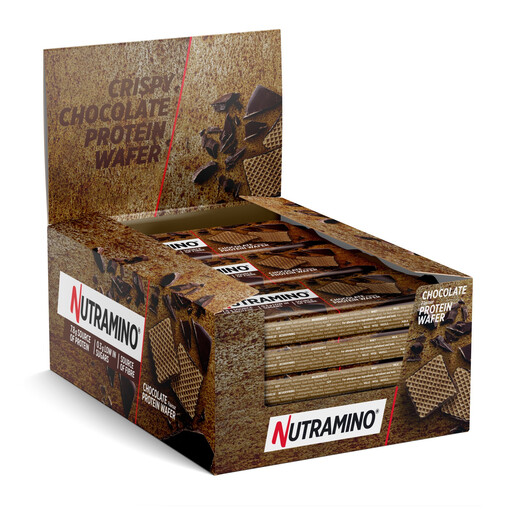
Nutramino Protein Wafer Chocolate wafers, pack of 12 x 39 g

Nutramino Protein Wafer Chocolate 12 x 39 g

Worth considering if you’d like a chocolate-filled wafer in 39 g sachets after training. Before comparing it with a filled biscuit, check the pack for the sugar content per sachet, as well as the ingredients, allergens and sweeteners.

View on Joybuy

Frequently asked questions

Is Nutri-Score compulsory on filled biscuits in France?

No. The DGCCRF explains that Nutri-Score is voluntary, while a nutrition declaration is compulsory for prepacked food. If Nutri-Score appears on a pack, you can use it as a guide, but compare the nutritional values and portion size too.

What’s the difference between ‘sugar-free’ and ‘no added sugars’?

‘Sugar-free’ refers to the product’s sugar content; ‘no added sugars’ means no sugars have been added, but doesn’t rule out naturally occurring sugars. To find out how much sugar is listed for the biscuit you’ve chosen, check the ‘of which sugars’ line in the nutrition table.

Is a filled biscuit enough for a post-workout snack?

A biscuit can be part of your snack, but its sugar claim doesn’t tell you everything about the snack as a whole. Anses highlights the role of proteins, carbohydrates and fats in our diet. Consider the biscuit’s portion size and what else you’ll have in your snack and next meal.

What should I check if I have concerns about certain ingredients?

Read the ingredients list and allergen information for the product you’re buying, then check whether it contains any sweeteners. The ‘sugar-free’ or ‘no added sugars’ claim is no substitute for checking these details.