To choose a lower-sugar shortbread biscuit, check the wording on the packaging, then compare the ‘of which sugars’ figure per 100 g with similar biscuits. Also look at saturated fat, salt and the ingredients: a sugar claim doesn’t tell you everything about the recipe. Nutri-Score can be a useful guide when displayed, but its use is voluntary in France, according to the French Ministry for the Economy.
Who is this choice for?
People keeping an eye on sugar at snack time
You’re looking for a biscuit with a sugar-related claim, but don’t want to rely on that wording alone. Anses reminds consumers that ‘no added sugars’ doesn’t mean sugar-free: you still need to check the ‘of which sugars’ figure.
Fans of shortbread recipes
You want a particular type of biscuit and would like to compare its ingredients. The ingredients list and nutritional information can help you distinguish between recipes before choosing one to suit your taste.
People who plan their shopping by retailer
You look up a product before heading to a shop or placing an online grocery order. Check which product is available at your chosen store: Carrefour and Auchan list different products.
What should you check before buying?
First, make sure it’s the type of shortbread biscuit you’re looking for, sweet or savoury. Then compare the information per 100 g for products intended for the same purpose.
| Priority |
What to check |
Who is it for? |
| Sugar content |
The exact claim on the packet and the ‘of which sugars’ figure per 100 g. |
I want to know what the shortbread contains, rather than guessing its sugar content from a claim on the front of the pack. Around 40% of consumers put comparing sugar content at the top of their list. |
| Overall nutritional values |
Saturated fat, salt and energy per 100 g; Nutri-Score if displayed. |
If I choose a biscuit because of a sugar claim, I also want to consider its other nutritional values. This overall view is the main priority for around 30% of consumers. |
| Type of shortbread and recipe |
The biscuit description and its ingredients list. |
Whether I’m looking for something to enjoy with a coffee or to include in a snack, I first want to find the recipe and type of shortbread that suit me. Around 20% of consumers prioritise this over other criteria. |
| Product stocked by the retailer |
The exact product listing and whether it’s available at your chosen shop or delivery slot. |
When I plan my shopping, I need a product I can find at my chosen store. Finding this specific product comes first for around 10% of consumers. |
Common misconceptions to avoid
-
Confusing ‘no added sugars’ with ‘sugar-free’
According to Anses, a product labelled ‘no added sugars’ may still contain sugars that occur naturally in its ingredients.
Read the exact claim, then compare the ‘of which sugars’ figure per 100 g with similar shortbread biscuits.
-
Assuming Nutri-Score must appear on every packet
The French Ministry for the Economy says that this logo is voluntary in France. Its absence isn’t, by itself, a reason to rule out a biscuit.
If it isn’t shown, use the nutritional information per 100 g to compare products.
-
Choosing based on sugar content alone
Two biscuits may differ in other parts of their nutritional profile, including saturated fat and salt.
Compare these values on the same per-100 g basis, then read the ingredients list for the product you choose.
Brands to know when comparing
Gerblé
Carrefour lists a Gerblé hazelnut and chocolate chip shortbread biscuit labelled ‘sugar-free’; Auchan lists a lemon-yuzu shortbread biscuit labelled ‘no added sugars’.
- Two examples of shortbread biscuits with different sugar claims.
- These claims don’t replace checking the nutritional values for the exact product.
Karelea
A search on Carrefour brings up Karelea biscuits with sugar-related claims, including palmier biscuits and speculoos.
- A brand to consider if you’re widening your search to include other types of biscuits.
- A palmier or speculoos shouldn’t be confused with a shortbread biscuit.
St Michel
St Michel Sablés de Retz provide a point of comparison for classic shortbread, though they aren’t presented as reduced-sugar biscuits.
- The Auchan listing gives a figure of 25 g of sugars per 100 g for this specific product.
- This figure doesn’t represent all St Michel shortbread biscuits or all classic shortbread.
Two savoury shortbread biscuits to consider on Joybuy
These two RAMDAM SOCIAL products are savoury shortbread biscuits: one with Parmesan and chia seeds, the other with Comté and sesame. They may appeal if you’re looking for this type of biscuit, but shouldn’t be mistaken for sweet shortbread biscuits with a sugar-reduction claim.
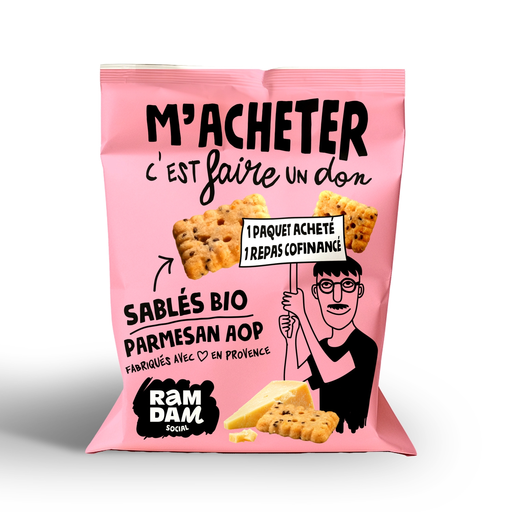 Image unavailable
RAMDAM SOCIAL, savoury Parmesan and chia shortbread biscuits, 100 g
Worth considering if you’re looking for a savoury shortbread biscuit with Parmesan and chia seeds, rather than a sweet biscuit for snack time.
The pack is listed as 100 g. If you’re choosing based on sugar content, check the nutritional values and ingredients on the exact product; its name doesn’t include a sugar-reduction claim.
View on Joybuy
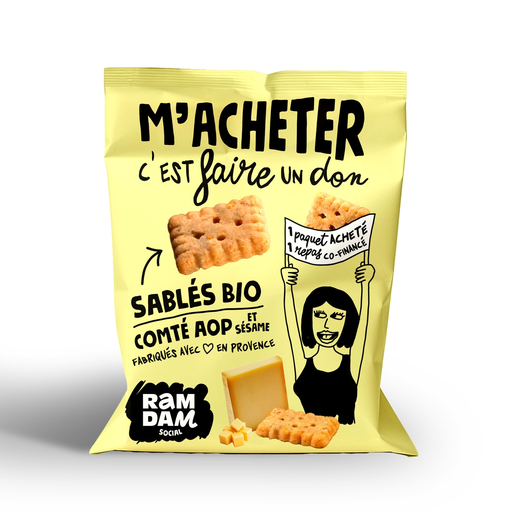 Image unavailable
RAMDAM SOCIAL, savoury Comté and sesame shortbread biscuits, 100 g
Worth a look if you’d like a savoury shortbread recipe with Comté and sesame, rather than a sweet shortbread biscuit with a sugar claim.
The pack is listed as 100 g. Check the nutritional values and ingredients for the exact product before comparing it with another shortbread biscuit; its name doesn’t include a sugar-reduction claim.
View on Joybuy
Frequently asked questions
Is Nutri-Score compulsory on biscuits in France?
No. The French Ministry for the Economy says that displaying Nutri-Score is voluntary. The DGCCRF states that a nutrition declaration is required for most prepacked foods; among other things, this lets you compare values per 100 g.
Does ‘no added sugars’ mean ‘sugar-free’?
No. As Anses points out, sugars may occur naturally in the ingredients of a product labelled ‘no added sugars’. Check the ‘of which sugars’ figure to find out the declared amount in the biscuit you’ve chosen.
How can you compare two shortbread biscuits if one doesn’t display Nutri-Score?
First, compare biscuits of the same type on a per-100 g basis: sugars, saturated fat, salt and energy. Then check their ingredients and allergen information to suit your needs. The DGCCRF explains that giving values per 100 g makes it easier to compare products.


