
Livraison le jour même ou le lendemain

Qualité garantie

Débloquez vos offres de bienvenue: Livraison GRATUITE | Jusqu'à -80 % | 30 jours d'essai gratuits à JoyPlus
Téléchargez l'application
Nothing personalises a home and makes it feel truly yours like frames, photos, or works of art. The problem? The daunting prospect of drilling into your walls, especially if you're renting or love to refresh your decor with the seasons. No-drill picture hanging solutions seem like the perfect answer, but be warned: they are far from being created equal.
The wrong choice can quickly turn into a nightmare: a frame crashing to the floor in the middle of the night, a chunk of paint ripped away, or a sticky residue that's impossible to remove. To avoid these disasters, it's crucial to know the common pitfalls before you buy.
This guide deciphers the jargon of picture hanging strips and gives you everything you need to decorate your walls with complete peace of mind.
To successfully hang a frame without drilling in a reliable way, a few technical details make all the difference. Ignoring them is the fastest way to end up with a damaged wall and a shattered frame.
This is the first thing to check, especially if you want to hang a heavy frame without making a hole.
The effectiveness of a no-drill wall mount depends entirely on its adhesion to the surface. And not all walls are compatible with adhesives.
There are two main families of removable fasteners, each with its own logic and advantages.
Instead of an endless list, we've selected products that meet specific needs. Our goal is to help you find the most relevant solution for your project right away.
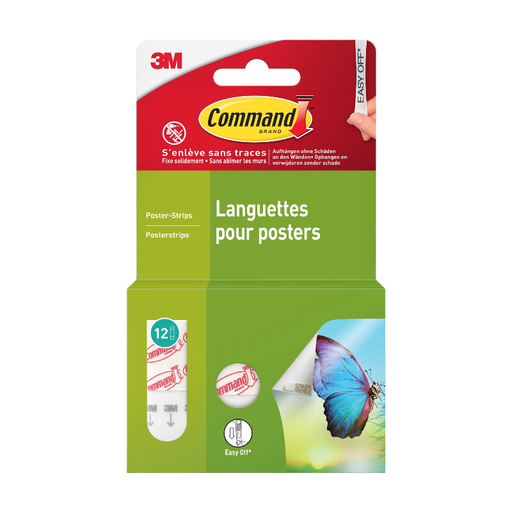
Who is it for? The perfect solution for students, renters, or for decorating a child's room. These strips are calibrated for lightweight paper items (posters, photos, calendars), where an overly strong adhesive would be not only unnecessary but also risky for the wall.
This product avoids the overpowered adhesive trap. Its formula is specifically designed for lightweight items, ensuring a clean removal from smooth surfaces and minimising the risk of peeling your paint.
Ultra-simple and quick application with no tools required. Removal is just as clean: simply pull the tab to leave behind no holes or sticky residue.
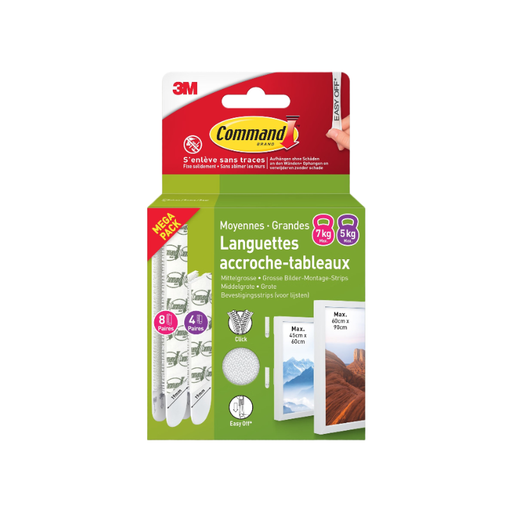
Who is it for? For anyone who wants to hang frames of various sizes—including valuable or heavier pieces—with total peace of mind. This mixed pack offers great versatility for tackling multiple projects, from a small photo frame to a large canvas.
It counters the misjudged weight trap by offering different-sized strips with clearly defined load capacities (up to 5 kg for medium, 7 kg for large), allowing for precise and secure use.
The interlocking hook and loop system is very sturdy and lets you detach the frame from the wall without disturbing the fasteners. Ideal for perfecting the alignment or for easy cleaning.
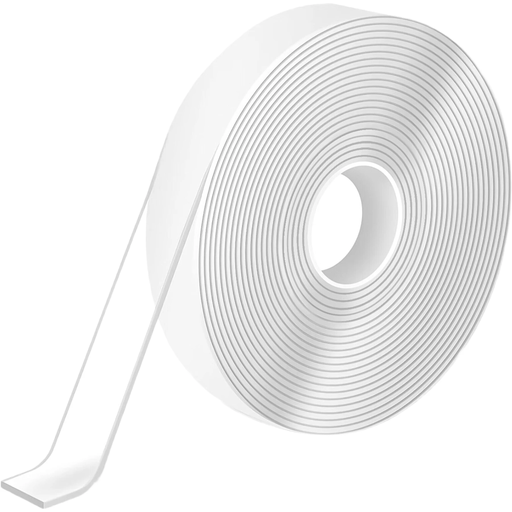
Who is it for? The Swiss Army knife for DIY enthusiasts. This tape does more than just hang frames: it can hold a rug in place, secure a power strip under a desk, or organise kitchen utensils. The fact that it's washable and reusable makes it a smart, budget-friendly ally.
Its acrylic-gel formula combines strong adhesion with non-destructive removal. It comes off without leaving residue on most smooth, non-porous surfaces, setting it apart from permanent and aggressive glues.
Its extreme versatility: you cut it to size, wash it, and reuse it. A single roll can be used for a multitude of projects throughout the house.
Explore our full selection of products that meet our strict selection criteria for performance and safety.
The secret is to follow the instructions to the letter. For Command-style strips, it is imperative to pull the tab slowly and straight down, parallel to the wall. Never pull it towards you: that's the surest way to put stress on the paint and cause it to peel. For gel tapes, a slow twisting motion is often recommended to gently break the adhesive bond.
As a general rule, no. Classic adhesive strips are designed for single use. Once removed, their adhesive power is too weak to be reliable. Trying to "recycle" them with a dab of glue is a very bad idea that is likely to end badly. The exception is certain specific tapes, like gel "nano-tapes," which are designed to be washed, dried, and reused multiple times.
Absolutely not. It's a very bad idea. To adhere properly, an adhesive needs maximum, perfectly stable surface contact. The textures or grain of wallpaper create countless micro-gaps that reduce this contact area and weaken the bond. Even worse, upon removal, the risk of tearing the wallpaper or the textured paint is almost certain. Stick to the smooth, non-porous surfaces recommended by the manufacturer.