
Livraison le jour même ou le lendemain

Qualité garantie

Débloquez vos offres de bienvenue: Livraison GRATUITE | Jusqu'à -80 % | 30 jours d'essai gratuits à JoyPlus
Téléchargez l'application
Hanging a frame, a hook, or a shelf shouldn't mean a permanent hole in your wall. Whether you're a renter worried about your security deposit or a homeowner wanting to keep your walls pristine, the search for a no-drill wall mounting solution is often an uphill battle. Between unrealistic promises of maximum load capacity and adhesives that rip off paint, it's easy to make a mistake.
As a product expert at Joybuy, my mission is to help you make sense of it all. Let's forget the marketing jargon and focus on the criteria that truly matter for a strong, reversible, and suitable mounting solution for your needs. Here's how to avoid the three most common pitfalls.
To make the right choice, ignore the advertising slogans and instead analyse these three technical criteria.
Not all mounting solutions are compatible with all walls. Identifying your wall type is therefore step number one.
This is the heart of the matter. A heavy-duty adhesive hook should be chosen not only based on the object's weight but also its use.
A true no-drill solution must be removable without leaving a single trace.
Rather than an endless list, here are targeted solutions for specific needs, chosen for their reliability.
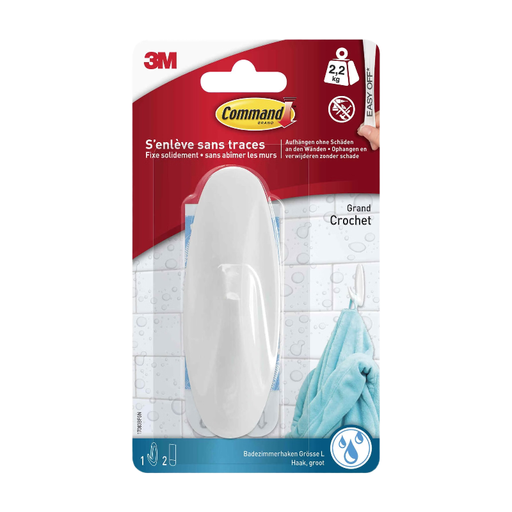
Why we chose it: Ideal for hanging towels, kitchen utensils, or light decor. It's the versatile and reliable solution for those who want maximum flexibility with zero risk to their walls.
Its stretch-release adhesive technology is designed for clean removal, which counteracts the pitfall of removal that damages paint. Its 2.2 kg capacity is realistic for everyday use.
Its water-resistant strips allow it to be used in the kitchen and bathroom, where standard adhesives give up.
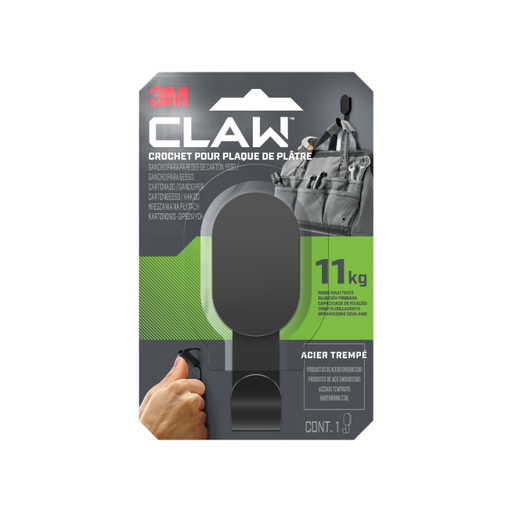
Why we chose it: For those with drywall who want to hang heavy items (frames, mirrors, coat racks) without finding a stud or taking out the drill. A robust, tool-free solution.
It bypasses the problem of adhesives by using steel claws that anchor securely into the drywall. Its load capacity is reliable because it's specifically tested for this material.
Installation in seconds with just the push of your thumbs. Upon removal, it leaves only minimal marks that are easy to patch.
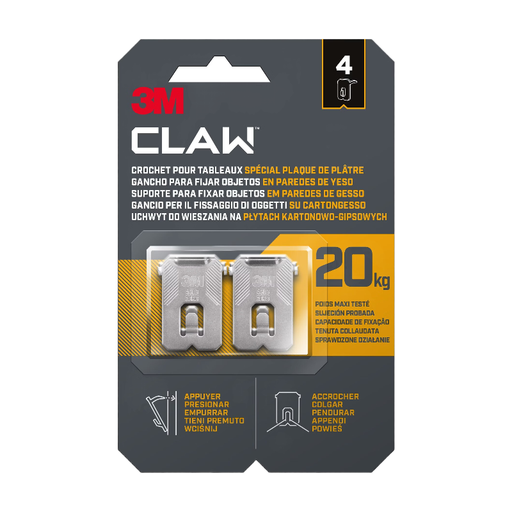
Why we chose it: The heavy-duty solution for ambitious projects on drywall. Allows you to hang very large mirrors, gallery walls, or massive decorative objects, all without a drill.
It solves the problem of overstated load capacity by offering a technical solution designed for a specific mission: supporting a very heavy weight on drywall, where any adhesive would be ineffective and dangerous.
A tool-free load capacity of 20 kg, a performance once reserved for fixings that require drilling and special anchors.
Yes, but it all depends on the technology and the wall type. Adhesive hooks are generally reliable for light to medium loads (up to about 3 kg). For heavier objects on drywall (plasterboard), specialised systems like the 3M CLAW hanger use steel claws to anchor into the wall, supporting up to 20 kg. The golden rule: always check the product's compatibility with your wall and strictly adhere to the maximum load capacity indicated.
For stretch-release adhesives (like the Command hook), the secret is to pull the tab very slowly, straight down, and parallel to the wall. Never pull the tab towards you, as this can rip the paint off. This method allows the adhesive to release cleanly. For other adhesives, gently heating the area with a hairdryer can soften the glue, but the risk of damaging the surface remains higher.
It is strongly discouraged for most adhesive solutions. The adhesive is likely to stick better to the paper than to the wall, causing a tear upon removal. Claw systems for drywall may work, but they will puncture the wallpaper. It is therefore crucial to carefully read the manufacturer's instructions on compatible surfaces before you start.