
Livraison le jour même ou le lendemain

Qualité garantie

Débloquez vos offres de bienvenue: Livraison GRATUITE | Jusqu'à -80 % | 30 jours d'essai gratuits à JoyPlus
Téléchargez l'application
You've found the perfect mirror or a large frame that will transform your living room, but one question holds you back: how do you hang it on this drywall without pulling out the drill and risking disaster? Whether you're a renter or simply not a DIY pro, the idea of a drill-free hanger for heavy pictures is certainly appealing.
But here's the catch: the market is flooded with solutions that promise the world, and it's easy to fall for the most common traps. Before you make your choice, let's review the frequent mistakes that all too often end with a frame on the floor and a wall to repair.
To make the right choice, it's better to rely on concrete technical criteria than on marketing promises. Here are the points to check before you buy.
The weight listed on the packaging is just a starting point. It absolutely must be weighed against the nature of your wall. For a plasterboard partition (like drywall), it is imperative to choose a drill-free wall mount explicitly designed for this material.
Not all "drill-free" solutions are created equal—far from it. The hanging mechanism is critical for the safety of your installation.
The goal is simple: leave no trace. For adhesive strips, the secret is to pull the tab straight down and flat against the wall to avoid tearing the paint. As for claw hooks, they leave only tiny holes, like pinpricks, that can be hidden in a flash with a dab of spackle.
Rather than an endless list, we've selected specific solutions for specific needs to guide you to the ideal product for your project.
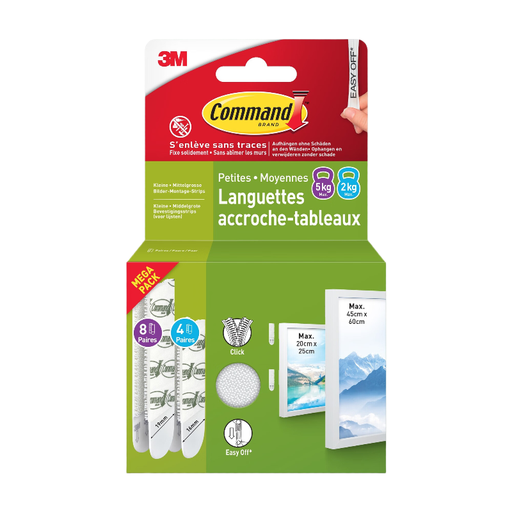
Why we chose it: Ideal for creating a gallery wall with photos, posters, or lightweight canvases. It's the dream solution for renters who want to avoid any holes and love to change their decor regularly.
It bypasses the "hidden damage" trap thanks to its stretch-release adhesive technology, which allows for a clean removal, provided you follow the instructions and respect the weight limit.
No holes, no marks, no sticky residue. It's completely reversible on smooth, compatible surfaces.
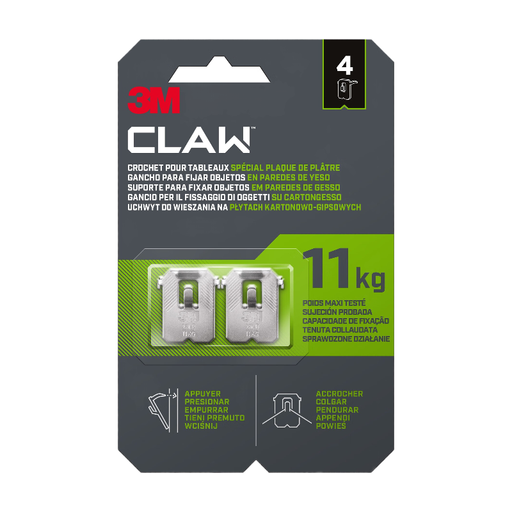
Why we chose it: For hanging an entryway mirror, a wall clock, or a large frame on a drywall wall with complete peace of mind.
It directly addresses the "wall incompatibility" trap by being specifically designed to anchor into drywall, where adhesives fall short.
Installs in seconds with just a push of your thumbs. No tools, no screws, for a reliable mechanical hold up to 11 kg (25 lbs).
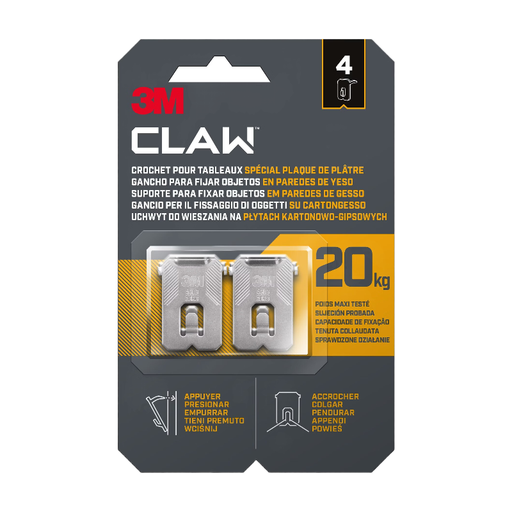
Why we chose it: For the most critical mission: hanging a large mirror, a valuable piece of art, or a decorative headboard. For when peace of mind is priceless.
It tackles the "overstated weight capacity" trap head-on by offering a robust mechanical solution, with a maximum load of 20 kg (45 lbs) that is tested and proven for drywall.
A high load capacity with a tool-free installation. It's a serious alternative to traditional anchors for heavy objects on drywall.
We have selected a full range of products for you that meet our criteria for quality and safety.
Yes, provided you choose the right system. For a heavy mirror hook, it is imperative to use mechanical claw systems like the 3M CLAW, which are designed for drywall and can support up to 20?kg (45?lbs). Purely adhesive solutions should be avoided for such a weight. Always remember to weigh your mirror and check the hook's maximum allowed load.
For adhesive strips, the secret is to pull the tab straight down, flat against the wall, very slowly and smoothly. Never pull it out towards you. As for claw hooks, their removal leaves only tiny, often invisible pinprick holes. They can be filled in a second with a dab of spackle for a flawless finish.
Absolutely not, and this is a crucial point of caution. Claw hooks are designed exclusively for hollow walls like drywall. They will be ineffective on concrete, brick, or wood. Adhesive hangers, on the other hand, require a smooth, clean, and non-porous surface. They are not recommended for wallpaper (especially vinyl or textured types) or freshly painted walls. Always read the manufacturer's recommendations carefully.