People who want to control the amount of salt themselves
When making a sauce for several guests, they prefer to start with a tomato base with no added salt and choose the herbs and seasoning themselves.


If you mainly want to control the salt in your sauce for an Italian evening, choose a tomato base labelled ‘no added salt’, then compare the ‘salt’ figure in the nutritional information. The 200 g Jardin BiO étic tomato passata listed by Auchan contains 0.03 g of salt per 100 g. A ready-made sauce takes less preparation, but it is already seasoned; check its salt content before choosing this option.
When making a sauce for several guests, they prefer to start with a tomato base with no added salt and choose the herbs and seasoning themselves.
They are considering a ready-made sauce to cut down on preparation, while still comparing the ‘salt’ value per 100 g before buying.
They look for a product labelled no added salt and check this claim against the ingredients list and nutritional information for the pack they are buying.
For an Italian evening, first decide whether you want to season the sauce yourself or save time with a ready-made option. Then compare the salt per 100 g and choose a pack size that suits the number of guests.
Choose this if: you want to add your own herbs and decide how to season the sauce.
Bear in mind: you will still need to cook the base to make the sauce you want.
Choose this if: you want to serve pasta with less preparation.
Bear in mind: the recipe is already seasoned, and its salt content depends on the product you choose.
| Criterion | What to check | Who is it for? |
|---|---|---|
| Control over salt | The ‘no added salt’ claim, the ingredients list and the ‘salt’ value per 100 g. | I want to decide how much salt to add to the sauce I serve my guests. Around 50% of consumers prioritise this level of control. |
| Preparation time | Whether the product is ready to use, then its ‘salt’ value per 100 g. | When dinner is approaching, I prefer a sauce that takes only a few steps to prepare, without skipping a check of its ingredients. Speed comes first for around 30% of consumers. |
| Pack size and leftovers | How much you need, the pack sizes available and the storage instructions after opening. | I want to serve enough sauce without opening more than I can use afterwards. This is the main priority for around 20% of consumers. |
These claims do not tell you the salt content. For example, Joybuy’s listing for Panzani Tomacouli 700 g states that it contains 0.45 g of salt per 100 g.
Compare the ‘salt’ figure per 100 g for the products you are considering, even if another claim on the packaging catches your eye.
Mutti’s Passata Zéro Résidu de Pesticides is described on the brand’s website as having ‘no added salt’, while an Auchan listing for the 3 × 200 g pack includes salt in the ingredients.
If the information conflicts, check the ingredients list and nutritional information on the pack you are buying before choosing it on this basis.
An online listing does not guarantee that the product will be available in the shop or for your chosen delivery slot for dinner.
Check availability when you shop, and identify another tomato base that meets your criteria if necessary.
Storage instructions after opening vary by product: the listing for the 200 g Jardin BiO étic passata says to use it within three days, while the Panzani Tomacouli 700 g listing gives five to seven days.
Estimate how much you will need for your guests, then check the instructions on the product you buy before opening several packs.
Its tomato passata can be used as the base for a pasta sauce seasoned at home.
The range includes cooked sauces and tomato bases such as Tomacouli.
Barilla offers Basilico tomato sauce, among other products, to serve with pasta.
Mutti tomato passatas can provide a base for a sauce you prepare yourself.
This range includes a cooked Provençal sauce, which is different from a simple tomato base.
This comparison lists three products by their stated salt content per 100 g, from lowest to highest. It also distinguishes bases that need cooking from a sauce that is already prepared; the order is not a taste ranking.
| Rank | Product | Details | Reason for comparison | Retailer |
|---|---|---|---|---|
| 1 | Jardin BiO étic organic tomato passata, no added salt, 200 g | 0.03 g of salt per 100 g; base to cook. | According to Auchan, this passata is labelled ‘no added salt’. You will still need to season it for pasta. | Auchan |
| 2 | Panzani Tomacouli 700 g | 0.45 g of salt per 100 g; 99.4% tomato purée and pulp. | Joybuy’s listing gives a salt value you can compare with a no-added-salt base before choosing this product for your sauce. | Joybuy |
| 3 | Nos Régions ont du Talent Provençal sauce with fresh Provence tomatoes, 400 g | 1.1 g of salt per 100 g; cooked sauce. | According to E.Leclerc, this ready-to-use sauce has a higher salt content than the two tomato bases in this table. | E.Leclerc |
These products can be used to make a tomato sauce for pasta. They include purées to season yourself and a Tomacouli base. If salt is your main consideration, compare the variant and the information on each pack.
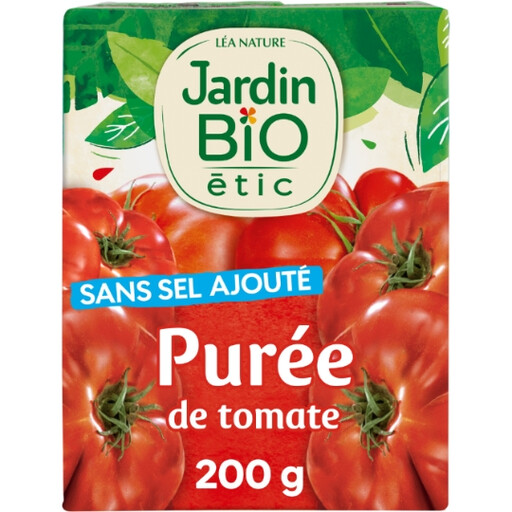 Image unavailable
This purée is a good choice if you want to season your pasta sauce yourself.
The product is described as having no added salt; also check the ‘salt’ value on the pack you buy. It is not a ready-made sauce.
 Image unavailable
This 500 g pack of tomato purée can be used as the base for a sauce that you season yourself.
If the ‘no added salt’ claim is important to your choice, check it on the packaging for this size, along with the ingredients list and ‘salt’ value.
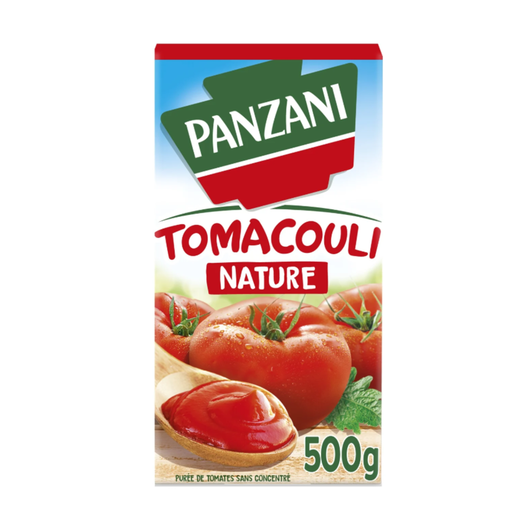 Image unavailable
This purée is a base to prepare if you want to choose the herbs for your pasta sauce.
If salt is your main consideration, compare the ‘salt’ value and ingredients list for this variant with those of the other bases you are considering.
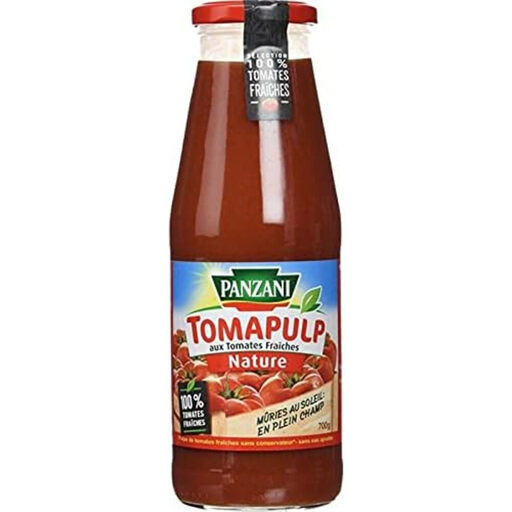 Image unavailable
This 700 g pack can be used to make tomato sauce for pasta to serve several guests.
Joybuy’s listing gives a salt content of 0.45 g per 100 g. If controlling the salt yourself is your main priority, compare this figure with that of a base labelled ‘no added salt’.
No: this claim does not mean the ‘salt’ value is zero. The 200 g Jardin BiO étic passata listed by Auchan contains 0.03 g of salt per 100 g, so check the nutritional information too.
You can use basil, garlic, onion, herbs or spices, depending on the recipe you have in mind. Manger Bouger recommends herbs and spices as a way to vary flavours without adding too much salt to dishes.
No: if salt is your main criterion, compare the ‘salt’ figure per 100 g directly across the sauces you are considering. Nutri-Score does not replace checking this value for each product.
Follow the instructions on the packaging for the passata in question. For the 200 g Jardin BiO étic passata, the product listing says to keep it chilled and use it within three days of opening.