People who count carbohydrates
You want to factor the carbohydrates in a snack into your meal plan. Diabetes UK explains that, for some people who use insulin, carbohydrate counting helps them apply their individual insulin-to-carbohydrate ratio.


If you live with diabetes and want to choose a snack made with nuts, compare plain nuts and snack mixes on a like-for-like basis: protein, carbohydrates and sugars per 100 g, then the amount you plan to eat. A mix containing dried fruit or coated almonds cannot be compared with plain almonds on protein content alone. If you count carbohydrates to adjust rapid-acting insulin, follow the method agreed with your healthcare team.
You want to factor the carbohydrates in a snack into your meal plan. Diabetes UK explains that, for some people who use insulin, carbohydrate counting helps them apply their individual insulin-to-carbohydrate ratio.
You’re comparing protein content for a snack around exercise, while also keeping an eye on carbohydrates, sugars and portion size. The protein figure alone isn’t enough to tell you whether a pack fits your meal plan.
The term ‘dried fruit’ can refer to almonds on their own or a mix containing sultanas. Check the ingredients list to see what’s actually in the pack.
Start by identifying the type of product, then compare the values per 100 g with the amount you plan to eat. The needs below relate to choosing a snack and are not a substitute for an individual meal plan.
| Criteria | What to check | Who is it for? |
|---|---|---|
| Carbohydrates consumed | Carbohydrates and sugars per 100 g, then for the amount you plan to eat; ingredients in mixes. | If I count the carbohydrates in my snack, I want to relate the amount I actually eat to my personal plan. Around 36% of consumers would make this their priority. |
| Protein | Protein per 100 g across comparable products, followed by carbohydrates and added ingredients. | For a snack around exercise, I’m looking for something whose protein content I can assess without relying on that figure alone. Around 29% of consumers would put protein content first. |
| Salt and recipe | Salt per 100 g and whether the ingredients include oil, honey, sugar or syrup. | If I want a snack rather than an aperitif-style or coated product, I want to know what has been added to the nuts. This would be the priority for around 21% of consumers. |
| Allergens and portion size | Allergens, ‘may contain’ warnings and pack size. | If I have an allergy, I need to check the specific pack. I also want to be able to plan how much of my snack I’ll eat. Around 14% of consumers would make these checks their main concern. |
The Naturalia mix featured by Monoprix Courses contains 50% sultanas and lists 39 g of carbohydrates per 100 g. These figures describe the mix, not almonds on their own.
Check the first ingredients and their proportions, where these are shown on the packaging. If you’re mainly looking for nuts, make sure they make up most of the product.
According to the Joybuy product page, BT21 Honey Butter Almond contains 19.98 g of protein per 100 g, but also 40 g of carbohydrates, including 16.7 g of sugars. These are coated almonds, not plain almonds.
Compare protein, carbohydrates, sugars and the ingredients list on the same basis before choosing a snack.
E.Leclerc’s product pages for Bio Village and TOKAPI cashews list 1.2 g and 0.8 g of salt per 100 g respectively. It’s worth checking a roasted or seasoned recipe separately from a plain version.
Compare the ‘salt’ line and ingredients list for each pack. The type of nut alone doesn’t tell you what else is in the recipe.
The L’Atelier des Fruits Secs almond listing on Monoprix Courses warns that the product may contain traces of other allergens, including peanuts and sesame.
Check the ingredients and ‘may contain’ warnings on the pack you buy, especially if the recipe or pack size has changed.
The Carrefour Bio product listing for blanched almonds names organic almonds as its ingredient.
Auchan’s almond range includes a roasted option with no added salt.
E.Leclerc offers nuts in a range of recipes, including almonds with no added salt and salted cashews.
Lidl’s Alesto range includes plain almonds, as well as other dried fruit and snacks for sharing.
Aldi offers a 500 g pack of blanched almonds and TRADER JOE'S® roasted almonds with no added salt.
Monoprix Courses lists, among other products, blanched almonds on their own and a Naturalia mix of dried fruit and nuts.
These two packs suit different needs: unsalted cashews on the one hand, and honey and butter-coated almonds on the other. Compare their recipes before choosing a snack to fit your meal plan.
 Image unavailable
Worth considering if you’re looking for unsalted cashews for a snack. The pack contains 130 g; check its ingredients list, allergens and nutrition information for the amount you plan to eat.
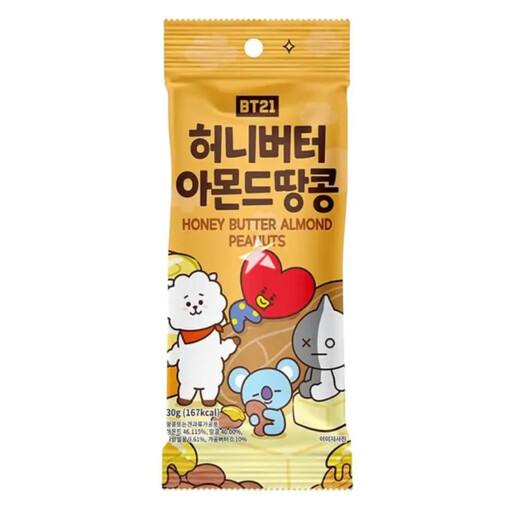 Image unavailable
Consider this if you’re specifically looking for coated almonds rather than plain almonds. The Joybuy listing gives 19.98 g of protein and 40 g of carbohydrates per 100 g, including 16.7 g of sugars. Compare these figures with the amount you’ll eat and check the allergens on the pack.
Start by comparing the type of nut you want to eat, rather than focusing on protein alone. Check the carbohydrates, sugars, ingredients and portion size too. Diabetes UK reminds people that the total amount of carbohydrates eaten affects blood glucose after a meal; using insulin alongside carbohydrate counting is an individual decision.
No: its ingredients and nutritional values relate to the whole mix. The Naturalia mix featured by Monoprix Courses contains 50% sultanas and lists 39 g of carbohydrates per 100 g. Check the proportion of dried fruit and work out the carbohydrates based on the amount you plan to eat.
Not necessarily. Compare their recipe with a plain option or one with no added salt, depending on your dietary criteria. E.Leclerc’s Bio Village and TOKAPI product listings give 1.2 g and 0.8 g of salt per 100 g respectively; also check the carbohydrates and ingredients in the product you choose.
To compare products, check the ingredients list, nutrition information, net weight and allergens. The DGCCRF sets out the food labelling rules that apply in France; read the information on the specific pack you’re buying.
Check the ingredients and ‘may contain’ warnings every time you buy a product, even if you already know the brand. The Monoprix Courses listing for L'Atelier des Fruits Secs almonds mentions possible traces of peanuts, other nuts and sesame, among other allergens. Follow your individual medical advice if you need help interpreting a ‘may contain’ warning in your situation.