
Livraison le jour même ou le lendemain

Qualité garantie

Débloquez vos offres de bienvenue: Livraison GRATUITE | Jusqu'à -80 % | 30 jours d'essai gratuits à JoyPlus
Téléchargez l'application
Multi-purpose bicarbonate of soda is popular for its versatility: cooking, cleaning, deodorising and laundry care. However, not every product is suitable for the same uses. A sachet intended for household cleaning should not be used in cooking, while a ready-to-use cleaner cannot be compared directly with a powder that needs to be diluted.
Before buying, take the time to check the ingredients, format and safety instructions. This precaution helps you avoid unsuitable purchases and choose a solution that genuinely fits your household’s routines.
The simple mention of “bicarbonate” is not enough. Food-grade bicarbonate of soda is intended for recipes, provided you follow the labelling. Household bicarbonate of soda can be used for cleaning, degreasing or neutralising odours, but it is not automatically suitable for consumption.
For cooking, check for a clear indication that the product is suitable for food use, along with the ingredients list and the information shown on the packaging. For cleaning, choose a product whose label specifies compatible surfaces and usage precautions.
Bicarbonate can act as a natural cleaning powder, complement laundry detergent or neutralise certain odours. However, it does not always replace a detergent designed for a specific type of stain. A mildly abrasive paste may be effective on some surfaces, but it can also scratch delicate materials if you scrub too hard.
Another common confusion: washing soda crystals are not bicarbonate of soda. Generally more alkaline, they are better suited to heavy-duty degreasing, unblocking drains or cleaning stubborn dirt. They therefore require different precautions.
A natural origin or bicarbonate-based formula does not mean you can skip the warnings. Some ready-to-use products also contain surfactants, fragrances or enzymes. The format, dosage and compatible surfaces are just as important as the word displayed on the label.
Start by defining what you need:
Read the ingredients list carefully. A product presented as bicarbonate should in particular be checked against its packaging: product information may vary depending on the packaging format.
A small 75 g bottle is suitable for occasional use or for a home where the product is rarely needed. A 250 to 500 g format offers more flexibility for cleaning, laundry and cooking, provided it is stored in a dry place.
Liquid products are convenient for immediate use, but their quantity should be considered in relation to the number of washes or frequency of use. To compare prices, look at the cost per wash, per litre or per use rather than the displayed price alone.
Never mix several cleaning products unless clear instructions specifically permit it. Wear gloves if recommended on the label, avoid contact with the eyes and keep products out of reach of children.
Always test a product on a small, inconspicuous area when using it on a delicate surface. For products intended for ovens, floors or food-contact surfaces, follow the rinsing instructions and check the list of excluded materials. A formula without caustic soda is not necessarily suitable for every surface.
The products below are intended for different uses. The features mentioned come from the product listings: always check the packaging you receive for the latest regulatory information and instructions.
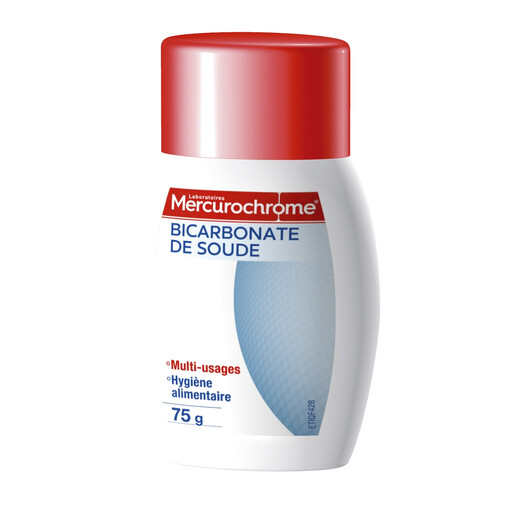
Why this choice suits this profile : Its 75 g bottle lets you try out several uses without taking up too much cupboard space. The product listing states that it can be used for hygiene and food purposes, subject to following the labelling.
The two stated uses help distinguish a food-grade product from a powder intended exclusively for household cleaning. It is still essential to check the packaging before each use.
Compact 75 g format ; made in France, as stated ; several uses described in the listing.
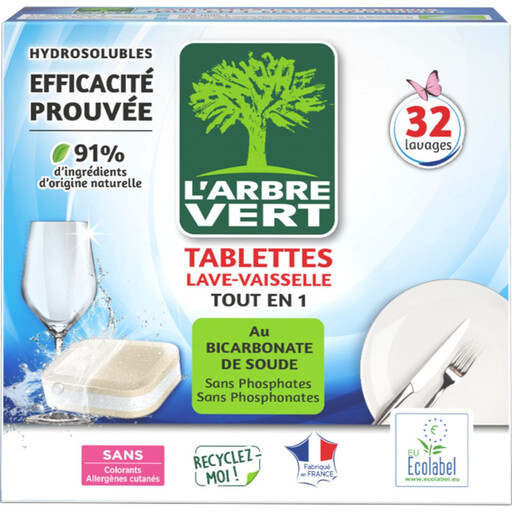
Why this choice suits this profile : Users looking for pre-dosed dishwasher detergent get 32 tablets, with no added fragrance according to the product listing.
The tablet format helps prevent dosing errors. However, the presence of bicarbonate does not mean that these tablets can replace food-grade bicarbonate of soda.
32 washes stated ; bicarbonate-based formula ; refillable and recyclable packaging according to the product listing.
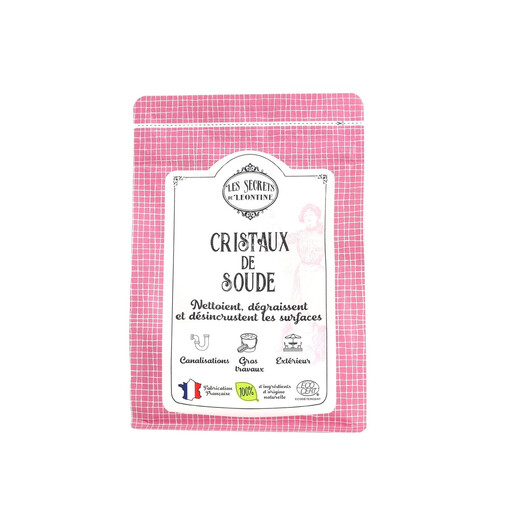
Why this choice suits this profile : This 500 g format is intended for households that regularly degrease, deep-clean or unblock their drains.
It is clearly presented as sodium carbonate rather than food-grade bicarbonate. The warnings require gloves, careful handling and suitable storage.
500 g ; ingredients stated to be of 100% natural origin ; Ecocert certification indicated in the listing.
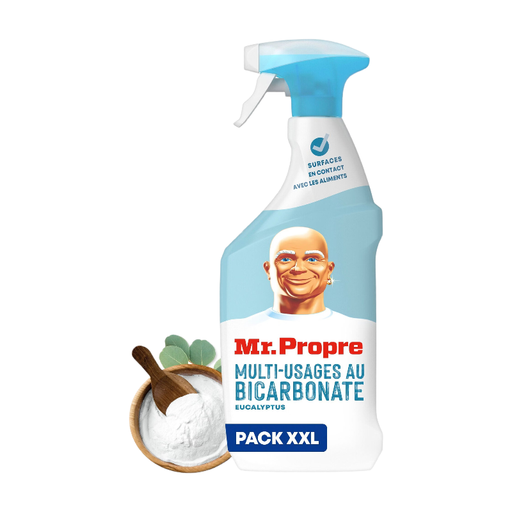
Why this choice suits this profile : The 800 ml spray bottle fits easily into your cleaning routine for sinks, hobs, shower screens and washable floors.
This product is formulated for cleaning surfaces, so you do not need to use a food-grade powder for household cleaning. Food-contact surfaces must be rinsed.
800 ml spray bottle ; suitable for use on several hard surfaces ; eucalyptus fragrance mentioned in the listing.
We have brought together a complete, real-time updated selection of products that meet these strict criteria and European safety requirements.
Yes, it may be suitable for some household uses, but that does not mean it replaces every cleaner. Check that it is compatible with the surface and start by testing the product on an inconspicuous area. For intensive cleaning, a household product or soda crystals with suitable instructions may sometimes be more appropriate.
The powder should be stored in a cool, dry and sealed place. For food use, check the date shown on the packaging. Damp powder is harder to measure and loses some of its practical usefulness. Close the container carefully after each use.
The mixture creates a fizzy reaction, but it quickly neutralises some of both ingredients. It is better to use them separately, depending on the result you are looking for. Never combine them with bleach or other cleaning products.