
Livraison le jour même ou le lendemain

Qualité garantie

Débloquez vos offres de bienvenue: Livraison GRATUITE | Jusqu'à -80 % | 30 jours d'essai gratuits à JoyPlus
Téléchargez l'application
Managing meals for a large family or navigating a hectic daily schedule can quickly turn the kitchen into a race against the clock. The electric multi-cooker emerges as the ideal solution to simplify meal prep. The problem? With an overwhelming number of options, it's easy to get lost. Too many appliances promise the world, only to end up gathering dust in a cupboard.
This guide is here to help you see things more clearly. Together, we'll break down the common pitfalls and the essential criteria for choosing an appliance that will genuinely meet your needs, far from the siren calls of marketing.
Before you even start comparing features, let's review the classic mistakes that turn a promising purchase into a regret.
The "Theoretical" Capacity Trap: Don't trust the gross capacity advertised! A 6-litre appliance can't actually cook 6 litres of soup. The usable capacity is typically 20% to 30% lower to allow space for pressure cooking or to prevent overflows. For a family of four, a 6-litre pot is the bare minimum. Aim for 7.5 litres or more to be comfortable, especially for batch cooking or if you regularly host guests.
The Overload of Useless Programmes: Don't be impressed by a control panel boasting 25 programmes: how many will you actually use? A good multi-cooker should first and foremost excel at its core functions: pressure cooking, slow cooking, searing, steaming, and sometimes specific modes like yogurt maker or rice cooker. Be wary of models that sacrifice the quality of these fundamentals for the sake of gimmicky features.
The Cleaning Complexity: An appliance meant to save you time shouldn't become a time-waster. A non-removable pot, hard-to-remove seals, or parts that aren't dishwasher-safe can quickly turn this culinary helper into a chore.
With these pitfalls in mind, here are the three technical criteria that will truly make a difference in your appliance's efficiency and lifespan.
Power, measured in watts (W), directly affects the heat-up speed and cooking efficiency. A good electric pressure cooker generally has a power rating of at least 1000W to ensure fast and even pressure cooking. Also, make sure the essential cooking modes match your habits:
The inner pot is the heart of your multi-cooker. Two points need inspection:
A multi-cooker that uses pressure cooking must be equipped with multiple safety systems. Check that the model you're considering has at least:
Every household has different needs. To help you find the perfect fit, here are a few models that caught our eye, tailored to typical user profiles.
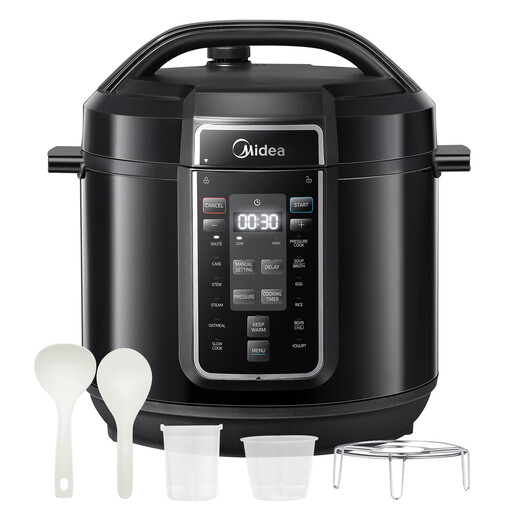
Why it's a match: With its very large 7.6-litre capacity, this model is designed for families of 4 or more, weekend *batch cooking*, or holiday meals. Its 9-in-1 multi-cooker functions replace several appliances, freeing up precious counter space.
It directly addresses the common issue of insufficient capacity with its generous usable volume. Its 12 programmes are focused on practical uses (meat, soup, rice, yogurt) rather than gimmicky features.
The combination of a large capacity and efficient pressure cooking significantly reduces time spent in the kitchen. The 24-hour delay start function is a real asset for busy days.
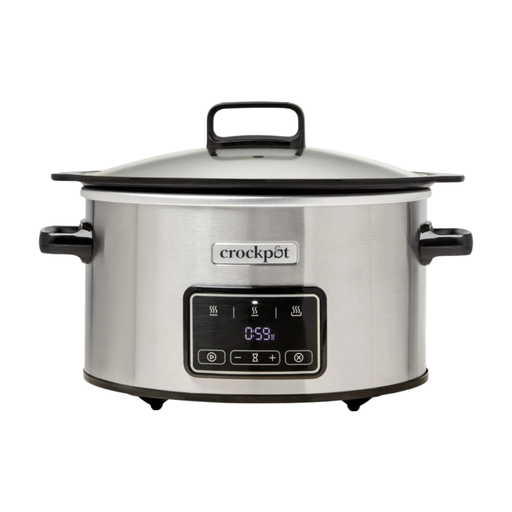
Why it's a match: For those who prioritise the flavour of slow-cooked meals over speed. This appliance focuses on one thing and does it well: slow cooking at low temperatures. It's ideal for stews, curries, or pulled meats for a household of 3 to 4 people.
It doesn't overpromise. This is a dedicated slow cooker, not a complex multi-function device. Its simplicity is its greatest strength, helping you avoid the trap of superfluous programmes you'll never use.
Its ceramic pot is removable and can be used on an induction or gas hob to sear ingredients before starting the slow cook. It's incredibly simple to use, with just 3 heat settings.
We have selected dozens of models for you that meet our quality criteria and European safety standards.
An electric pressure cooker is primarily designed for pressure cooking, which significantly speeds up preparation. A multi-cooker is a more generic term that encompasses multiple cooking modes. Today, most multi-cookers include a pressure cooker function, but they can also slow cook, steam, sauté, and more. Therefore, a multi-cooker is essentially an electric pressure cooker with a much broader range of functions.
Contrary to popular belief, a multi-cooker is often more energy-efficient than a hob or an oven. Thanks to its sealed and well-insulated pot, heat loss is minimal. Most importantly, pressure cooking drastically reduces cooking times. The result: lower electricity consumption and a smaller bill.
Ease of cleaning should be a key purchasing criterion. Opt for a model where the pot, inner lid, and sealing ring are removable and easy to handle. Most pots (both non-stick and stainless steel) are dishwasher-safe. For the sealing ring, hand washing is often recommended to preserve its elasticity. Finally, remember to dry all parts thoroughly before reassembling the appliance to prevent bad odours.