
Livraison le jour même ou le lendemain

Qualité garantie

Débloquez vos offres de bienvenue: Livraison GRATUITE | Jusqu'à -80 % | 30 jours d'essai gratuits à JoyPlus
Téléchargez l'application
Replacing an entire set of cookware with a single appliance? It's an appealing promise. A smart multicooker offers varied, fast, and (almost) effortless meals. But with an overwhelming number of options and vague marketing claims, it's easy to end up with a gadget that doesn't live up to the hype.
As the Head of Product Recommendations at Joybuy, I'm here to help you navigate the choices. Let's break down the common pitfalls to avoid and the essential criteria for making the right decision.
The market is flooded with models making tempting promises. To prevent the dream from turning into a nightmare, here are three common issues to be aware of before you check out.
To ensure you make the right choice, focus on the features that truly matter and define the performance and convenience of an all-in-one cooker.
Evaluate your actual needs. For a single person or a couple, a 2 to 4-litre pot is more than enough. For a family of four or for batch cooking, aim for a usable capacity of at least 5 litres, which often corresponds to a 7-litre (or larger) gross capacity model. The inner pot must be removable. Ceramic or stainless steel coatings with a thick base are durable and healthy choices that ensure excellent heat distribution.
A good multicooker should excel at several key functions, going far beyond a simple rice cooker. Check for the presence and performance of the following modes:
The interface must be intuitive, period. A programmable multicooker with a delayed start is a major asset for busy schedules: prep your ingredients in the morning, and a hot meal will be waiting for you when you get home. On the safety front, check for features like a locking lid, overheat protection, and a reliable, easy-to-use pressure release valve. Dishwasher-safe compatibility for the pot and removable accessories is practically standard today, but it remains a key convenience factor that shouldn't be overlooked.
Here are a few models that cater to distinct user profiles, based on the performance and convenience criteria we've just discussed.

Why it stands out: With its extra-large 7.6 L capacity, this Midea multicooker is designed for large gatherings and preparing meals in advance. It easily replaces several bulky appliances.
It avoids the capacity trap by offering a substantial usable volume, perfect for a whole chicken or large quantities. Its 9 functions are truly distinct (pressure, slow cook, yogurt, etc.) and not just marketing variations.
12 preset programs to simplify everyday dishes (meat, soup, rice). Up to 24h delayed start and an automatic keep-warm function provide maximum flexibility.
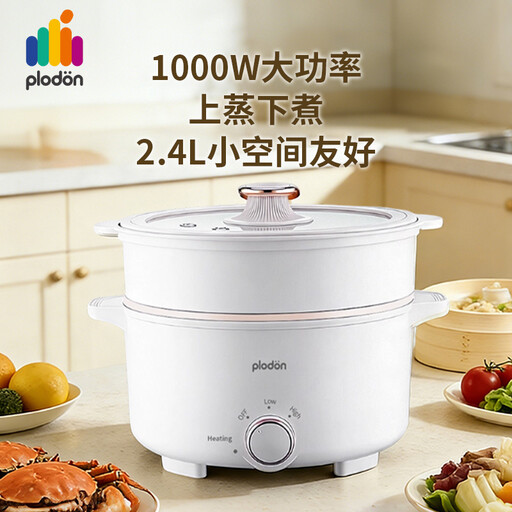
Why it stands out: Perfect for students, couples, or kitchens where every square inch counts. Its compact size and versatility for simple meals make it a great everyday companion.
It doesn't try to oversell dozens of functions. It focuses on the essentials: boiling, simmering, and steaming, with a 2.4 L capacity perfectly suited for 1 or 2 people, avoiding wasted space and energy.
Dual power levels (low/high) for controlled cooking. Removable steam rack to cook two items at once without mixing flavours.
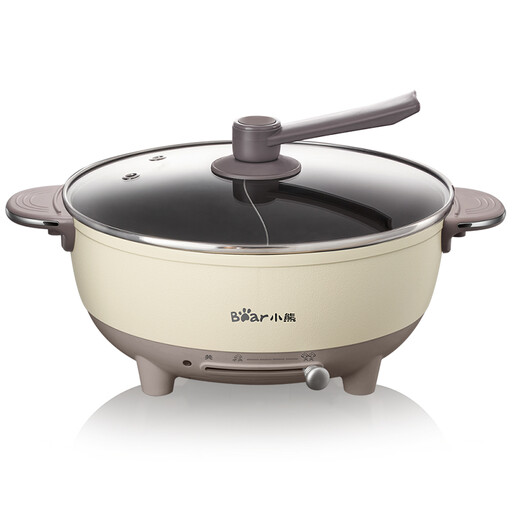
Why it stands out: Perfect for Chinese hot pot and other shared meals. Its large 6 L capacity and unique design ensure there's something for everyone.
Instead of piling on programs, it specializes in and perfects a highly sought-after function. Its divided pot is a genuine innovation, not just a marketing gimmick.
Dual-compartment pot to offer two different broths (e.g., one spicy and one mild) at the same time. Precise temperature control (0-210°C) for perfect cooking management.
We have curated a full selection of products that meet our strict selection criteria and current safety standards.
A smart multicooker focuses on cooking: it simmers, pressure cooks, steams, etc. An all-in-one food processor adds preparation functions: it can chop, mix, knead, or blend thanks to blades or rotating attachments. Simply put, the multicooker is an autonomous cooking specialist, while the food processor is a versatile kitchen assistant that is often more expensive.
Generally, no. By cooking faster (especially in pressure mode) and in a sealed, insulated container, a multicooker is often more energy-efficient than a conventional oven or stovetop for similar dishes. The wattage affects the heating speed, but not necessarily the total energy consumption for a given recipe.
Yes, modern models are packed with safety features. Unlike old stovetop pressure cookers, an electric pressure cooker manages pressure electronically. It has sensors, a locking system that prevents the lid from opening under pressure, and multiple safety valves to release excess steam if needed. It remains crucial to always respect the maximum fill lines and never force the lid open.