To get a meal cooking and then turn your attention to something else, choose an appliance based on the dishes you make: a programmable multi-cooker for rice, soup, steaming and slow-cooked meals; an electric pressure cooker if your recipes also use pressure cooking; or a rice cooker or slow cooker if you mainly use one type of cooking. Check that your chosen model has the right programme, adjustable cooking time and keep-warm function, then compare its capacity and footprint with the space in your kitchen. Delay start needs particular care when it comes to ingredients and recipe instructions.
Who are these appliances for?
Start by thinking about the kind of meals you want to leave cooking without actively keeping an eye on them.
Households that enjoy a varied menu
If you alternate between rice, soups, steamed vegetables and slow-cooked dishes, consider a programmable multi-cooker. UFC-Que Choisir describes appliances that take care of cooking once the programme has been set correctly; check that the available modes suit your recipes.
Households that use pressure cooking
An electric multi-cooker with pressure cooking is worth considering if your recipes also call for pressure cooking, sautéing or slow cooking. Check these functions on the specific model rather than assuming every appliance has them all.
Smaller households with regular cooking habits
If you mainly make rice, grains or slow-cooked dishes, a dedicated appliance may cover most of your needs. Compare its capacity and footprint with the equipment you already have in your kitchen.
What should you check before choosing?
Start with the recipes you make regularly, then check the controls that let you set the cooking and plan when to serve.
Programmable multi-cooker
Choose this if: you regularly cook several types of dish in the same pot.
Bear in mind: having lots of programmes doesn’t mean you can overlook how easy the controls are to use or the appliance is to clean.
Electric multi-function pressure cooker
Choose this if: pressure cooking features in your recipes, alongside slow cooking or steaming.
Bear in mind: if you cook almost exclusively rice or slow-cooked dishes, you may rarely use this extra function.
Rice cooker or slow cooker
Choose this if: your meals mainly feature rice and grains, or slow cooking.
Bear in mind: check the available modes separately: a rice cooker and a slow cooker aren’t designed for the same recipes.
| Priority | What to check | My needs |
|---|
| Programmable cooking |
Look for modes suited to your dishes, an adjustable cooking time and a keep-warm function that starts when cooking ends. For delay start, follow the instructions in the manual and recipe. |
I want to start cooking, get on with something else and serve the meal without having to stay by the appliance. |
| Capacity |
Compare the stated capacity in litres, the model’s serving-size guidance and the quantities required by your recipes. Also measure the space available. |
My meals need to fit in the pot, without choosing a bulky appliance for the amounts I usually cook. |
| Useful modes |
Compare the rice, steam, slow-cook, sauté and pressure-cook modes with your recipes and the appliances you already own. Check which accessories are included and which parts are easy to clean. |
If I mainly cook rice, I’d rather look at a dedicated rice cooker; if I use different cooking methods, I want to avoid accumulating several appliances. |
| Serving and storage |
Distinguish between keeping food warm after cooking and storing it at room temperature. For perishable ingredients, only use delay start in line with the manual and recipe. |
The meal may be served later, but I don’t want to mistake an appliance function for a food-storage method. |
What mistakes should you avoid?
-
Choosing based on the number of programmes
Extra modes won’t help if you don’t use them for your usual meals; they may also duplicate functions on an appliance you already own.
Make a note of the dishes you cook most often, then check that the model you’re considering has the modes you need for each one.
-
Estimating portions from litres alone
The stated capacity doesn’t equate to a fixed number of portions for every recipe.
Check the manufacturer’s serving-size guidance for the specific model and compare it with the amounts you usually cook and the space available.
-
Confusing keep-warm with indefinite storage
Anses states that the risk of micro-organisms multiplying increases if cooked food is left at room temperature for more than two hours.
Follow the manual’s instructions for keeping food warm and food-storage guidance for leftovers. Don’t use delay start with perishable ingredients unless the manual or recipe gives suitable instructions.
-
Forgetting to check which version of the appliance you’re buying
The plug, documentation and access to after-sales service all matter when using an electrical appliance bought in France. The DGCCRF points out that CE marking is not a quality certification.
Before buying, check the electrical specifications of the version on sale, that a French-language manual is included, and what the seller says about after-sales service.
Which brands offer useful points of comparison?
These ranges show different ways of organising cooking; check the features of each model individually.
Moulinex
The range includes programmable multi-cookers for varied meals.
- According to Moulinex, the Fuzzy Logic FC22 MK708810 combines a 5 L pot, 25 programmes, delay start and a keep-warm function.
- The number of programmes alone doesn’t tell you how easy the appliance is to use or how well it handles each recipe.
Instant Pot
Its electric pressure cookers offer several cooking modes, depending on the model.
- Instant Pot describes the Duo 5,7 L as offering pressure cooking, slow cooking, sautéing, rice and steaming modes, among others.
- Check the capacity and controls of the model you’re considering: features aren’t necessarily the same across the range.
Crock-Pot
The brand offers slow cookers designed for slow-cooked dishes.
- According to Crock-Pot, the TimeSelect CSC066X lets you enter the food, quantity and meal time, and automatically switches to keep-warm mode.
- A dedicated slow cooker won’t meet the same needs as an appliance with pressure cooking.
Which Joybuy models should you consider?
These Joybuy options include multi-function pressure cookers and cookers with a greater focus on rice. Compare their modes with the meals you usually make; features to check are highlighted for each relevant model.
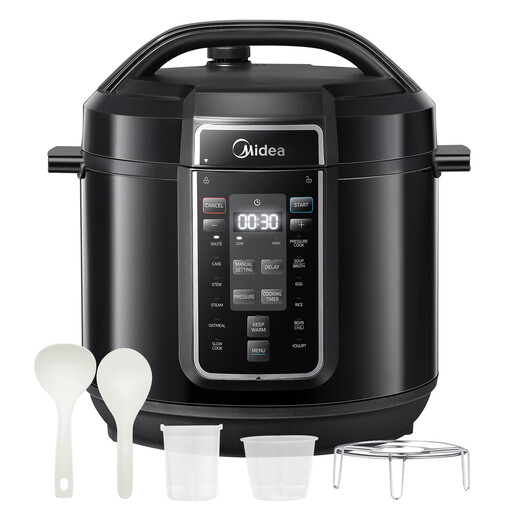 Image unavailable
Midea 9-in-1, electric pressure cooker, stated capacity 8 L
Worth considering if your meals call for pressure cooking, rice or slow cooking. The product name lists 12 preset menus and 1200 W of power. Its product information gives conflicting units for the capacity: confirm the volume of the version on sale, as well as its voltage and manual. For delay start, follow the instructions for the ingredients in your recipe.
View on Joybuy
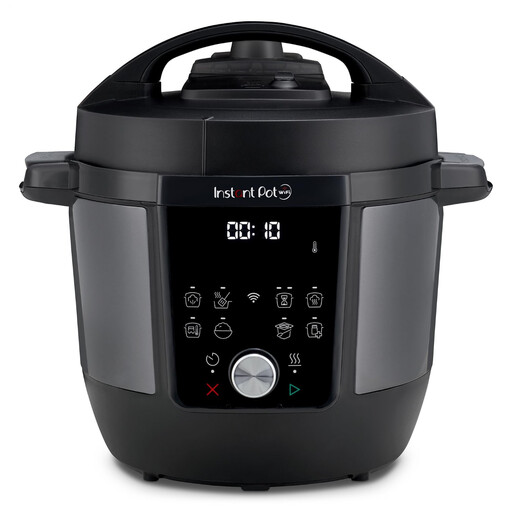 Image unavailable
Instant Pot Plus WiFi, 5.7 L multi-cooker
An option to compare if you’d like one 5.7 L appliance to handle several cooking methods. If you plan to start cooking ahead of time, check the delay-start controls on the specific model. Also confirm that the version on sale is suitable for use in France and comes with a French-language manual.
View on Joybuy
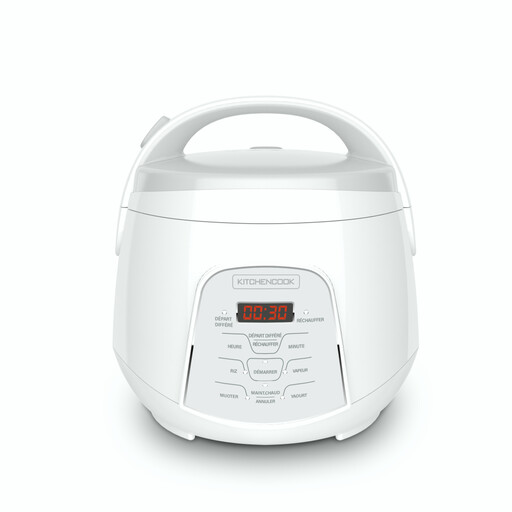 Image unavailable
KitchenCook Kyoto, white, 2 L multi-cooker
Worth considering if your meals are mainly rice-based and you’d also like to look at programmes for other simple dishes. The stated capacity refers to 2 L of uncooked rice. The listed dimensions are 220 × 245 × 215 mm; also allow for the recommended clearances of 40 cm above and 10 cm at the sides.
View on Joybuy
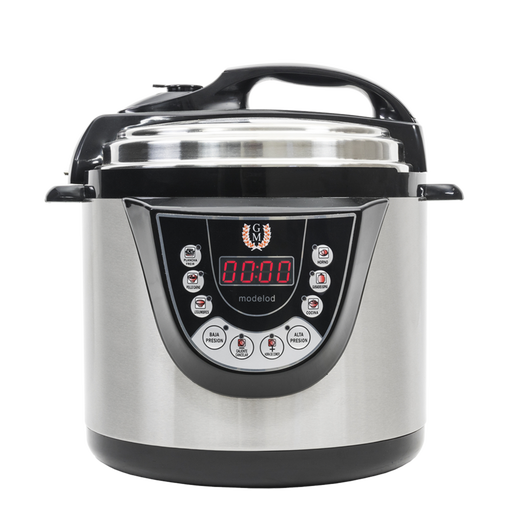 Image unavailable
Cecotec Model D, 6 L programmable pressure cooker
For recipes that use pressure cooking, this model lists 9 menus, two pressure settings and a 24-hour timer. If you plan to serve the meal after the cycle ends, check how the keep-warm function works. Also check the voltage, version on sale and whether a French-language manual is included.
View on Joybuy
 Image unavailable
ochama, 4 L rice cooker, 860 W
Worth considering if you mainly cook rice, porridge or soup. The product name lists a serving size of 3 to 4 people, a steaming basket, delay start and a keep-warm function. Check the manual for the timings and conditions for these two functions, as well as the appliance’s dimensions.
View on Joybuy
Frequently asked questions
Which functions let you start a meal and then get on with something else?
First, look for a programme suited to the dish, then check whether you can adjust the cooking time and whether keep-warm mode starts when cooking ends. Delay start is only useful if the model offers it and the manual and recipe allow it with the ingredients you plan to use.
Is a slow cooker enough for dishes with sauce?
It may be enough if you mainly make soups, stews and other slow-cooked dishes. Check its timer and keep-warm function; if you also regularly use pressure cooking, sautéing or steaming, compare the modes on a multi-function appliance instead.
Can you leave a cooked dish at room temperature until mealtime?
Don’t leave it at room temperature for an extended period: Anses states that the risk of micro-organisms multiplying increases more than two hours after cooking. Keeping food warm and refrigerating it involve different conditions; follow the manual and food-storage guidance.
What should you check before using an electrical appliance in France?
Check the voltage and plug of the version on sale, whether a French-language manual is available, and the information provided about after-sales service. The DGCCRF explains that CE marking shows the manufacturer’s commitment to meeting the applicable European requirements, but it is not a quality or performance certification.


