
Livraison le jour même ou le lendemain

Qualité garantie

Débloquez vos offres de bienvenue: Livraison GRATUITE | Jusqu'à -80 % | 30 jours d'essai gratuits à JoyPlus
Téléchargez l'application
A microwave can make mealtimes easier for students, couples and families alike, provided you choose an appliance suited to your available space and cooking habits. From compact models and microwaves with grills to appliances equipped with automatic programmes, the differences go far beyond price.
Some common pitfalls regularly catch shoppers out:
Internal capacity is measured in litres, but this alone does not determine how much usable space is available. A compact 19 or 20 L microwave is generally suitable for reheating individual portions, drinks, vegetables and everyday ready meals. Models with a capacity of 23 to 25 L offer more room for family meals.
The turntable diameter is just as important. A 24.5 cm turntable accommodates a standard plate, while a model measuring 27 to 31.8 cm makes it easier to use larger dishes. Remember to measure the depth available on your unit before placing your order.
A 700 W microwave meets everyday reheating and defrosting needs, although heating times may be longer than with an 800 or 900 W appliance. For frequent use or larger quantities, higher power can reduce operating time, but you will still need to stir or turn the food.
The number of settings allows you to adjust the heat more precisely. Five or six settings are enough for basic use. Eleven settings, as found on some digital models, provide greater precision for delicate foods, drinks and defrosting.
A solo microwave is designed for reheating, cooking and defrosting, without a grill element. Usually simple to use and compact, it suits most everyday needs. A microwave with grill adds a heating element for browning or finishing certain foods. However, you need to use containers compatible with both modes and accept higher electricity consumption when the grill is operating.
The defrost function can be set by time or by weight. Automatic programmes make certain preparations easier, but the manufacturer’s instructions should always be followed. Two mechanical dials are ideal for anyone who values immediate, straightforward operation, while a digital display provides a more precise view of the remaining time.
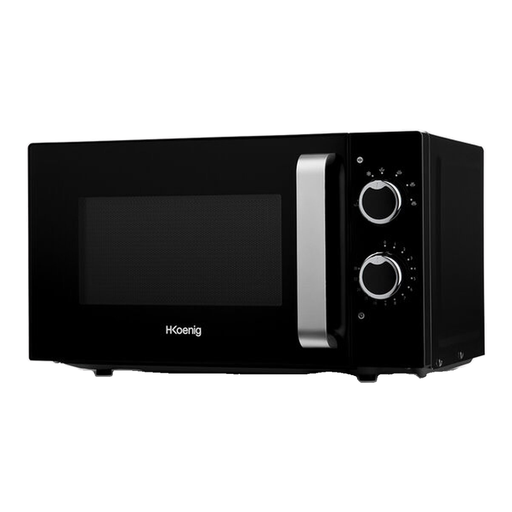
Why this choice suits this profile : This freestanding microwave focuses on simplicity for reheating, cooking or defrosting everyday meals, particularly in a studio flat or small kitchen.
The product listing clearly states 20 L, 700 W, six modes and a 24.5 cm turntable, making the essentials easy to identify without having to sift through a long list of options.
Five heat settings, a defrost function, a timer of up to 30 minutes and dimensions of 45 × 35 × 26.5 cm.
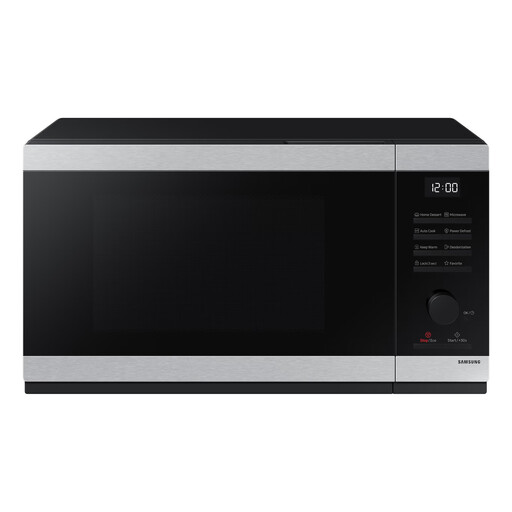
Why this choice suits this profile : Its generous capacity and electronic controls are ideal for households that want to prepare a variety of dishes in a spacious appliance.
With its 32 L capacity and 31.8 cm turntable, it reduces the risk of choosing an appliance that looks spacious but proves impractical for large dishes.
Seven power settings, eight automatic programmes, defrosting, keep-warm function, steam mode and an enamelled ceramic interior.
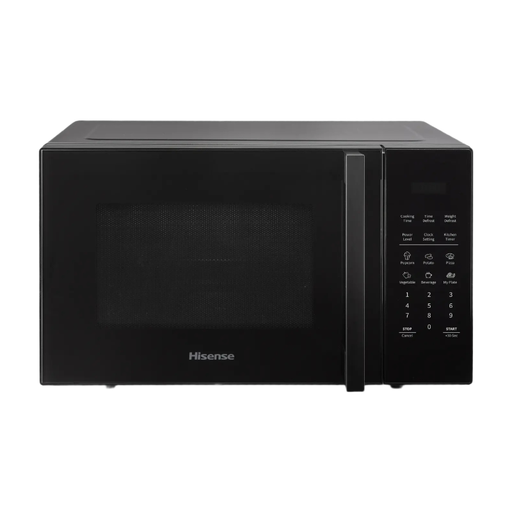
Why this choice suits this profile : Whether you want to reheat large portions or use a grill, this appliance offers more settings and a comfortable capacity.
The listing distinguishes between the 900 W microwave power, the 11 settings and the grill function, making it easier to compare with a solo model.
28.8 cm glass turntable, touch controls, defrosting by weight or time and child lock.
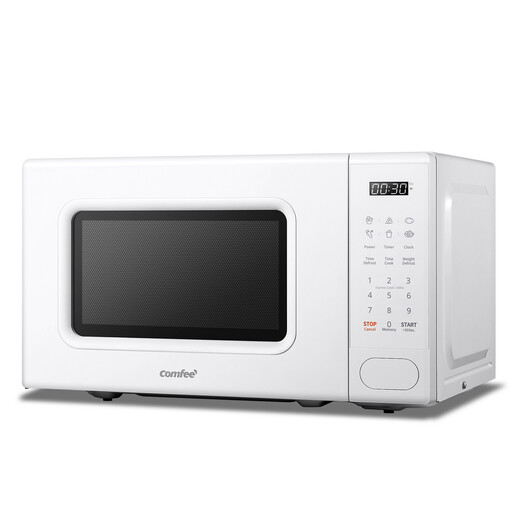
Why this choice suits this profile : With its stated dimensions of 44 × 31.9 × 25.9 cm, it fits easily into a small space while retaining the useful functions you need every day.
The product listing specifies the external dimensions as well as the weight- or time-based defrost functions – two details often missing from overly brief listings.
Eleven power settings, six pre-set menus, quick start and memory function.
We have put together a comprehensive, real-time selection of products that meet these demanding criteria as well as European safety standards.
A freestanding microwave should be installed on a flat, stable and heat-resistant surface. Follow the clearances specified in the instructions, particularly above and behind the appliance, to avoid obstructing ventilation. Ideally, plug it into a compliant, earthed wall socket, without using an unsuitable extension lead.
Only use containers labelled as microwave-safe. Avoid airtight containers, eggs in their shells, metal objects and running the appliance empty. Liquids can reach high temperatures without visibly boiling, so handle them carefully and stir them before consumption.
To keep the appliance in good condition, clean the cavity, seal and turntable regularly. A smooth interior or easy-clean coating can reduce the time spent on maintenance, but it does not replace regular cleaning.
An appliance with a capacity of 19 to 23 L is generally suitable for reheating individual portions and everyday plates. However, check the turntable diameter and the width of the cavity if you use unusual or particularly large dishes.
Consumption depends on the input power, how long the appliance is used and the selected mode. An appliance displaying 700 W as its output power may have a different rated electrical input. To compare running costs, check the energy label and instructions, then take the actual operating time and standby consumption into account where stated.
Its lifespan depends on how often it is used, how well it is maintained and the condition of the door, seal and turntable. Do not use the appliance if the door or seals are damaged. Before buying, check the warranty terms, the availability of spare parts and the instructions, especially if you plan to use it intensively.