
Livraison le jour même ou le lendemain

Qualité garantie

Débloquez vos offres de bienvenue: Livraison GRATUITE | Jusqu'à -80 % | 30 jours d'essai gratuits à JoyPlus
Téléchargez l'application
A microwave can quickly become an essential part of a French kitchen, whether you want to reheat a family meal, defrost a portion or brown a dish. However, choosing one is not simply a matter of looking at the power displayed on the front. An appliance that is too deep can make it difficult to open a cupboard, while a model packed with features may go largely unused if all you want to do is reheat your meals.
Here are the key criteria to consider to avoid an unsuitable purchase, followed by a selection of models for different needs.
The power rating in watts indicates the heating capacity of the magnetron, but it is not enough to assess how convenient the appliance will be to use. A 700 W 20 L microwave is generally suitable for everyday reheating, while a model rated at 900 to 1,000 W will be better suited to generous portions or frequent use.
Also check how many power levels are available. Several settings allow you to adjust the heat for delicate foods, liquids and different types of defrosting.
The internal capacity alone does not tell you how much space the appliance will occupy. Before ordering a compact microwave, measure carefully:
A 20 or 21 L appliance is often suitable for a studio flat, office or student accommodation. For a family, a 25 L microwave or 32 L microwave makes it easier to use larger dishes. Capacities of 39 L or 42 L are more suited to households looking to combine several cooking methods in a single appliance.
A multi-function microwave may include a grill, fan-assisted cooking, steam cooking, automatic defrosting and pre-set programmes. These options offer greater flexibility, but they also come with additional settings and accessories.
If you simply want to reheat and defrost, a solo microwave will generally be easier to use and clean. A grill is useful for browning toast, grilling vegetables or adding crispness to a dish. As for combination cooking, you should check the accessories supplied and the space available inside the cavity.
The capacity stated in litres refers to the volume of the cavity. For everyday use, the turntable diameter is often more informative. As a guide, the 20 L models featured here have a turntable of around 24.5 cm, while some 25 L appliances offer a turntable close to 28.8 cm.
So, if you want to accommodate a large dish, do not rely solely on descriptions such as “25 L microwave” or “32 L microwave”: check the internal dimensions when they are available.
A microwave with a defrost function can operate according to time or weight. Automatic defrosting is convenient, but you may still need to turn or separate the food when recommended in the instructions.
If you plan to cook regularly, compare the following functions:
Inverter technology, available on some models, uses a more gradual method of regulating power. Check the instructions to confirm which modes are actually compatible with this technology.
An enamelled or stainless-steel cavity can be cleaned with a soft sponge and a non-abrasive product. Coatings marketed as easy to clean may help prevent splashes from sticking, but they do not replace regular cleaning.
Always follow the manufacturer’s installation instructions. Leave the specified ventilation gaps, use a suitable socket and never operate the appliance empty. When using microwave mode, metal containers, airtight containers and eggs in their shells present particular risks. After using the grill, the walls and dishes may remain very hot.
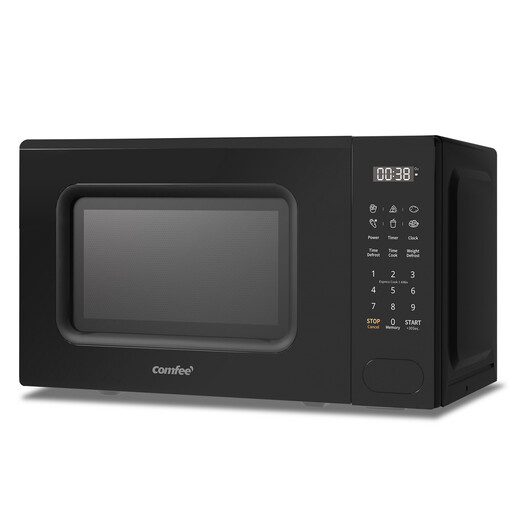
Why this choice suits this profile : Its 20 L capacity and compact dimensions make it easy to fit into a small kitchen, studio flat or student accommodation.
Its 11 power levels mean you do not have to rely on a single setting that is too intense for reheating or defrosting.
700 W, six pre-set menus, defrost function and express start.
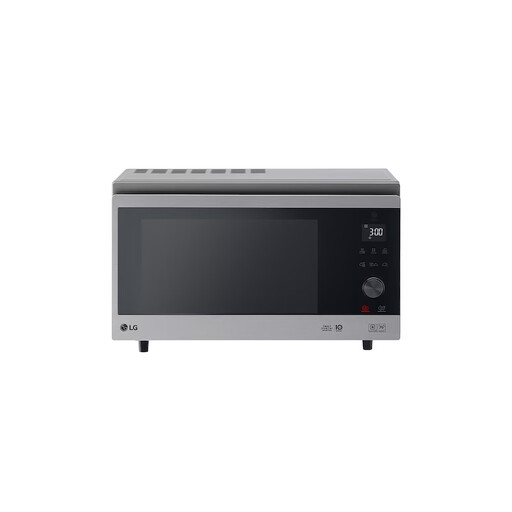
Why this choice suits this profile : Its large capacity is ideal for households wanting to combine several functions in a single appliance.
The product details specify the 39 L capacity, 36 cm turntable diameter and included accessories. This makes it easier to check that the equipment is suitable for your intended use.
Microwave, grill, convection and steam modes, with preheating and a child lock.
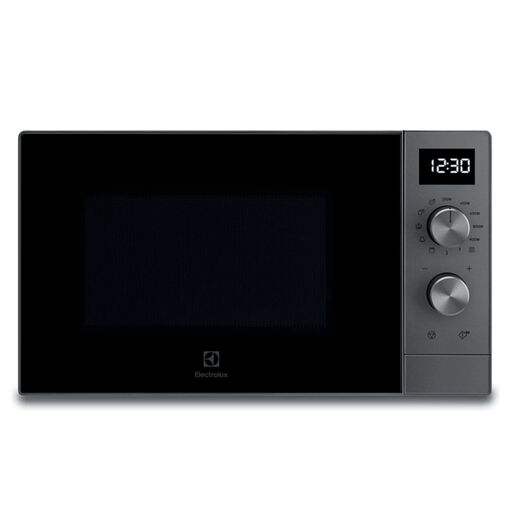
Why this choice suits this profile : Its 25 L capacity and combination modes are well suited to regular preparation involving reheating, defrosting and finishing under the grill.
The product details distinguish between the 900 W microwave power, the 1 150 W grill power and the defrost programmes based on weight or time.
Inverter technology, eight automatic programmes, multi-stage cooking and a child lock.
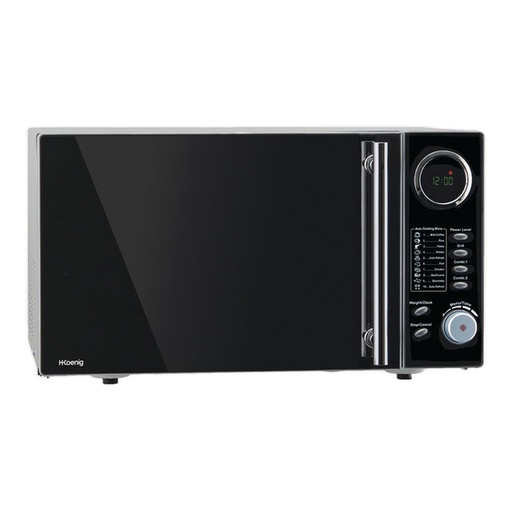
Why this choice suits this profile : Users who alternate between reheating, defrosting and grilling have ten cooking modes at their disposal.
The microwave and grill power ratings are listed separately, with six levels and a combination cooking function.
900 W in microwave mode, 1,000 W grill, LCD display and automatic defrosting.
We have put together a complete, real-time updated list of products that fully meet these strict selection criteria and European safety regulations.
An appliance with a capacity of 25 to 32 L generally offers more room for everyday plates and dishes. Models with a capacity of 39 L or more are suitable for uses combining convection, grilling and several accessories.
Only if the manufacturer explicitly allows this type of installation. A model designed to sit on a worktop must retain the ventilation gaps specified in the instructions. Do not block the openings or place anything on top of the appliance if the manufacturer prohibits it.
Its lifespan depends on how often it is used, how well it is maintained and whether the instructions are followed. Clean the cavity regularly, avoid operating the appliance empty and stop using it if the door or its seals are damaged. Also check the warranty period and after-sales service terms before buying.