
Livraison le jour même ou le lendemain

Qualité garantie

Débloquez vos offres de bienvenue: Livraison GRATUITE | Jusqu'à -80 % | 30 jours d'essai gratuits à JoyPlus
Téléchargez l'application
A magnetic spirit level can make it easier to install a shelf, align a pipe or fit electrical equipment. However, not every model is suited to the same surfaces or working conditions. A tool that is too long can be awkward inside boxing, while a compact model may lack stability on a large structure.
Before buying, pay particular attention to the stated accuracy, the quality of the magnetic base and the strength of the frame. Here are the criteria to check to avoid choosing an unsuitable tool, along with a selection of spirit levels for different domestic and professional uses.
A mini spirit level is easy to carry and store in a toolbox. However, its short reference length is less practical for checking a larger surface. Conversely, a 23 cm spirit level provides more support but takes up more room in confined areas.
So the right question is not simply ‘what is the most practical size?’, but rather: which surfaces will the tool be used on most often?
A magnetic spirit level designed for pipes must have a base suited to metal and curved surfaces. A simple magnetic strip does not guarantee a secure hold on a round pipe. A V-groove generally makes it easier to position the tool on pipes, tubes and conduits, but you should still check its stability manually.
Also check that the magnets will not interfere with use near sensitive devices. Powerful models should be kept away from bank cards, electronic devices and implanted medical devices.
A damaged vial or a deformed frame can distort the reading. Even an aluminium model should be protected from drops and repeated knocks. After each use, clean the magnetic base with a dry cloth to remove metal particles, then store the tool in a dry place.
An aluminium spirit level generally combines light weight with rigidity. However, the frame finish matters less than the flatness of the base and the readability of the vials.
A model fitted with 90° and 180° vials allows you to check vertical and horizontal alignment respectively. An additional 45° vial is useful for slopes, angled installations and certain plumbing jobs.
The ‘90° 180° precision spirit level’ format therefore covers the essential requirements. A 45° torpedo level adds angle checking, provided the vial remains clearly visible from your working position.
For professional or regular use, check the following:
This information is more useful than a vague claim of ‘professional accuracy’ unsupported by technical data.
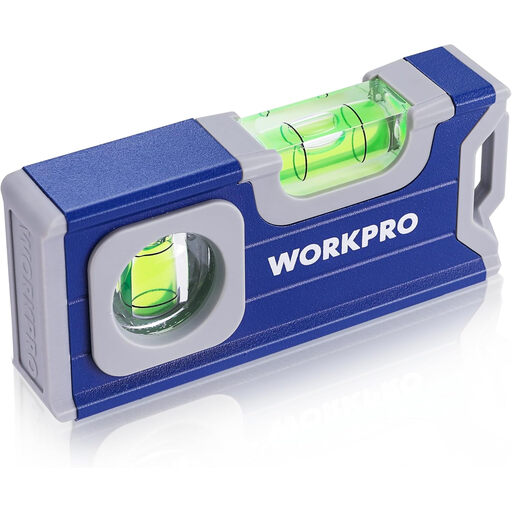
Why this choice suits this profile : Measuring 115 mm and weighing approximately 114 g, this model is suitable for small DIY jobs, furniture installation and work in confined spaces.
The V-shaped base and two 90°/180° vials mean you do not have to settle for a compact model without a secure grip or limited to a single angle.
Aluminium alloy, integrated magnets, stated accuracy of 0.5 mm/m and a hanging hole.
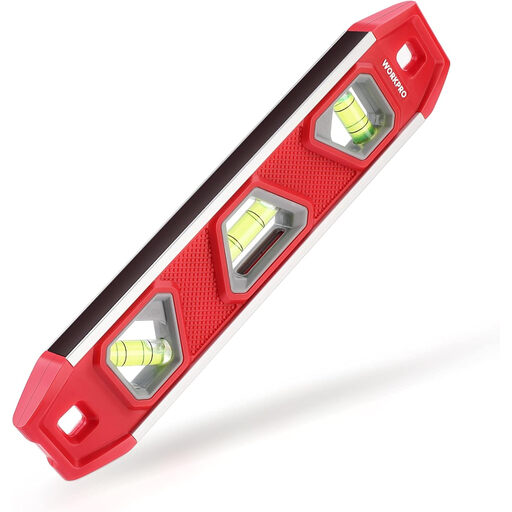
Why this choice suits this profile : Plumbers, electricians and installers benefit from the 23 cm format, top viewing window and three angles for repeated jobs.
The 45°, 90° and 180° vials, magnetic base and V-groove overcome the limitations of a tool that only covers one angle.
Aluminium frame, rare-earth magnets, top viewing window and 23 cm length.
To obtain a reliable measurement with a magnetic spirit level, proceed as follows:
Magnets adhere to ferromagnetic surfaces, such as certain types of steel. They will not hold onto copper, PVC, non-magnetic aluminium or wood. The V-groove may improve mechanical positioning, but it does not create magnetic adhesion on these materials.
For furniture and small spaces, a 115 mm mini spirit level is easy to handle. For plumbing, electrical work and everyday installations, a model of approximately 23 cm provides more comfortable support while remaining easy to carry.
Clean the base, avoid knocks and store the tool away from moisture. If the frame appears bent or the vial is leaking, replace the spirit level rather than relying on an uncertain measurement.