
Livraison le jour même ou le lendemain

Qualité garantie

Débloquez vos offres de bienvenue: Livraison GRATUITE | Jusqu'à -80 % | 30 jours d'essai gratuits à JoyPlus
Téléchargez l'application
A wall hook can be enough to declutter a hallway, hang a towel or organise a home office. But behind this seemingly simple purchase lie a few classic pitfalls: fixings that give way, metal that damages the wall, poorly chosen dimensions or a load capacity stated without any real context.
To choose a coat hook, a wall-mounted coat rack or a no-drill adhesive hook, it's best to start with the intended use, the type of wall surface and the installation method. Style and the promise of "high strength" aren't everything.
A hook's capacity depends on several factors: wall material, quality of the wall plug, type of screw, contact surface area and weight distribution. A model fixed to plasterboard won't withstand the same stresses as a hook installed in concrete or a wooden stud.
A full bag, a winter coat or several damp towels put far more strain on the fixing than a scarf or a set of keys. When the product page doesn't specify a maximum load, it's best to reserve the hook for lightweight items.
The no-drill adhesive hook is primarily intended for smooth, clean, dry and non-flaky surfaces. Powdery paint, a textured wall, wallpaper or an area exposed to steam can significantly reduce its grip.
Application should generally be done after careful cleaning and thorough drying. Also respect the waiting time indicated by the manufacturer before hanging anything. In a bathroom, avoid installing the adhesive in an area directly exposed to splashes.
A decorative wall hook can add character to a hallway. But if its shape is too short or its ball too prominent, hanging clothes becomes difficult. For a coat, check the usable depth, the spacing between hooks and whether there are any sharp edges that could snag fabrics.
In a rented property, a reversible solution is often preferable. However, be aware: "no-drill" doesn't necessarily mean "no trace at all". Removing an adhesive hook can peel off fragile paint.
A black wall hook easily finds its place in a contemporary décor. A sand, white or coloured finish allows you to create a more discreet look or, conversely, a more personalised one.
Start by identifying the wall surface: concrete, brick, wood, tile or plasterboard. The wall plugs and screws must be chosen accordingly. Fixings are not always supplied, particularly with wall-mounted coat racks.
For a rented property, an adhesive hook can work for keys, tea towels, small towels or lightweight accessories. For a heavy coat or daily use, a properly installed screw fixing is generally more reliable and predictable.
Measure the width of the wall, the installation height and the depth taken up by the hung item. In a narrow hallway, a compact model will avoid obstructing the passage. For a family hallway storage solution, several well-spaced hanging points are often more practical than a single overloaded hook.
In the kitchen, a towel hook or a kitchen hook should remain easily accessible, without being placed too close to a heat source. In the bathroom, choose a spot that will allow textiles to dry properly.
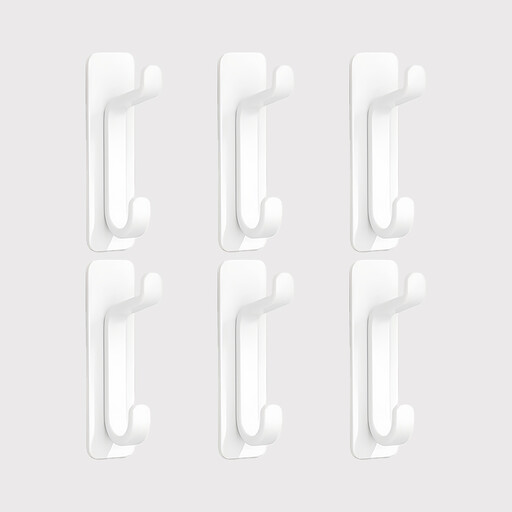
Why this model suits this profile: This pack lets you quickly equip a hallway, kitchen or home office without multiple purchases. The white finish remains discreet on a light-coloured wall.
The adhesive fixing avoids drilling, but it should be reserved for smooth surfaces and lightweight items. The product page states a stainless steel construction.
Pack of 6 hooks with no-drill installation as stated by the manufacturer. A silver finish is also available.
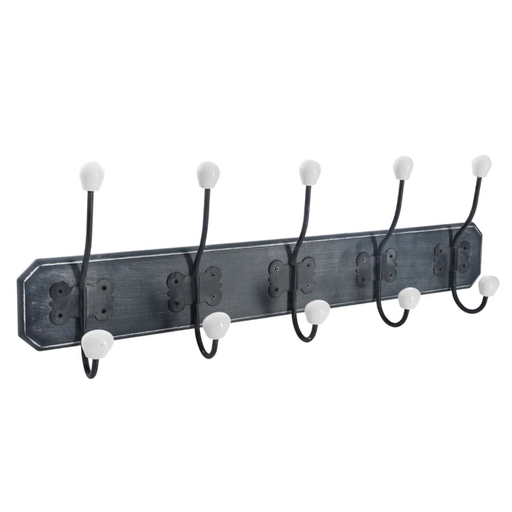
Why this model suits this profile: This 60 × 20 cm panel is ideal for a hallway or corridor where you want a harmonious solution rather than a succession of individual hooks.
The dimensions and number of hooks are clearly stated. However, you will need to choose fixings suitable for your wall, as they are not included.
E1 MDF panel, five double metal hooks and ceramic details. The product is stated as FSC certified.
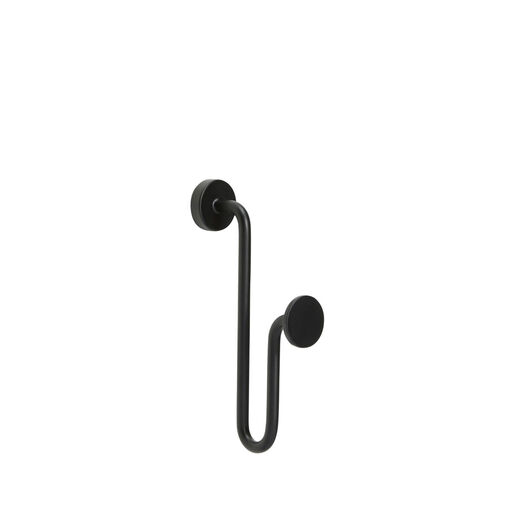
Why this model suits this profile: Its graphic silhouette fits well in a kitchen, bathroom or bedroom where hanging points also contribute to the décor.
The product page specifies installation with screws and wall plugs. This method is to be preferred for regular use, after checking compatibility with your wall.
Iron construction, dimensions of 7 × 2.5 × 13 cm and the option to install it alone or in a row of three or five.
We've put together an updated selection so you can compare formats, materials and uses before making your choice.
For a wall-mounted key hook, a decorative hook or a towel hook, ease of maintenance matters just as much as appearance. Regularly checking the fixing also allows you to spot any loosening before it gets worse.
An adhesive model is suitable for lightweight items and smooth, clean, dry surfaces. On plasterboard, a textured wall or for hanging a heavy coat, check the recommended fixing method and, if necessary, opt for a wall plug suitable for a universal adhesive.
There is no duration that applies in all cases. Adhesion varies depending on humidity, temperature, dust, surface quality and the weight hung. Inspect the surface regularly and remove the hook at the first signs of peeling.
Yes, provided you choose a location not heavily exposed to splashes and a material compatible with humidity. For a wet towel, check the strength of the fixing and leave enough space around the textile to allow it to dry properly.