
Livraison le jour même ou le lendemain

Qualité garantie

Débloquez vos offres de bienvenue: Livraison GRATUITE | Jusqu'à -80 % | 30 jours d'essai gratuits à JoyPlus
Téléchargez l'application
A ruler that slips, a spirit level that is too short or a measuring jug with hard-to-read markings can turn a simple task into a real obstacle course. Measuring tools meet a wide range of needs: measuring a length, checking an angle, aligning an installation, calculating a distance or measuring out an ingredient.
Before buying, it is worth looking beyond marketing promises and focusing on the features that really matter. Here are the main criteria to consider, along with a selection suited to different uses and user profiles in France.
An instrument advertised as multifunctional may combine a ruler, protractor and set square, yet become bulky or difficult to read. For woodworking, stability and the reliability of the right angle often matter more than the number of advertised functions. At school, clear graduations and a format that is easy to store will generally be the priority.
A flexible plastic ruler may be perfectly suitable for some schoolwork, but it could become misshapen under repeated pressure. By contrast, an aluminium set square or metal ruler will generally withstand knocks and twisting better. This does not mean you can skip checking the quality of the edges, the readability of the graduations and the strength of the construction.
The phrase ‘high precision’ means very little unless it is accompanied by a measurable figure. For a magnetic spirit level, for example, look for a tolerance expressed in millimetres per metre. For a laser distance measurer, check the measuring range, power supply and conditions of use. In the kitchen, focus mainly on the units, capacities and readability of the markings.
The instrument’s dimensions should match the task. A 30 cm graduated ruler slips easily into a bag and is suitable for technical drawing, homework and everyday measurements. To measure a long room or work on a building site, it is better to choose an instrument with a longer range.
In the kitchen, a 500 ml to 2,000 ml measuring jug covers a wide variety of recipes. A small measuring cup or measuring spoons will, however, be more practical for oils, syrups, spices and small quantities. Also check whether the graduations are given in millilitres, centilitres or other units.
A carpenter’s square should remain firmly flush against the edge of the workpiece and maintain a reliable right angle. For technical drawing and geometry, a 180-degree protractor makes it easy to read common angles, provided its centre and baseline are clearly marked.
Combination models may also include dual metric and imperial graduations, a spirit level or a marking point. These features are worthwhile if they remain easy to adjust and lock in place.
On a metal surface, a magnetic spirit level allows you to work with both hands free. However, magnets are not suitable for non-metallic surfaces and may interfere with certain sensitive equipment. A V-shaped base is particularly useful for checking pipes or curved components.
To keep a precise measuring tool in good condition, clean it with a soft cloth, avoid dropping it and store instruments flat when they could become misshapen. Kitchen accessories should be washed according to the manufacturer’s recommendations and then dried thoroughly after use.
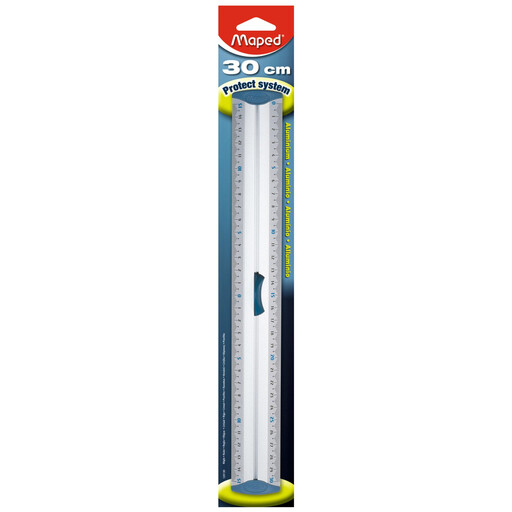
Why this choice suits this profile : At 30 cm, this ruler is suitable for students, creative activities and everyday measurements. Its lightweight design makes it easy to carry.
Anodised aluminium reduces the risk of flexing compared with a very flexible ruler, while the graduations remain suitable for everyday measurements.
30 cm format, anodised aluminium construction and protected ends, according to the product specifications.
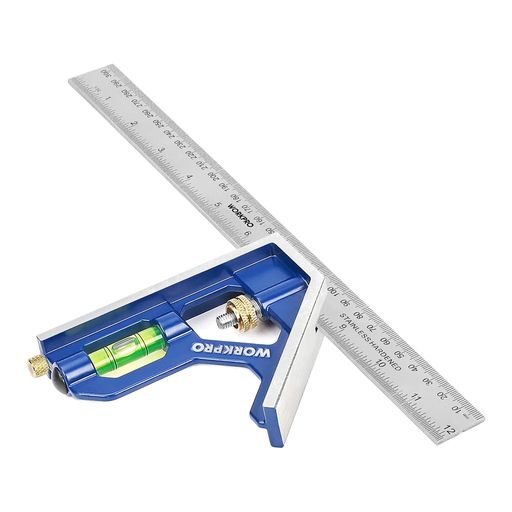
Why this choice suits this profile : Woodworkers, tradespeople and regular DIYers have an adjustable instrument for marking out and checking several dimensions.
The locking screw secures the ruler once it has been adjusted, limiting movement while marking out.
300 mm ruler, metric and imperial graduations, spirit level, marking point, and 90° and 45° angle checks.
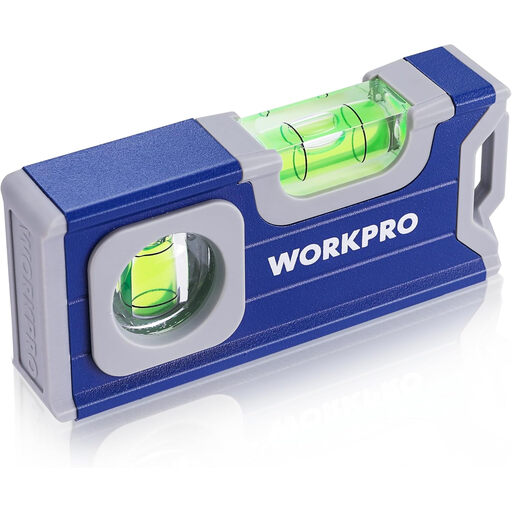
Why this choice suits this profile : Its compact size fits into tight spaces and is suitable for installation work, electrical tasks and small DIY jobs.
Its V-shaped magnetic base is designed for metal surfaces and pipes, rather than relying solely on being held by hand.
115 mm length, 90° and 180° vials, claimed accuracy of 0.5 mm/m and hanging hole.
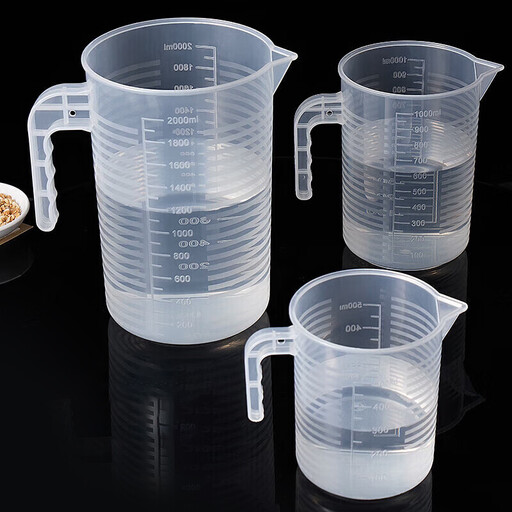
Why this choice suits this profile : Cooks and bakers moving from small to large recipes can choose between three capacities.
The set means you do not have to use an oversized container for every recipe, which can make the level harder to read.
Set of three pieces measuring 500 ml, 1,000 ml and 2,000 ml, to suit different preparation volumes.
We have brought together a complete, real-time updated selection of products that meet these exacting criteria and European safety standards.
A laser distance measurer is suitable for surveying rooms, decorating work and certain building-site applications. Before buying, check its measuring range, screen readability, battery life and included accessories. For short distances or occasional measurements, a standard ruler or tape measure is often simpler and quicker.
Wipe it with a soft, slightly damp cloth, then dry it thoroughly. Avoid abrasive products and do not store it beneath heavy objects. A carpenter’s square should also be protected from drops and twisting: an impact can throw off its alignment without leaving any visible mark.
A measuring jug is suitable for medium and large volumes, such as water, milk or flour. A measuring cup is practical for everyday recipes, while measuring spoons are ideal for small quantities. If you often make the same recipes, choose clearly visible graduations and units suited to your cooking habits.