
Livraison le jour même ou le lendemain

Qualité garantie

Débloquez vos offres de bienvenue: Livraison GRATUITE | Jusqu'à -80 % | 30 jours d'essai gratuits à JoyPlus
Téléchargez l'application
A lunch box should carry a meal without leaking, withstand everyday handling and be easy to clean. Yet some models disappoint after just a few weeks: lids that are difficult to close, compartments that are not truly leakproof or a capacity that does not match the user’s appetite.
For French families, the right choice depends above all on how the box will be used: a children’s lunch box for school, a meal box for the office, a container for picnics or a set designed for batch cooking. Here are the key criteria to review before ordering, along with a selection of models to consider in 2026.
A lid with clips or a latch may keep the box closed without preventing sauce from escaping. When choosing a leakproof lunch box, check for a seal, the type of closure and the conditions of use specified by the manufacturer. A compartmented box is not necessarily designed to carry liquid foods.
For a salad with dressing, soup or a saucy dish, it is better to choose a container with a full perimeter seal and a clearly described closing mechanism. Always carry the box flat in your bag, especially if the instructions advise against turning it upside down.
A compact box may be perfectly suitable for a snack, yet prove too small for a full lunch. Conversely, a 1.5-litre model may take up a significant amount of space in a child’s schoolbag.
As a general guide:
External dimensions are just as important as capacity. Before buying, measure the available space in your bag, schoolbag or office drawer.
An airtight food container that is also easy to clean helps prevent odours and residue from building up around the seals. A dishwasher can save valuable time, but not all lids, clips and seals are designed to withstand dishwasher cycles.
Borosilicate glass generally handles temperature changes well. However, it is heavier and more vulnerable to impact than plastic or stainless steel. A stainless steel lunch box is durable, but is generally not suitable for microwave use. Always consult the instructions before heating or freezing a container.
A compartmented bento box keeps fruit, starchy foods and crunchy ingredients from mixing together. However, fixed dividers do not guarantee leakproof separation between the different sections. For moist foods, small containers with their own lids can sometimes be more practical.
Also consider the width of the compartments. A box may offer numerous sections without providing enough room for a sandwich, fruit purée or cutlery.
For a school lunch box, the opening mechanism should be easy to understand and simple enough for a child aged 3 or over to operate. Clips integrated into the lid reduce the risk of losing small parts. These parts should nevertheless be supervised, in accordance with the manufacturer’s warnings.
Before transporting the box, check that the lid is properly secured and that the seal is clean. A deformed seal or damaged clip may be enough to compromise the closure.
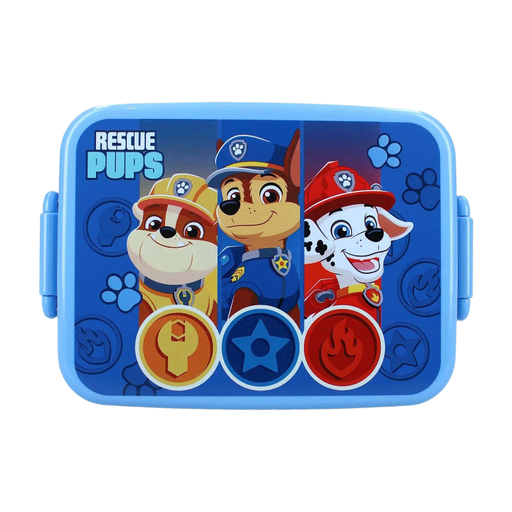
Why this model may be right for you: its 16 × 13 × 5 cm dimensions, featherlight weight and child-friendly design make it a practical choice for school commutes and outings.
The clearly stated dimensions help prevent overestimating its capacity. The snap closure is designed to keep sandwiches and small portions securely in place.
A lightweight plastic model suitable for children aged 3 and over according to the product details. Hand washing recommended.
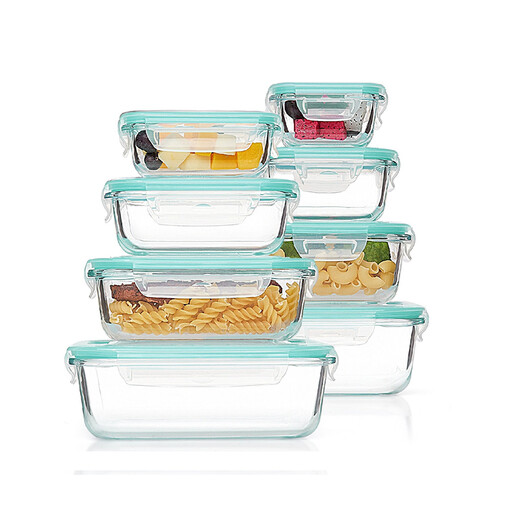
Why this model may be right for you: the eight sizes, from 150 ml to 1,040 ml, simplify meal preparation, food storage and organised refrigerator storage.
The detailed capacities make it easy to choose the right container for each meal, rather than reaching for the largest box every time.
Borosilicate glass, removable lids and eight capacities to choose from. Its weight should nevertheless be considered for everyday transport.

Why this model may be right for you: its 1.5-litre capacity and wide opening are well suited to generous meals, travel and outdoor excursions.
The capacity is clearly stated, and the product details indicate thermal retention for 4 to 6 hours. This jar should nevertheless be transported upright.
316 stainless steel, vacuum insulation and a wide opening. Hand washing is recommended to preserve the lid and its seal.
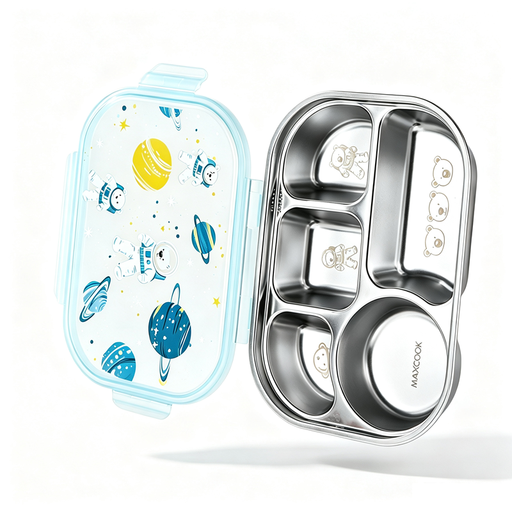
Why this model may be right for you: its five compartments keep foods separate, while the lid’s space-themed design is sure to appeal to children at school or on picnics.
The four closing latches lock independently, reducing the risk of the lid coming loose during transport.
316 stainless steel construction, separate compartments and a polypropylene lid. Hand washing recommended; the metal components must not be placed in a microwave.
We have brought together an up-to-date selection of boxes and containers suited to the different uses and criteria discussed in this guide.
Choose a lightweight model that is easy to open and has a clearly identifiable closure. Capacities from 300 to 900 ml can meet different needs, but also check the overall dimensions, weight and manufacturer’s warnings. Small parts should be supervised appropriately for the child’s age.
Not necessarily. An insulated box is primarily designed to maintain the temperature of a dish or drink for the stated period. A compartmented bento box separates several foods but does not necessarily provide thermal insulation. For a hot meal made up of several components, the two formats can therefore complement each other.
Glass is suitable for storage and, when authorised by the manufacturer, reheating. Stainless steel performs very well during transport but must not be placed in a microwave. Food-grade plastic remains lightweight and practical for everyday use. The best choice depends on how much weight you are willing to carry, how you plan to reheat your meal and which foods you intend to pack.