People looking to reduce their salt intake
You want to compare the amount of salt listed per 100 g, rather than relying on how tomatoey a sauce tastes or on a general claim about the recipe.


To reduce the salt in a pasta dish, first compare the ‘salt’ value per 100 g: an organic sauce or one with a good Nutri-Score is not necessarily low in salt. A ready-made sauce makes mealtimes easier, while tomato purée lets you decide how much salt to add but requires some cooking. If there are one or two people in your household, also check the pack size and storage instructions once opened.
You want to compare the amount of salt listed per 100 g, rather than relying on how tomatoey a sauce tastes or on a general claim about the recipe.
You prepare smaller quantities and want to choose a pack you can use within the stated time after opening.
You want to keep pasta meals easy, while being happy to season a tomato base with herbs or other flavourings.
First decide whether you want a ready-made sauce or a base to cook with. Then compare the salt per 100 g and choose a quantity that suits the meals you have planned.
Choose this if: you want to make pasta quickly and can compare the ‘salt’ value of sauces intended for the same use.
Bear in mind: the recipe is already seasoned, so check the salt content of each product individually.
Choose this if: you prefer to decide for yourself what seasoning to add.
Bear in mind: you’ll need to prepare the sauce and check the ‘salt’ value of the base you choose.
| Criterion | What to check | Who this matters to |
|---|---|---|
| Salt content | Compare the ‘salt’ value per 100 g of products intended for the same use, and take your serving size into account. You can’t tell whether a product is ‘low in salt’ from its Nutri-Score. | If my main aim is to reduce salt, I want to be able to work out how much my portion contains rather than judging by how the sauce looks. Around 42% of consumers would put this check first. |
| Pack size and storage | Check the net weight and the storage instructions after opening for the specific product. According to Auchan, its 300 g pouch of tomato and basil sauce keeps in the fridge for eight days after opening. | When I cook for one or two people, I prefer a pack size I can use up without leaving leftovers. Around 33% of consumers would prioritise pack size. |
| Meal preparation | Choose between a sauce that’s ready to use and tomato purée that you season yourself; taste the dish before adding salt. | I want to make pasta simply, without adding salt automatically to bring out the flavour. Around 25% of consumers would put this way of preparing a meal first. |
These claims don’t tell you how much salt a product contains. Auchan’s product listing for Barilla Bio Basil sauce gives a salt content of 0.78 g per 100 g.
To choose based on salt content, compare the nutrition information per 100 g for sauces intended for the same use.
Nutri-Score doesn’t replace the actual ‘salt’ value when that’s the main factor guiding your purchase.
Check this line in the nutrition information and relate it to the amount of sauce you plan to serve.
In a small household, you need to be able to use an opened sauce in line with the product’s storage instructions. Auchan says its 300 g pouch of tomato and basil sauce keeps in the fridge for eight days after opening; this doesn’t apply to all sauces.
Choose the net weight to suit the meals you have planned, and make a note of when you opened it.
Any salt added to the cooking water or the dish comes on top of the salt already in the sauce.
Taste the pasta with its sauce before adding more salt. Manger Bouger also recommends using herbs and other flavourings to bring out the flavour of dishes.
Panzani offers its Cooked Tomato Sauce in 210 g, 400 g and 650 g packs, as well as its plain Tomacouli tomato base in several sizes.
According to Barilla, its Basilico sauce is available in 200 g and 400 g packs. Auchan’s product listing also includes the 200 g Bio Basilic sauce.
Carrefour Classic’ tomato and basil sauce comes in a 420 g jar.
Auchan offers a 300 g pouch of tomato and basil sauce.
These products include tomato purées to cook with and a tomato speciality to serve with pasta. To reduce your salt intake, check the ‘salt’ value on the label of the variant you buy. Unseasoned purée also needs to be cooked into a sauce.
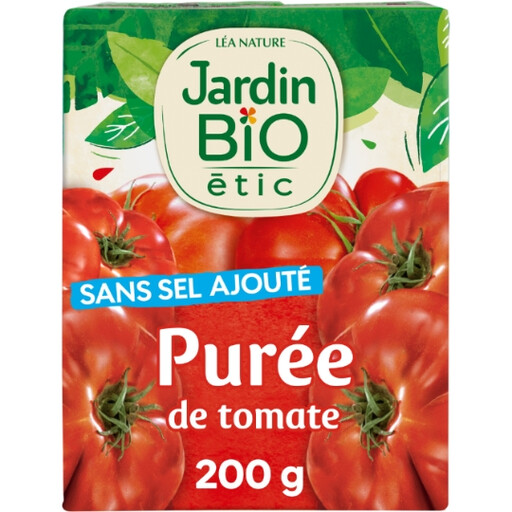 Image unavailable
This tomato purée can be used as the base for a sauce you season yourself. The 200 g pack lets you choose a smaller quantity; check the ‘salt’ value for this variant before you buy.
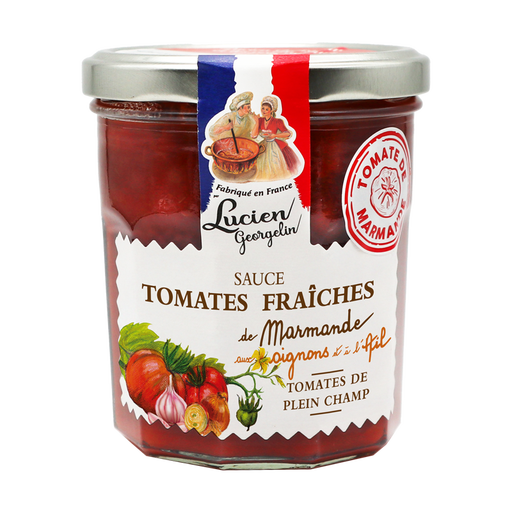 Image unavailable
This tomato speciality can be served with pasta if you’re looking for an already-flavoured option. It comes in a 300 g pack; check the ‘salt’ value and ingredients list for the variant you choose.
 Image unavailable
This tomato purée is a base to cook with for pasta, not a sauce that’s already seasoned. With a 500 g pack, you’ll need to plan how to use the rest in a small household; check the storage instructions after opening and the ‘salt’ value on the packaging.
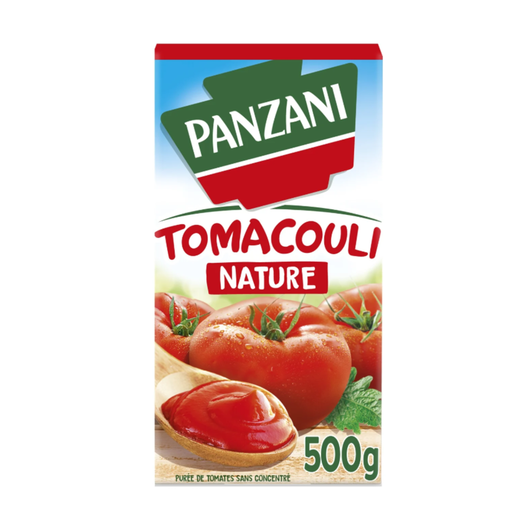 Image unavailable
This tomato purée can be used as the base for a homemade sauce, with seasoning to add during preparation. For the 500 g pack, check that the quantity and storage instructions after opening suit your meals, as well as the product’s ‘salt’ value.
No. Nutri-Score alone doesn’t indicate that a product is low in salt. If salt content is guiding your choice, compare the value per 100 g for sauces intended for the same use.
In the European Union, Regulation (EC) No 1924/2006 reserves the claim ‘low sodium/salt’ for products containing no more than 0.12 g of sodium per 100 g or 100 ml, or the equivalent amount of salt. For a sauce assessed per 100 g, this corresponds to around 0.30 g of salt; check the value shown for the specific product.
Choose a net weight that suits the meals you have planned, and follow the product’s storage instructions after opening. For example, Auchan says its 300 g pouch of tomato and basil sauce should be kept in the fridge and used within eight days of opening; this doesn’t apply to other sauces.
Taste the dish with its sauce first, then use herbs or other flavourings to suit your recipe. Manger Bouger recommends tasting before adding salt and limiting the amount added during preparation.