If you want to make your own sauce
A 500 g pack of tomato purée gives you a base for choosing what to add to your lunch. Bear in mind that you’ll need time to season it: it isn’t a ready-to-serve cooked sauce.


To choose between tomato purée and a 500 g pasta sauce, first decide whether you want to season the sauce yourself or serve one that’s already prepared. Then compare the ingredients and nutritional information per 100 g: the same net weight doesn’t mean the same recipe or salt content.
A 500 g pack of tomato purée gives you a base for choosing what to add to your lunch. Bear in mind that you’ll need time to season it: it isn’t a ready-to-serve cooked sauce.
A prepared sauce saves you having to build a recipe from a purée. Before choosing, compare its ingredients, salt and sugars per 100 g.
A pack close to 500 g could work well for several portions or planned leftovers. Check the exact net weight: the ranges mentioned also include packs both smaller and larger than 500 g.
Choose this if: you want to decide how to season your sauce and what else to add.
Bear in mind: you’ll need to do some extra preparation before serving the pasta.
Choose this if: a sauce that’s already seasoned better suits the time you have at lunchtime.
Check: the ingredients and nutritional information per 100 g for that specific recipe.
| Criteria | What to check | Who it matters to |
|---|---|---|
| Ingredients | Read the ingredients and compare the salt, sugars and fat per 100 g for the products you’re considering. | If you want to choose what goes into your lunch, a base you can season yourself gives you that control; around 42% of consumers would put this control over the ingredients first. |
| Preparation time | Check whether the pack contains purée that needs cooking or a sauce that’s already seasoned. | If you need to make lunch quickly, you may prefer a cooked sauce to a base that needs extra ingredients; speed is said to be the main priority for around 33% of consumers. |
| Pack size | Check the net weight and storage instructions after opening if you’re planning to keep leftovers. | If you’re splitting the contents between several plates or meals, you could start by looking for a pack close to 500 g; around 25% of consumers would make this their priority. |
Purée is a cooking base, whereas cooked sauce is already seasoned. This difference matters when you’re short on time to prepare lunch.
Choose according to how much preparation you want to do, then check the product’s description and ingredients.
With purée, allow time and make sure you have the ingredients you need to make your sauce.
Even at the same weight, purée and cooked sauce can have different salt contents. The Auchan and Panzani product listings give the salt content per 100 g as 0.03 g for Auchan 500 g tomato purée and 1.4 g for Panzani Garlic & Onion 500 g sauce, respectively.
Compare the nutritional information per 100 g for each recipe rather than judging its nutritional profile by net weight alone.
According to Santé publique France, displaying the Nutri-Score is voluntary for producers. A score on its own doesn’t tell you everything about the ingredients or nutritional information you may want to compare.
If the product displays a score, check its ingredients and nutritional information too.
These brands offer different types of recipes and pack sizes. Always compare specific products rather than judging a brand as a whole.
The range includes tomato bases and cooked sauces, including products in 500 g packs.
The retailer offers a 500 g tomato purée to use as a sauce base.
E.Leclerc offers Turini tomato purée in a 500 g carton.
The range includes tomato and vegetable-based sauces in several sizes.
Barilla’s Basilico Sauce is available in 200 g and 400 g packs.
Lidl offers Baresa tomato sauce in a 560 g pack.
This selection includes purées and tomato pulp for making your own sauce, as well as a cooked Panzani sauce. All come in 500 g packs; your choice mainly depends on how much preparation you want to do at lunchtime.
 Image unavailable
Make your own sauce using this 500 g pack of tomato purée. Have the ingredients and seasoning you want to add ready; the name of this variant doesn’t replace checking the information on the product.
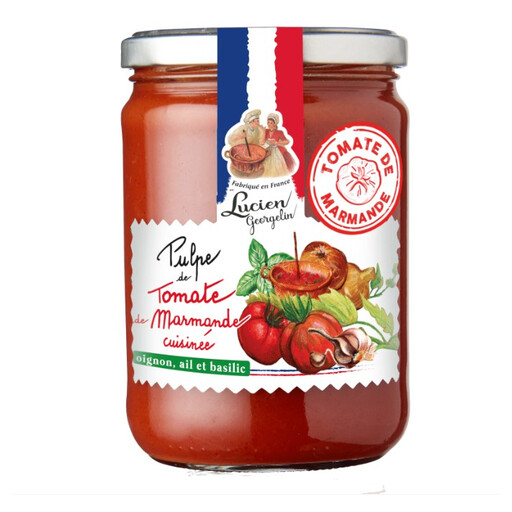 Image unavailable
Make a sauce with a tomato base that already includes onion, garlic and basil. This 500 g purée still needs to be incorporated into your lunch preparation.
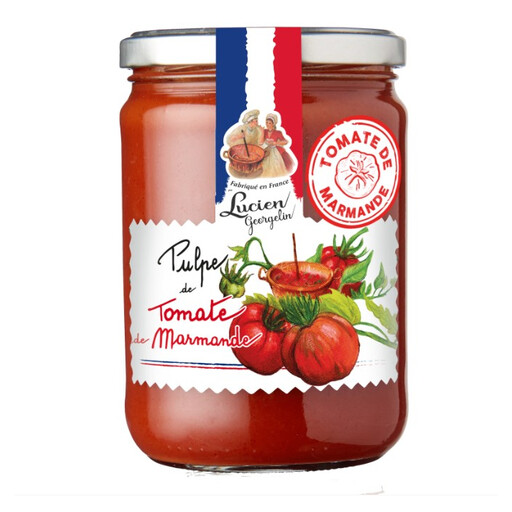 Image unavailable
Start with a 500 g pack of tomato pulp and make the sauce to your own recipe. This is different from a ready-made pasta sauce.
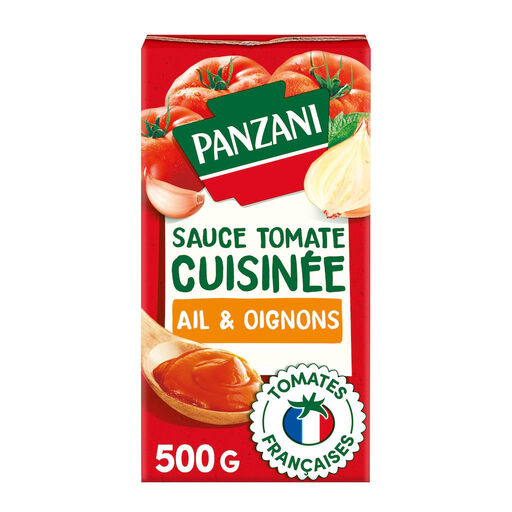 Image unavailable
A good choice for lunch if you’d rather have a sauce that’s already seasoned than a tomato base you need to cook. Auchan and Joybuy’s product listings give this 500 g sauce’s salt content as 1.4 g per 100 g. Bear this in mind if salt is an important factor in your choice.
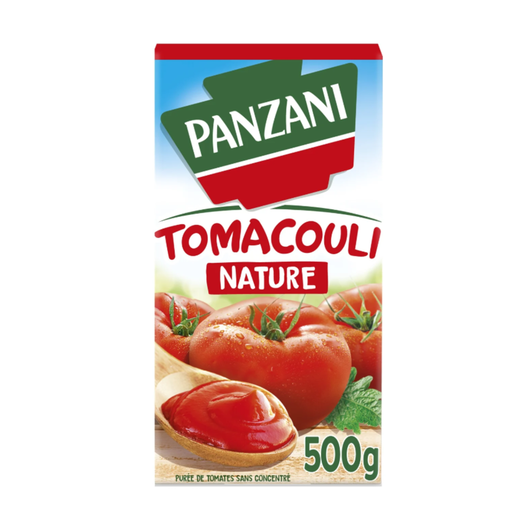 Image unavailable
Make a sauce using this 500 g tomato base. Joybuy lists tomato purée and pulp, with salt included in the ingredients; check the salt content on the packaging before comparing it with other products. The storage instructions for this product say to refrigerate after opening and use within three days.
No. In France, Santé publique France says producers can choose whether to display the Nutri-Score. If it’s shown, use it alongside the ingredients and nutritional information for the product you’re considering.
No. 500 g tells you the net weight, not what kind of recipe is inside. To choose, check whether you’ll need to season the purée or whether the sauce is already prepared, then compare the nutritional information per 100 g.
For this product, Joybuy advises storing it in the fridge and using it within three days of opening. Also follow the instructions on the packaging you buy.
No. On its own, this doesn’t tell you about the salt, sugars or fat. The Panzani Garlic & Onion 500 g sauce is described as containing no preservatives, while the Auchan and Joybuy product listings give its salt content as 1.4 g per 100 g. Check the full recipe against the factors that matter to you.