
Livraison le jour même ou le lendemain

Qualité garantie

Débloquez vos offres de bienvenue: Livraison GRATUITE | Jusqu'à -80 % | 30 jours d'essai gratuits à JoyPlus
Téléchargez l'application
Choosing a liquid laundry detergent seems simple… until the results don’t live up to expectations: stubborn stains that won’t budge, unpleasant smells that reappear after drying, colours that fade or skin that feels tight. The price of the bottle alone isn’t enough to compare two products either. Formula concentration, the number of washes stated, or environmental certification – each criterion deserves careful consideration.
A big bottle isn’t necessarily the most economical. To compare two products, divide the price by the number of washes stated, then check the recommended dosage. A concentrated detergent can cover more cycles with less product, but increasing the dose won’t make your clothes any cleaner.
Water hardness, drum capacity and the level of soiling also affect the amount you need. In the UK, the instructions on the label remain the best guide for adjusting your dosage.
‘Stain removal’, ‘long-lasting freshness’ or ‘sensitive skin’ indicate the direction of the formula, not a guarantee that works in every situation. Results depend on the fabric, temperature, programme and how old the stain is.
A stain-removing detergent containing enzymes can be suitable for everyday laundry. A formula designed for sensitive skin generally focuses on a composition and fragrance intended to limit certain sources of discomfort. Even a detergent marketed as hypoallergenic doesn’t eliminate every risk of an individual reaction.
A liquid laundry detergent for machines works on cotton, synthetic fibres and many everyday fabrics, but not necessarily on wool or silk. Optical brighteners, enzymes, fragrances and cleaning agents don’t meet the same needs depending on the fibres.
Before you head to the checkout, check the garment’s care label as well as any restrictions stated by the manufacturer. For a stubborn stain, targeted pre-treatment is often more effective than an excessive dose of detergent.
A detergent that works from 20 °C can help reduce energy consumption when the laundry is lightly soiled and the label allows it. Several products claim to be suitable for low-temperature use, but this doesn’t replace proper sorting or correct dosing.
To keep good results:
A detergent for white and coloured laundry can be practical for versatile family use. If your laundry regularly has sweat or musty odours, choose a formula whose deodorising action is clearly detailed. A disinfecting detergent meets a different need: it must be used in line with its biocidal labelling and safety precautions.
Families with a baby can opt for a liquid baby detergent designed for that type of laundry. Check for fragrance, preservatives and potential allergens on the label, especially if skin is reactive. Never mix several cleaning products together.
An eco-friendly detergent may carry a European Ecolabel, use plant-based surfactants, or come as a refill in recyclable packaging. These details can be verified on the product page, but they don’t excuse you from sticking to the correct dosage. Overdosing increases both waste and the cost of each cycle.
For a household that runs wash after wash, a professional format can reduce how often you need to buy. However, compare the actual number of washes, the dose per cycle and the fabrics allowed. Some professional detergents aren’t suitable for wool or silk.
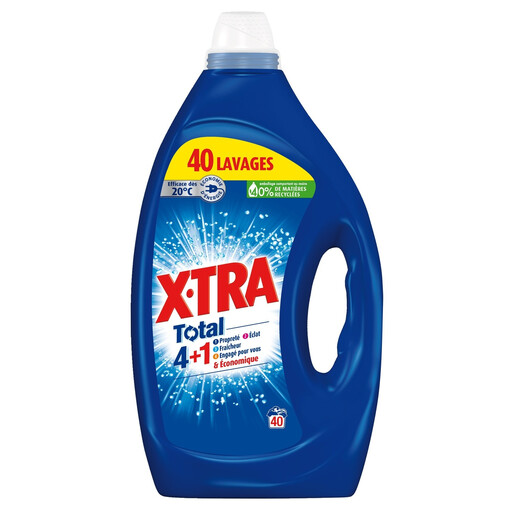
Why this choice suits this profile: A versatile formula for everyday laundry, claimed to be effective from 20 °C and compatible with all fabrics.
The 40 washes stated make it easy to calculate the cost per cycle, without relying solely on the bottle size.
40 washes, use on white and coloured laundry, effectiveness claimed from 20 °C.
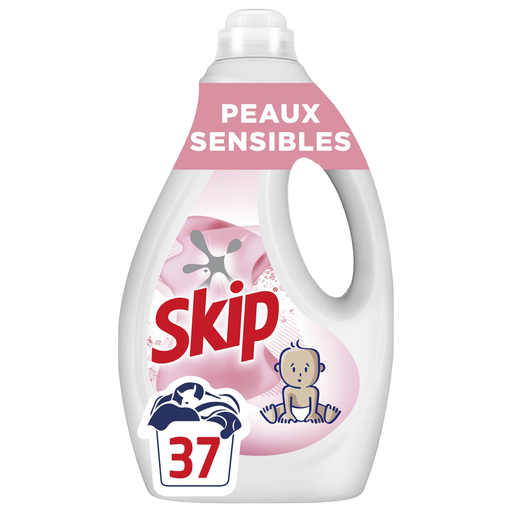
Why this choice suits this profile: Its product page mentions dermatological testing, low-temperature use and compatibility with wool and silk.
The mention of dermatological testing comes with a list of ingredients and precautions to check, rather than a vague promise without explanation.
37 washes, short cycles and low temperatures, use indicated for wool and silk.
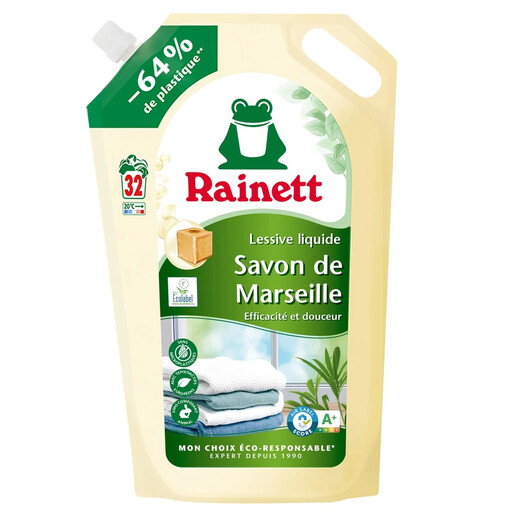
Why this choice suits this profile: Marseille soap, plant-based surfactants and an eco-refill format – this product ticks several boxes for anyone interested in ingredients and packaging.
The Ecolabel, absence of certain preservatives and the claimed reduction in plastic use provide concrete criteria to verify.
32 washes, European Ecolabel, plant-based formula and effectiveness claimed from 20 °C.
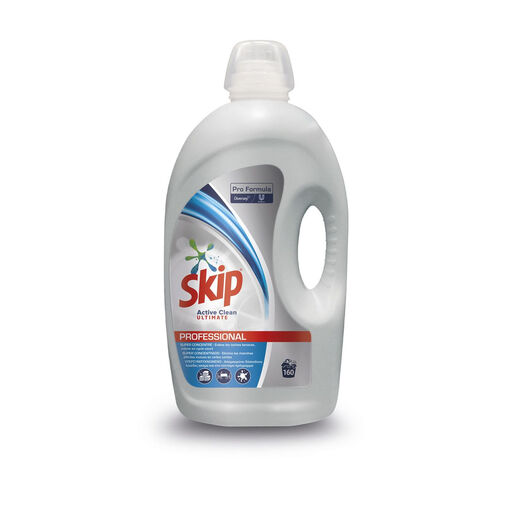
Why this choice suits this profile: Its ultra-concentrated 160-wash format is aimed at households that run the machine constantly, as well as the professional uses mentioned on the product page.
The large volume comes with a clearly stated number of washes and instructions specifying which fabrics are excluded.
160 washes stated, enzymes, 4.32 L format and intended use for white and coloured laundry.
Follow the dosage stated on the bottle, taking into account the weight of the laundry, how soiled it is and the water hardness. Overdosing can leave residue and push up the cost of each wash. Use the measuring cap when the manufacturer provides one.
Some formulas claim to be effective from 20 °C. This temperature is mainly suitable for lightly or normally soiled laundry, provided the garment’s care label allows it. For heavily stained fabrics, a hotter cycle or pre-treatment may be necessary.
Keep the bottle closed, in a cool, dry place away from sunlight and out of reach of children. Check the date, batch number and instructions on the packaging. If the product’s appearance, smell or texture changes noticeably, consult the manufacturer’s recommendations before using it.