
Livraison le jour même ou le lendemain

Qualité garantie

Débloquez vos offres de bienvenue: Livraison GRATUITE | Jusqu'à -80 % | 30 jours d'essai gratuits à JoyPlus
Téléchargez l'application
A Korean konjac jelly can replace a sweet treat or sugary drink when you’re looking for a light snack to pop in your bag. However, not all options are equal when it comes to format, sweeteners, texture or ingredients. A quick glance at the packaging is often enough to avoid any unpleasant surprises.
The term sugar-free means the sugar content is zero or very low, according to the applicable regulatory thresholds. It doesn’t guarantee the product contains no carbohydrates. Erythritol, sucralose or other sweeteners may appear in the nutritional table.
Some jellies therefore show 0 g of sugars, while still listing carbohydrates or polyols. It’s best to check the values per 100 ml or 100 g, then compare them to the portion you actually consume.
A konjac jelly flavoured with mango, lychee or peach may contain very little fruit concentrate and be based mainly on flavouring. That’s not necessarily a bad thing, but the difference between two products can be significant. Product descriptions sometimes list the concentrate percentage, for example 4.5% peach juice or 0.15% blueberry concentrate.
If you’re after a specific fruity taste, refer to the ingredients list rather than just the picture on the packet.
Konjac jelly is thicker than a regular drink. Some varieties need to be shaken before opening and eaten by chewing thoroughly. This precaution is especially important for children and anyone who has difficulty swallowing.
A resealable format is handy, but once the packet is opened, the product usually needs to be kept in the fridge and consumed within the time stated on the packaging.
For a light snack, start by comparing the energy content per sachet or cup. The products in this selection typically range from around 2 to 10 kcal per portion, depending on their format and recipe.
A sugar-free konjac jelly can suit those who want to cut down on sugary products. However, it doesn’t replace a balanced diet. Also remember to check the salt content, carbohydrates, polyols and any added vitamin C or calcium.
Konjac powder, gelling agents and sweeteners are common in this category. To choose a vegan konjac jelly, check that it contains no gelatine, milk or any animal-derived ingredients. The term “plant collagen” may refer to an ingredient from carrots, but it’s still best to read the full list.
Anyone sensitive to certain additives or sweeteners should also read the label carefully. Most of the products featured here don’t declare allergens, but you should verify this on the packaging you receive.
Available flavours include mango, lychee, peach, blueberry and watermelon. A single-serve format lets you try several flavours before committing to a larger pack.
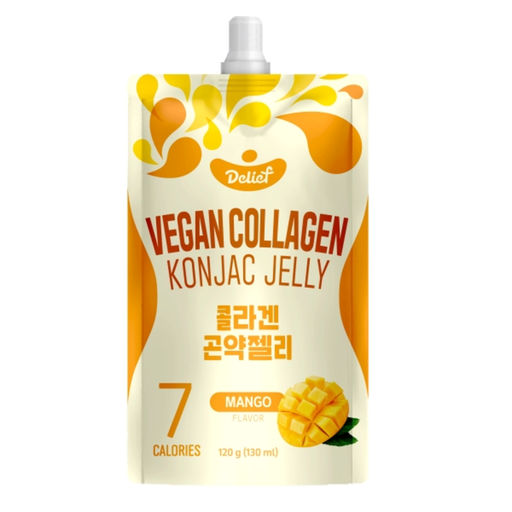
Why this choice suits this profile: At 120 g, this product lets you try vegan mango konjac jelly without committing to a larger pack straight away. According to the information provided, it contains 5 kcal and 0 g of sugars per 100 g.
The ingredients and nutritional values are listed per 100 g, making it easy to compare with other products.
A stated vegan recipe, a 120 g format, mango flavour and no declared allergens.
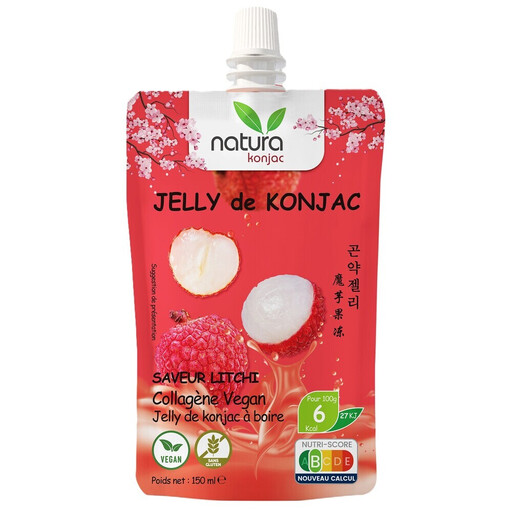
Why this choice suits this profile: This konjac jelly drink combines lychee, konjac, plant collagen and vitamin C. It’s aimed at those who prefer a particularly detailed nutritional profile.
The 150 ml portion is clearly distinguished from the value per 100 ml, so you won’t underestimate the actual intake.
9 kcal per portion, 0 g of sugars, 1.5 g of protein and 400 mg of vitamin C according to the product sheet.
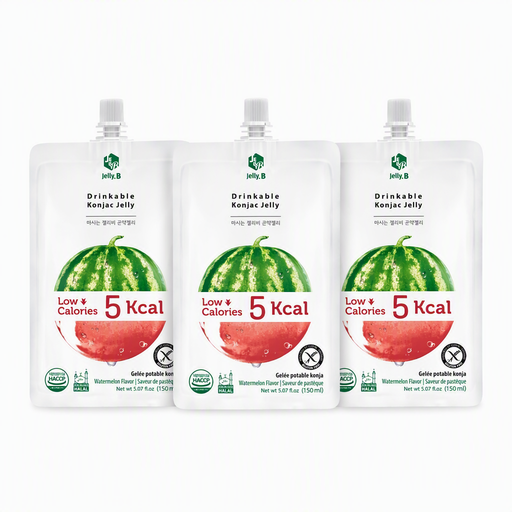
Why this choice suits this profile: With three sachets, this pack is ideal for regular use at the office, on the go or in a gym bag. The watermelon flavour offers a nice change from mango and lychee.
The resealable sachet and room-temperature storage before opening make it easy to take on the go.
5 kcal per 150 ml portion, 0 g of sugars and a stated vegan recipe, with clear safety instructions.
We’ve put together a comprehensive, real-time list of products that fully meet these strict selection criteria and European safety regulations.
Many products are marketed as vegan and combine konjac with plant-based gelling agents. However, you should check the product sheet and label for each item, as recipes can vary by brand and flavour.
Before opening, many products can be stored in a dry place at room temperature, away from light. After opening, most need to be refrigerated and consumed within 24 to 48 hours. The best-before date and the manufacturer’s instructions are the most important guidelines.
Yes, when it comes in a ready-to-drink sachet. However, it’s recommended to shake the sachet and chew the jelly thoroughly. This product should not be swallowed without care, especially by young children and anyone with swallowing difficulties.