
当日/次日达

品质保障

开启新人专享福利: 全场免邮 | 低至 2 折 | 免费试用 30 天 JoyPlus 会员
下载 Joybuy
Konjac jelly is loved for its gel-like texture, individual portions and fruity flavours. This drinkable konjac jelly can be a handy alternative to sweets or sugary drinks, whether at the office, after exercise or on the go. However, not all products are created equal.
Before buying a konjac snack, it’s worth keeping an eye out for a few pitfalls: a “sugar-free” claim that doesn’t necessarily mean “carb-free”, a composition that varies widely from one product to another, or packaging that isn’t very practical depending on how you plan to use it. Here are the criteria to look out for, followed by a selection of recommended products available on Joybuy.
Some sugar-free konjac jellies contain erythritol, sucralose, acesulfame-K or other sweeteners. The sugar content may be listed as zero on the label, while the “carbohydrates” line remains relatively high due to polyols or other ingredients.
To compare products properly, always check:
Polyols can also be poorly tolerated by some people when consumed in large quantities. Always rely on the statements and warnings printed on the packaging as your reference.
A konjac jelly labelled as mango or lychee can contain very different proportions of fruit concentrate. For example, the product pages show 4.6% mango concentrate for one KOREAN FOOD STYLE reference, while some recipes contain significantly less.
The fruity taste may therefore come mainly from flavouring, with only a limited amount of juice or concentrate. That’s not necessarily a flaw, but it’s good to know if you’re looking for a Korean jelly whose taste truly resembles the fruit.
Konjac has a thick, supple texture that is very different from a regular juice. Some products recommend shaking the pack before opening and chewing the jelly thoroughly rather than swallowing it directly. This precaution is especially important for children, the elderly and anyone with swallowing difficulties.
Also consider the type of packaging: cup, resealable pouch or tube with a screw cap. In a gym bag or lunchbox, a resealable format can be far more practical.
In the selection shown, a low-calorie konjac snack typically has between 2 and 10 kcal per 100 ml or 100 g. However, a 150 ml serving cannot be directly compared to a 120 g serving. Always refer to the value per serving to estimate what you’ll actually consume.
The sugar content should be analysed alongside the list of sweeteners. A recipe may show 0 g of sugars while still containing erythritol or intense sweeteners.
If you’re looking for a vegan konjac jelly, check that it contains no gelatine, milk or any animal-derived ingredients. The Delief references and some Jelly.B products are listed as vegan according to the information on their product pages. The term “plant collagen” here refers to an ingredient said to come from carrot; it should not be confused with animal collagen.
Also look at the gelling agents used: konjac, carrageenan, locust bean gum, xanthan gum or gellan gum. It’s the combination of these that determines the firmness and mouthfeel.
Before opening, most individual portions can be stored at room temperature, in a cool, dry place away from light. After opening, several product pages recommend refrigerating the product and consuming it within 24 to 48 hours.
If buying in a pack, check the best-before date on each package. Konjac jelly is a ready-to-eat snack, but it does not replace a varied and balanced diet.
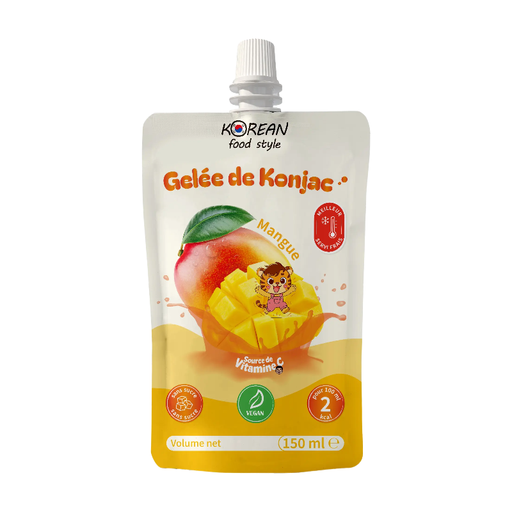
Why this choice suits this profile: At 150 ml, this individual format lets you try a mango jelly without committing to a large assortment straight away. The product page states 2 kcal and 0.5 g of sugars per 100 ml.
The product page specifies the presence of 4.6% mango concentrate and clearly distinguishes between energy, carbohydrates and sugars.
Mango concentrate, konjac powder, a ready-to-drink format and no declared allergens.
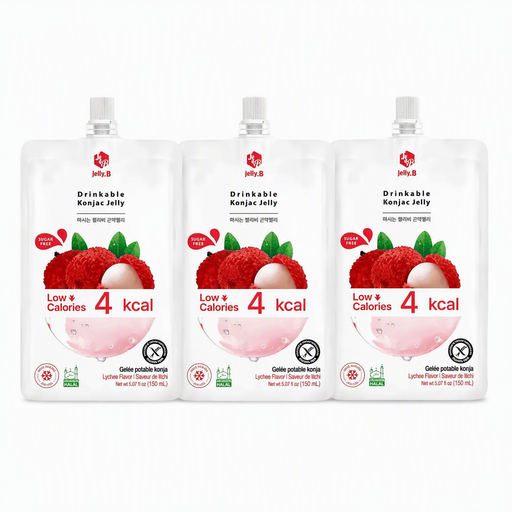
Why this choice suits this profile: The pack of three and the lychee flavour will appeal to those looking for regular consumption and a more refined fruity experience.
Values are given per 100 ml and per 150 ml serving, with 4 kcal per pouch according to the product page.
A pack of three, vitamin C and calcium stated per serving, a resealable pouch and a stated origin in South Korea.
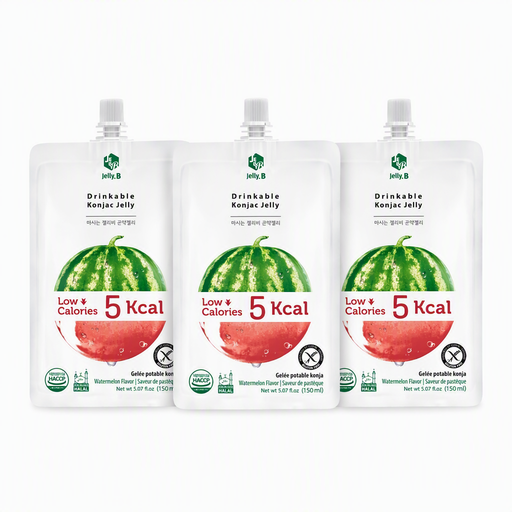
Why this choice suits this profile: Its screw cap, pack format and room-temperature storage before opening make it easy to transport in a gym bag, lunchbox or suitcase.
The product page details storage conditions after opening, recommends chewing the jelly and mentions choking risks.
5 kcal per 150 ml serving, 0 g of sugars stated, a recipe presented as vegan and a watermelon flavour.
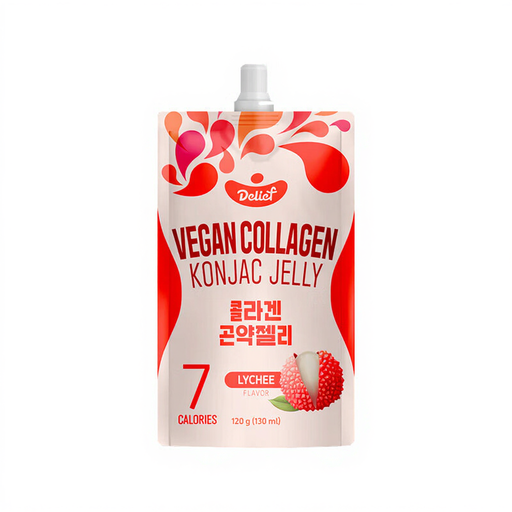
Why this choice suits this profile: At 120 g, this format is aimed at those looking for a recipe stated as vegan and a slightly different portion size from the 150 ml pouches.
The product page states 5 kcal and 0 g of sugars per 100 g, while detailing the gelling agents and sweetener used.
A lychee flavour, ingredients stated as plant-based, vitamin C and a 120 g portion.
We’ve compiled a complete, real-time updated selection of products that meet these strict criteria as well as European safety requirements.
Some products are presented as vegan, notably several Jelly.B and Delief items. However, always check the ingredients list and labelling on each package – recipes can vary depending on the flavour and format.
Before opening, it generally keeps at room temperature, in a dry place, following the manufacturer’s instructions. After opening, place it in the fridge and consume it within 24 to 48 hours when this guidance appears on the product page. Always check the best-before date on the packaging.
Yes, its individual format can be handy for a post-workout break. However, it is a light snack, not a proper recovery drink. Shake the pouch, chew the jelly and follow the safety instructions. Extra care should be taken with children and anyone who has difficulty swallowing.