
当日/次日达

品质保障

开启新人专享福利: 全场免邮 | 低至 2 折 | 免费试用 30 天 JoyPlus 会员
下载 Joybuy
A Korean konjac jelly can be a great alternative to sweets or dessert when you're after a fruity, convenient, low-calorie treat. Whether in a pouch or a pot, konjac jelly is easy to slip into a bag, lunchbox or desk drawer.
The trouble is that packaging often shouts about being "sugar-free", "vegan" or "low in calories", without always making it easy to compare products at a glance. Here are the criteria to check before buying a konjac jelly drink, along with a selection suited to different needs in the UK.
A jelly can show 0 g of sugars while still containing carbohydrates from polyols or other ingredients. Some recipes use erythritol, sucralose or acesulfame-K, for example. These sweeteners affect the taste and nutritional profile, but they're not interchangeable with regular sugar.
Start by checking the nutritional information per 100 ml or 100 g, then look at the value for the serving size. A 120 g serving and a 150 ml serving aren't directly comparable – you need to account for the format.
The actual fruit content can be quite low. In some recipes, the flavour comes mainly from an aroma, a concentrate or a small amount of fruit powder. A mango jelly, lychee jelly or peach jelly might taste fruity without having the composition of a real fruit purée.
The ingredients list helps you tell the difference between juice or concentrate, flavourings and acidity regulators. It's a useful glance to avoid paying more for a marketing promise that doesn't necessarily reflect the recipe.
Konjac gives these products a thick, jelly-like texture. They're not an ordinary liquid drink. Many packs recommend shaking before opening and chewing before swallowing. This precaution is especially important for children, elderly people and anyone with swallowing difficulties.
Before choosing a drink pouch, also check the type of lid, the volume and the storage instructions after opening.
To choose a light snack, compare several pieces of information at once:
In this selection, several products show between 2 and 6 kcal per 100 ml or 100 g, depending on the recipe. However, these figures mean nothing without their unit of measurement. A 120 g konjac jelly won't necessarily have the same profile as a 150 ml Korean jelly drink.
Vegans may look for a vegan konjac jelly, but this claim should be confirmed on the product page and in the ingredients list. Delief products, for example, mention plant-based collagen from carrot, while several Jelly.B products are presented as free from gelatine and dairy ingredients.
Konjac is usually combined with other gelling agents, such as carrageenan, xanthan gum or locust bean gum. If you follow a particular diet, always take the time to check the full ingredients and allergens list.
A resealable 150 ml pouch slips easily into a bag for a journey, a day at the office or an after-lunch break. A pack of three can be better value if you regularly enjoy this type of snack. The 120 g pot or 150 ml pouch formats are often stored at room temperature before opening, but the manufacturer's instructions should always take priority.
After opening, some products need to be refrigerated and consumed within 24 to 48 hours. There's no point choosing a larger size to save on the unit price if you can't finish it quickly.
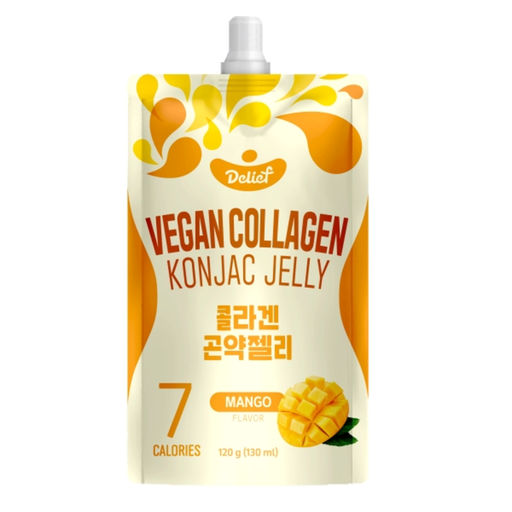
Why this suits this profile: Its individual 120 g format lets you try konjac jelly without committing to a larger pack straight away. The recipe is presented as plant-based and flavoured with mango.
The product page states 5 kcal and 0 g of sugars per 100 g. It's still worth checking the label on the product you actually receive.
120 g format, no declared allergens, konjac powder and mango flavour.
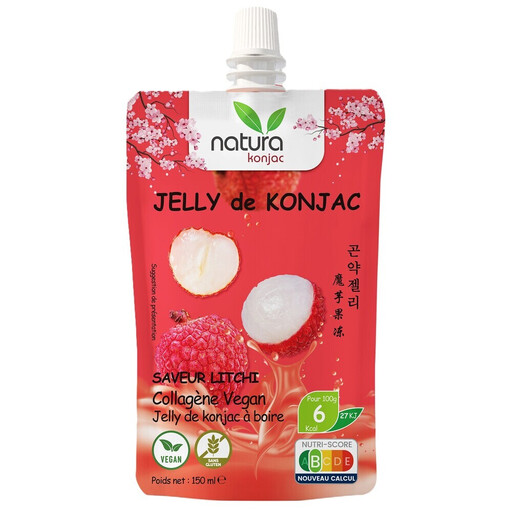
Why this suits this profile: This konjac jelly drink combines a drinkable texture, lychee concentrate and a 150 ml format. The product page also mentions vitamin C and plant-based collagen.
Values are given for a 150 ml serving and per 100 ml, making it easier to compare with other products.
6 kcal per 100 ml according to the product page, 0 g of sugars and 1.5 g of protein per serving.
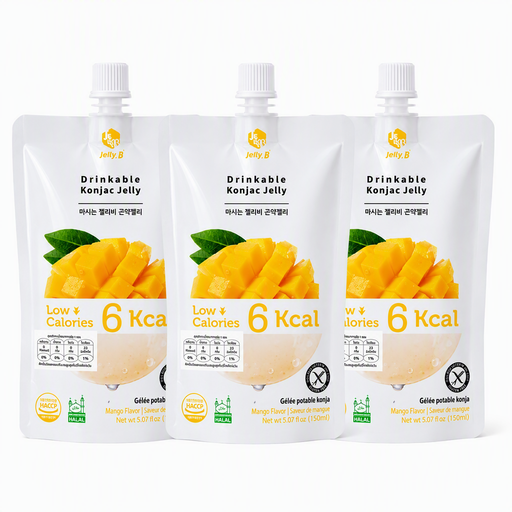
Why this suits this profile: The pack of three is handy for anyone who regularly takes a snack to work, on the go or in their gym bag.
The resealable lid makes it easy to carry and reduces mess. You still need to chew the jelly and refrigerate it after opening.
Three 150 ml units, 0 g of sugars stated and room temperature storage before opening.
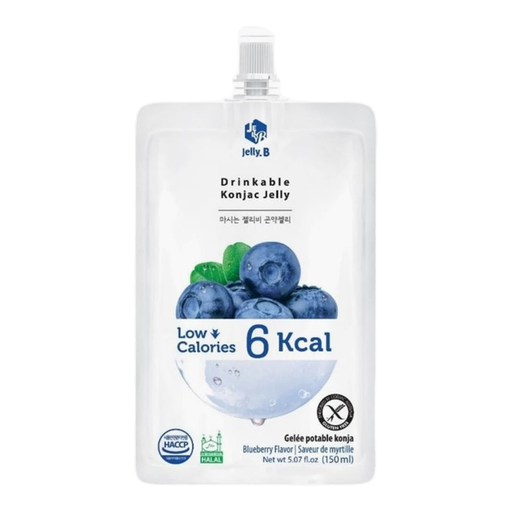
Why this suits this profile: Blueberry offers a change from mango, lychee or peach, while still coming in an individual format that's easy to enjoy chilled.
The product page mentions blueberry juice concentrate and distinguishes the amount of konjac from other gelling agents.
2 kcal per 100 ml according to the product page, 0 g of sugars and 150 ml format.
We've put together a complete, real-time updated selection of products that meet these exacting criteria, while also complying with European safety regulations.
Some products are labelled as vegan and are based on plant-based ingredients. However, this isn't the case for the entire category. Check for the "vegan" claim, any possible presence of gelatine or dairy products, and the full ingredients list.
Before opening, the storage time and temperature vary depending on the product. Product pages often recommend keeping it in a cool, dry place away from light. After opening, many pouches need to be refrigerated and consumed within 24 to 48 hours. The best-before date printed on the packaging is the reference.
No. Despite being called a drink, its texture can be thick. Shake the pouch, consume slowly and chew the jelly before swallowing. These products are not suitable for young children or anyone with swallowing difficulties.