
Livraison le jour même ou le lendemain

Qualité garantie

Débloquez vos offres de bienvenue: Livraison GRATUITE | Jusqu'à -80 % | 30 jours d'essai gratuits à JoyPlus
Téléchargez l'application
The kitchen is the beating heart of the home. It's also a battleground for grease splatters, cooking residues, and stubborn, set-in stains. Choosing a kitchen degreaser might seem simple, but in the cleaning products aisle, marketing promises often outweigh actual effectiveness. Between formulas that damage your surfaces and those that are useless against burnt-on grease, it's easy to make the wrong choice.
As a product expert at Joybuy, my mission is to decode labels and formulas for you. Let's forget the marketing hype and focus on the facts. Here's how to avoid the common pitfalls and choose the kitchen cleaner that's truly right for your needs.
The aisle is saturated with products featuring catchy slogans. To avoid falling into the trap, keep an eye out for these two classic mistakes?:
To make the right choice, here are the three points to check before you finalise your purchase.
The product's composition determines its effectiveness and scope of use.
An essential habit: read the label and the manufacturer's recommendations. An induction or ceramic cooktop cleaner must explicitly state its compatibility to avoid causing scratches. Likewise, stainless steel, aluminium, marble, or treated wood require specific products. When in doubt, always test on an inconspicuous area first.
The format is not just a detail; it dictates the application.
To move from theory to practice, here is our selection of products that meet specific needs, based on the criteria we've just discussed.
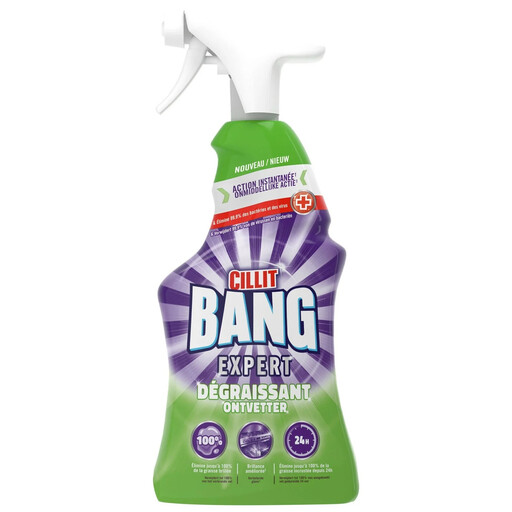
Why we recommend it : Ideal for those who want a heavy-duty solution for tough grease, without compromising on hygiene. Its active foam tackles food stains, carbonised residue, and caked-on dirt.
It doesn't fall for the empty "no-scrub" promise. Its foam formula is designed to cling and work deep down, making the fight against grease much more realistic and effective.
Its degreasing power is coupled with a disinfecting action: it eliminates 99.9% of bacteria and viruses (according to the manufacturer). It is food-safe, provided it is rinsed thoroughly.
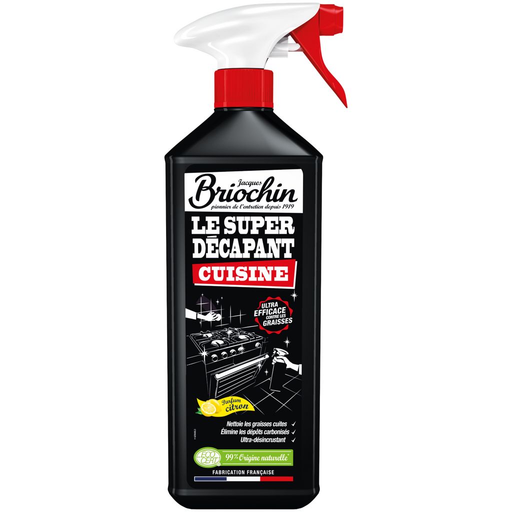
Why we recommend it : The perfect solution for those looking to combine effectiveness on cooked-on grease with respect for the environment, featuring natural-origin ingredients and a recognised certification.
It avoids the "catch-all multi-surface" trap by being very clear about which materials not to treat (aluminium, painted surfaces). The result: no nasty surprises or damaged surfaces.
Its formula contains 99.5% natural-origin ingredients and is ECOCERT certified : a true mark of trust for a greener clean.
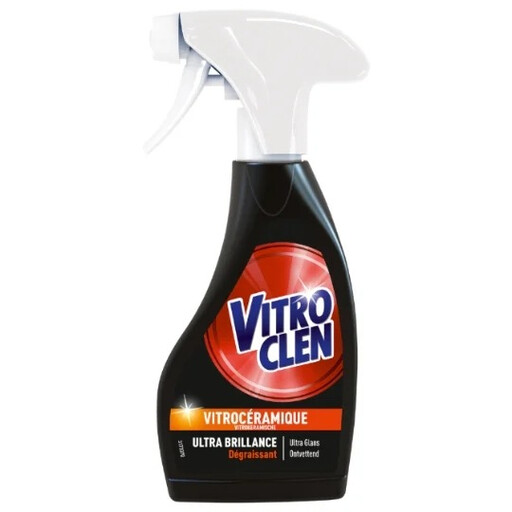
Why we recommend it : This is the go-to product for ceramic or induction hobs, which require cleaning that is both effective and gentle.
It takes the opposite approach to "multi-surface" products by positioning itself as a pure specialist. Its formula is tailor-made to degrease these delicate surfaces without leaving a single scratch.
Beyond cleaning, it leaves a protective film that helps prevent future stains from setting in. This makes subsequent cleanings easier and preserves the hob's shine.
Discover our complete, up-to-date selection of products that meet our demanding selection criteria and current standards.
No, and this is a common misconception. The job of a kitchen cleaner is to lift dirt and grease (the detergent action). The job of a kitchen disinfectant is to eliminate microorganisms (bacteria, viruses, etc.). Some products combine both functions, particularly those containing bleach or another biocidal agent. If disinfection is your priority, make sure the label says "disinfectant," "antibacterial," or lists a European standard (e.g., EN 14476 for virucidal efficacy).
Absolutely not! This is a very bad idea. Formulas like an oven degreaser are designed to be ultra-powerful against burnt-on grease; they are far too corrosive for the delicate surface of an induction or ceramic hob. You must use a dedicated cooktop cleaner to avoid scratches and irreversible damage.
The format has a direct impact on application and effectiveness. The degreaser spray is practical for large, smooth surfaces. Cream, often slightly abrasive, is useful for targeted action and for shining stainless steel. Gel or foam is formidable on vertical surfaces (oven interiors, backsplashes) because its texture clings to the surface. This prolongs the contact time with the dirt, allowing for a deeper clean.