
Livraison le jour même ou le lendemain

Qualité garantie

Débloquez vos offres de bienvenue: Livraison GRATUITE | Jusqu'à -80 % | 30 jours d'essai gratuits à JoyPlus
Téléchargez l'application
A fresh grease spot on a frying pan isn't the same as burnt-on residue in an oven. Yet many products claim to be all-purpose, even though their formula, dwell time and compatible surfaces can vary enormously. To avoid nasty surprises, it's better to compare real-world use, ingredients and safety instructions rather than relying on marketing promises alone.
A kitchen degreaser spray might work on stainless steel, tiles or certain painted surfaces, while being unsuitable for aluminium, copper, varnished materials or delicate substrates. A formula that's fine for an extractor hood won't automatically be safe for a ceramic hob or a fragile worktop.
Always check the "multi-surface" claim against the list of approved materials and any rinsing instructions.
A degreasing cleaner that can tackle cooked-on grease may also irritate your eyes or skin. Some products are corrosive, contain chlorine-based agents or require you to wear gloves and ensure good ventilation. The promised power never excuses you from reading the label carefully.
Never mix a degreaser with bleach, descaler or another cleaner. Incompatible substances can produce dangerous fumes.
A product that's applied and wiped off immediately won't necessarily have time to loosen ingrained grease. On the other hand, leaving an alkaline formula on an incompatible surface for too long risks damaging it. The manufacturer's recommended dwell time, surface temperature and rinsing instructions are therefore crucial factors.
For an oven, grill or barbecue, look for an oven degreaser or barbecue degreaser designed for burnt-on residue and carbonised grease. For a hob, check compatibility with glass, ceramic, induction or enamel carefully.
A degreaser for an extractor hood must be usable on filters and washable parts, following the manufacturer's recommendations. On surfaces that come into contact with food, rinsing with drinking water is generally essential when the label says so.
Also compare the volume, concentration and actual amount used per clean. A large bottle isn't always the most economical if you need a high dosage.
An eco-friendly degreaser may carry an ecolabel or certification that governs certain formulation and packaging criteria. However, you need to distinguish a clearly identifiable certification from a vague marketing term like "natural" or "green".
The products shown below mention, according to their listings, elements such as ECOCERT, EU Ecolabel, naturally derived ingredients or recyclable packaging. That doesn't mean they're harmless: protection and storage instructions are still essential.
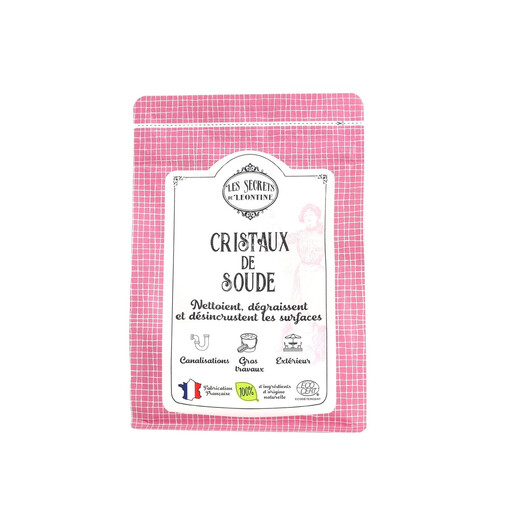
Why this choice suits this profile: The soda crystal powder lets you prepare a solution tailored to different household tasks, without needing multiple bottles.
The dosage adjusts according to the level of soiling, rather than always imposing a ready-to-use concentrated formula.
100% naturally derived ingredient stated, ECOCERT certification and resealable kraft paper sachet.
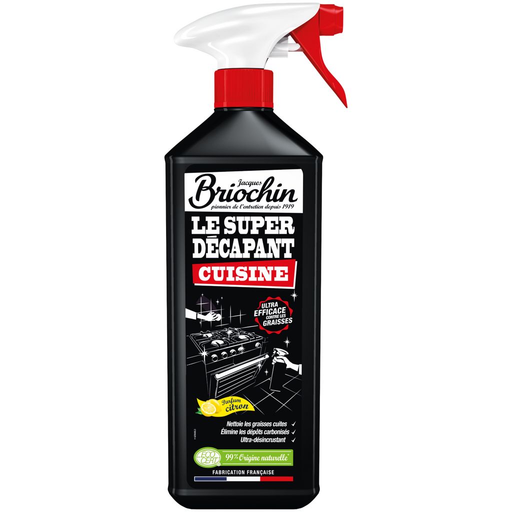
Why this choice suits this profile: The foaming spray targets cooked-on grease from the oven, hob, extractor hood and barbecue grill.
The foam stays in place during the dwell time, so you don't have to scrub immediately.
99.5% naturally derived ingredients stated, ECOCERT certification and made in France according to the product listing.
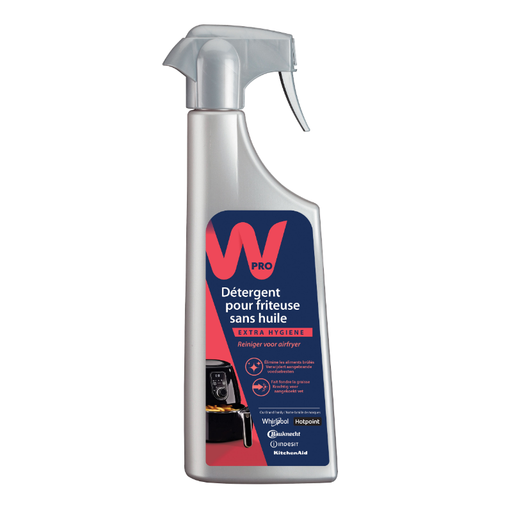
Why this choice suits this profile: This spray is designed for the baskets, interior walls and racks of air fryers. It should be used on an unplugged appliance.
Its targeted use prevents applying a general-purpose degreaser to electrical components or incompatible materials.
Formula designed for grease and burnt-on residue in Air Fryers, with thorough rinsing of parts after application.
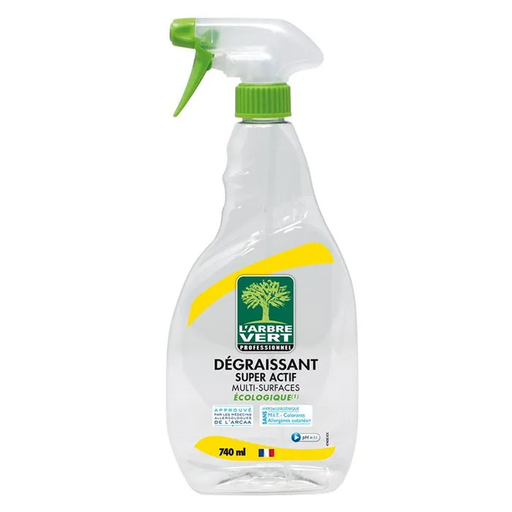
Why this choice suits this profile: Its formula is intended for heavily soiled washable surfaces, particularly enamel, tiles and painted or laminated surfaces.
The listing recommends testing the product on an inconspicuous area first, which limits the risk on delicate surfaces.
Formula stated to be free from phosphonates, colourants and MIT isothiazolinones, with EU Ecolabel certification and recyclable packaging.
We've put together a comprehensive, real-time updated list of products that meet these strict selection criteria and European safety regulations.
An oven degreaser designed for burnt-on grease is generally more suitable than washing-up liquid. Check the approved materials, dwell time and rinsing instructions. Catalytic panels, aluminium, seals and certain non-stick surfaces may be incompatible with alkaline formulas.
Not always. Consult your hob's manual and the product's label. A degreaser designed for ovens or barbecue grills may be too harsh for glass or ceramic. If the product is compatible, opt for targeted application, a short dwell time and careful wiping.
Choose a degreasing washing-up liquid intended for hand washing. Apply it to a sponge or dilute it in water, following the manufacturer's instructions. For a pan with burnt-on residue, pre-soaking often helps reduce the amount of product needed. Do not use an oven degreaser on plates, glasses or utensils.