
Livraison le jour même ou le lendemain

Qualité garantie

Débloquez vos offres de bienvenue: Livraison GRATUITE | Jusqu'à -80 % | 30 jours d'essai gratuits à JoyPlus
Téléchargez l'application
A stained saucepan, an extractor hood coated in a greasy film, or an oven dotted with burnt-on residue don't necessarily all need the same kitchen degreaser. Yet many households reach for an all-purpose product, swayed by promises like "fast-acting" or "ultra-degreasing formula". The result can be disappointing — and even risky for certain materials.
A cleaner designed for your worktop may not be up to the job of tackling carbonised grease in an oven or on a barbecue. Highly alkaline formulas can even attack aluminium, painted surfaces, copper, and certain delicate coatings.
Before you head to the checkout, check which surfaces are compatible and which the manufacturer excludes. A worktop degreaser in particular must be rinsed off if the surface comes into direct contact with food.
A spray that claims to be effective in just a few minutes may still require good ventilation, wearing gloves, or thorough rinsing. The dwell time varies depending on the type of soiling, but also on the temperature of the surface. Spraying a product onto a hot hob can produce fumes or trigger an unwanted reaction.
Always read the label before use. And never mix different cleaners, especially a product containing bleach with another detergent.
A naturally derived formula isn't necessarily harmless. Bicarbonate of soda, washing soda crystals, and certain alkaline agents can irritate the skin and eyes. Conversely, a degreasing washing-up liquid is generally designed for hand-washing dishes, not for cleaning oven walls.
The packaging is also worth a look: a 500 ml bottle may be enough for occasional use, while a 1.5 litre container will be more practical for a family that regularly cleans large surfaces.
Start by identifying the material:
For everyday splashes, a ready-to-use spray or a multi-surface product can do the job perfectly. For an extractor hood, a barbecue grill, or old, baked-on residue, look for a formula that explicitly states it is suitable for cooked-on or ingrained grease.
An oven cleaner is generally more specialised. It often comes as a foam, gel, or aerosol so that it stays in contact with the soiling for longer. Always follow the recommended application temperature and dwell time scrupulously.
Certifications like EU Ecolabel or ECOCERT give you an indication of the product's specifications, but they don't replace checking the hazard pictograms. To compare products on a solid basis:
In daily use, measure the product accurately and avoid spraying more than necessary.
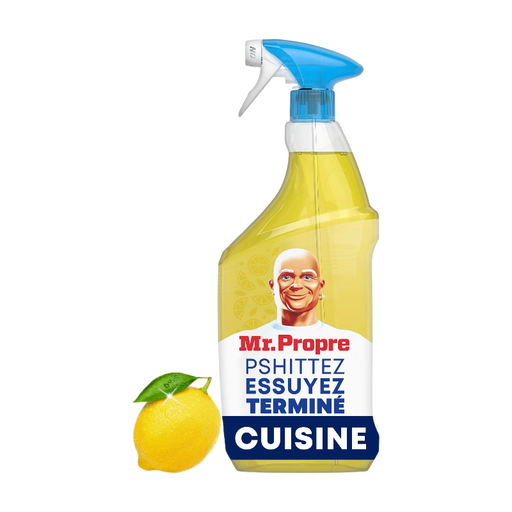
Why this choice suits this profile: Its 800 ml spray format is ideal for everyday cleaning of worktops, sinks, hobs, and tiles. The lemon fragrance leaves a pleasant feeling of freshness after cleaning.
The product page states that it is applied by spraying before wiping, with mandatory rinsing on surfaces that come into direct contact with food. A clear indication that stops you mistaking it for a specialist oven cleaner.
An 800 ml format, clearly stated multi-surface use, a lemon fragrance, and hassle-free application.
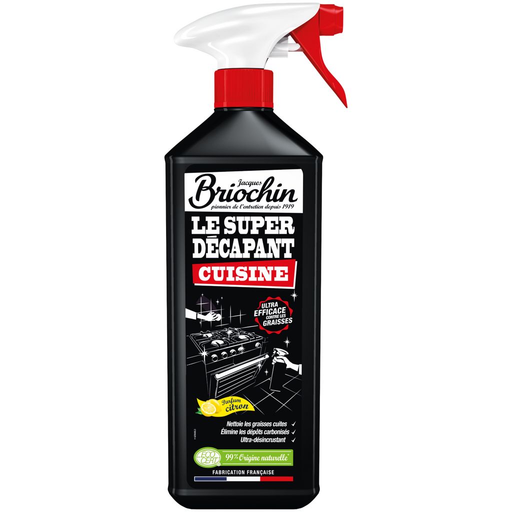
Why this choice suits this profile: This 500 ml spray focuses on a formula that is 99.5% natural origin and ECOCERT certified. It is designed for ovens, hobs, extractor hoods, and barbecue grills.
The restrictions are clearly stated: it must not be used on aluminium, painted surfaces, or delicate materials. This helps you avoid mistakes caused by assuming it's an all-purpose product.
A foam that clings well, a lemon fragrance, made in France, and intended for cooked-on grease.
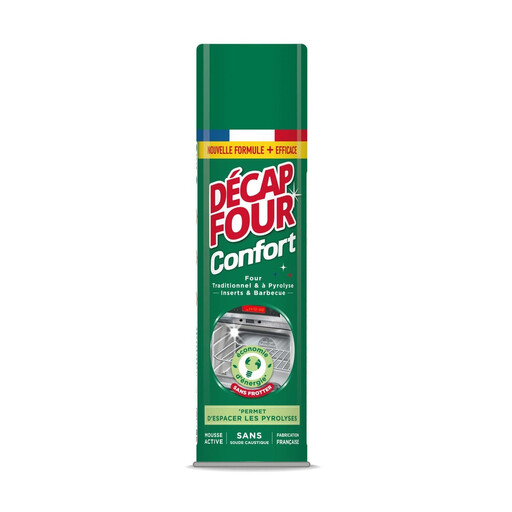
Why this choice suits this profile: Its purpose is perfectly targeted: oven, oven door, shelves, barbecue, and certain stainless steel or enamel surfaces. The dwell time varies depending on the temperature of the surface and the thickness of the baked-on grease.
The instructions specifically exclude aluminium, copper, varnished surfaces, and several types of coating. They also recommend good ventilation and thorough rinsing.
A 500 ml aerosol, a formula that is caustic soda-free, and a true specialisation in burnt-on grease.
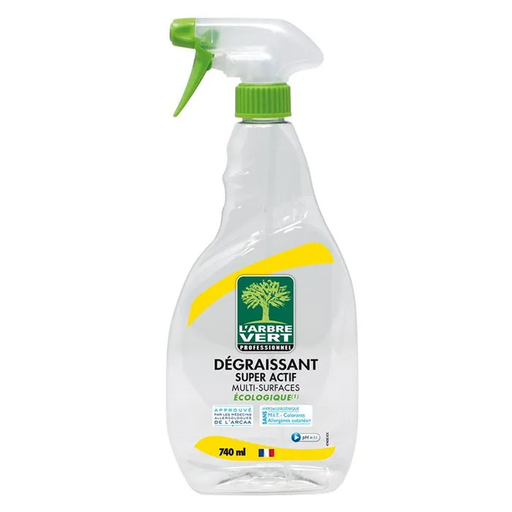
Why this choice suits this profile: Its formula carries the EU Ecolabel and its packaging is stated to be recyclable. It is suitable for heavily soiled washable surfaces, including enamel, tiles, and laminated surfaces.
The product page advises testing it on an inconspicuous area first if the surface is delicate. The product should only be used undiluted when the level of soiling justifies it.
The EU Ecolabel, made in France, and a formula stated to be free from phosphonates and colourants.
We've put together a comprehensive, real-time selection of products that meet these demanding criteria and comply with European safety regulations.
For washing dishes, choose a degreasing washing-up liquid labelled "for hand washing". For a specific appliance, like an air fryer, a dedicated product will often be more suitable than a general-purpose degreaser.
Not necessarily. An oven cleaner can be more alkaline and may have restrictions regarding painted surfaces, aluminium, or delicate materials. For a worktop, choose a compatible formula and rinse the surface if it will come into contact with food.
Follow the instructions on the label. For light soiling, a few moments may be enough. Cooked-on grease sometimes needs a longer dwell time, but leaving it on for longer than recommended can damage the surface. Do not let the product dry on the surface.
No. Environmental labels relate to certain formulation or impact criteria, but every household product must be used according to its label. Wear the recommended protection, ventilate the room, and keep the bottle out of reach of children.