
Same-day & Next-day Delivery

Quality Guaranteed

Unlock Your Welcome Offers: FREE Delivery | Up to 80% OFF | Free 30-day JoyPlus trial
Download the APP
Enjoying a warm, comforting meal at the office, at university, or on the go—without relying on a microwave or breaking the bank at restaurants—is an everyday luxury. The key to achieving this? A good insulated lunch box. The problem is that the market is saturated with marketing promises that often lead to disappointment: a lukewarm meal by noon, soup that has leaked into your bag, or a container that still smells like last week's curry.
Before you buy, learn how to avoid the common pitfalls that turn a promising purchase into a useless gadget destined to gather dust at the back of a cupboard.
To avoid these disappointments, focus on the features that truly make a difference. This checklist will guide you toward a takeaway food container that is both durable and high-performing.
The choice of material is paramount. It directly impacts food safety, durability, and ease of maintenance.
The secret to a truly effective insulated container for hot meals? Its construction. The only technology worth considering is a double-wall vacuum-insulated design. This thermal barrier prevents heat (or cold) from escaping. Avoid single-wall models or those with just a layer of air—they aren't true insulated containers, and their performance is virtually zero.
For transporting soup or a saucy dish with peace of mind, a leak-proof design is non-negotiable. Always check for this winning combination:
Because every user is unique, here is our selection of recommended models, categorised by user profile to help you find the perfect match.

Why this model? Ideal for those with long days who are looking for an all-in-one solution. The included carrying bag not only makes it easy to transport but also adds an extra layer of insulation. As for the 316 stainless steel, it's a guarantee of rock-solid durability.
This model doesn't sell a dream, but results: vacuum insulation provides 4 to 6 hours of heat retention, and its 316 stainless steel material prevents corrosion and odour retention, unlike low-end options.
The complete package, with its insulated carrying bag and the use of premium stainless steel for maximum food safety and longevity.
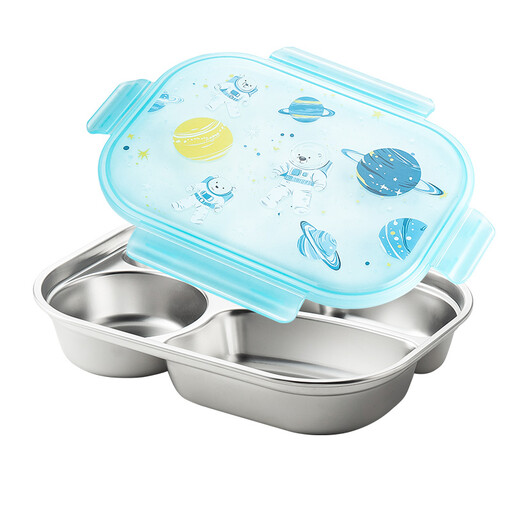
Why this model? Perfect for organisation enthusiasts who like to separate their main course, side dish, and dessert. This compartmentalised bento box prevents flavours from mixing and preserves the texture of each food item.
It bypasses the problem of removable dividers, which are rarely leak-proof. Here, the 4 fixed compartments made of 316 stainless steel offer a structured and hygienic solution for a perfectly organised meal.
The impeccable meal organisation thanks to its integrated compartments and the quality of the 316 stainless steel. Note: this model is not insulated; it is designed for transporting and organising food.
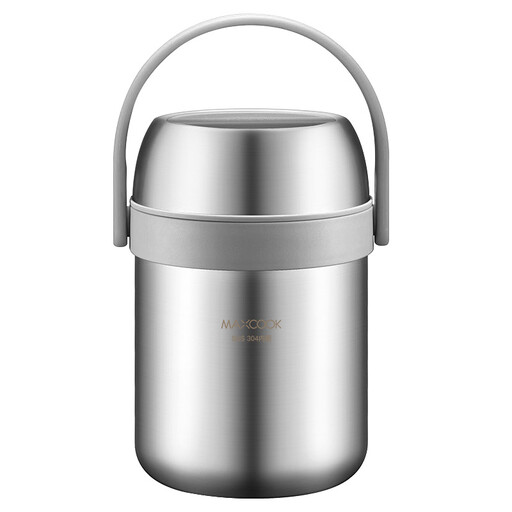
Why this model? The ultimate efficient, no-frills option. It gets straight to the point with essential features (vacuum insulation, wide mouth, 304 stainless steel) for reliable daily use, whether for a hot soup or a fresh salad.
This food jar focuses on the essentials: maintaining temperature. Its 304 stainless steel construction and screw-top lid are tried-and-true features, a far cry from the complex, fragile gadgets of entry-level models.
Its large 1.5L capacity is perfect for a full meal. Its wide mouth simplifies filling, serving, and cleaning.
Explore our full selection of products that meet our quality criteria and food safety standards.
For a hot meal, the secret is to "preheat" your insulated food jar. Fill it with boiling water, close the lid, and wait 5 to 10 minutes. Empty the water just before putting your hot food inside. The same logic applies to keeping food cold: use ice-cold water to pre-chill the container.
As a general rule, it is strongly discouraged. The intense heat and harsh detergents in a dishwasher can damage the vacuum seal that provides insulation, as well as the lid's gaskets. Hand washing is therefore preferable to preserve the performance and lifespan of your product. When in doubt, always consult the manufacturer's instructions.
Both 304 and 316 are excellent food-grade stainless steels that are safe and durable. The main difference lies in the addition of molybdenum to 316 stainless steel. This element significantly increases its resistance to corrosion, particularly from salt and acids. In practical terms, if you often carry salty dishes, tomato sauces, or dressings, 316 stainless steel is a wiser investment to ensure your container remains pristine over time.