
Same-day & Next-day Delivery

Quality Guaranteed

Unlock Your Welcome Offers: FREE Delivery | Up to 80% OFF | Free 30-day JoyPlus trial
Download the APP
Bringing a home-cooked lunch is a smart move: it's a great way to eat healthier, save money, or simply enjoy your own cooking. But the challenge remains: how do you keep your soup piping hot until noon and your salad from wilting? The solution is a quality insulated food jar.
However, with an overwhelming number of options on the market, it's easy to get lost. This guide is here to help you decode the features that truly matter and choose the perfect insulated food container for your daily routine, whether you're at the office, on a construction site, or out in nature. We'll then review a selection of models that excel in capacity, durability, and user-friendliness.
To make the right choice, focus on a few technical details that will make all the difference in your daily use.
Nearly all high-quality insulated jars are made from stainless steel. This material is favored for its durability, neutrality (it doesn't impart any taste to food), and ease of cleaning. For food-grade use, two main types of stainless steel are used:
The primary job of a hot food thermos is to maintain temperature. The most effective technology for this is double-wall vacuum insulation. It creates a nearly impenetrable thermal barrier between the inside and the outside.
A leak-proof seal is another non-negotiable feature. A screw-on lid with a sturdy silicone gasket is essential for guaranteed leak-proof transport. No one wants to find soup at the bottom of their backpack.
Finally, capacity is a decisive factor. A 1.5 L insulated food container offers a generous volume, ideal for a full meal or for those with hearty appetites. It's a versatile size that suits professionals on the go as well as students.
A wide mouth makes all the difference. It not only makes filling easier without making a mess, but it also simplifies eating directly from the container. Most importantly, it radically simplifies cleaning, allowing you to reach the bottom with a sponge without any hassle.
Based on the criteria above, here are a few models that stand out for their design and performance.

What sets it apart
This model focuses on durability and food safety with its 316 stainless steel construction. A real asset for those who enjoy a variety of meals and want unbeatable corrosion resistance. Its generous 1.5 L capacity makes it the perfect companion for long days and hearty appetites.
Pros
Who is it for?
For heavy users looking for a solution that is both robust and durable, ideal for confidently carrying saucy dishes or acidic soups.

What sets it apart
More than just an insulated lunch box, this product is a complete on-the-go kit. It builds on the excellent foundation of the previous model (including the 316 stainless steel) and adds a dedicated insulated carrying bag. This bag not only makes transport easier but also provides an extra layer of insulation.
Pros
Who is it for?
For professionals who are often on the move and anyone who wants a turnkey solution that radically simplifies lunch logistics.
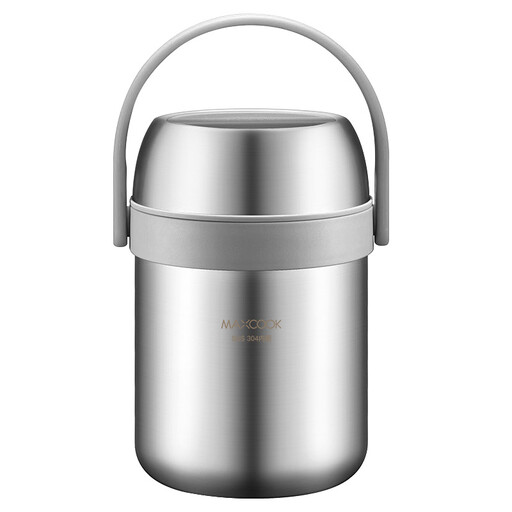
What sets it apart
This insulated food jar embodies the perfect balance of performance and reliability. Made from 304 stainless steel, it meets all the expectations for standard daily use. It makes no compromises on the essentials: a large 1.5 L capacity, effective vacuum insulation, and a well-thought-out design.
Pros
Who is it for?
For anyone looking for a high-performance and reliable insulated food container for daily use, without needing the extreme resistance of 316 stainless steel.
If the models in our selection don't check all your boxes (capacity, design, features, etc.), don't worry: there are plenty of other options available. Every user is unique, and the perfect food container for you is surely in our full catalogue.
? Explore our full range of insulated food jars and find the perfect model for you.
304 stainless steel is the most common type in the culinary world. It is highly resistant to corrosion and perfectly suitable for food contact. 316 stainless steel, known as "marine-grade," also contains molybdenum. This addition significantly enhances its resistance to corrosion, particularly from chlorides (salt) and acidic foods. For a stainless steel insulated jar, 316 is a bonus if you often carry very salty or acidic dishes (tomato sauce, vinaigrette, etc.). For more standard use, 304 is more than sufficient.
To maximize how long your hot food thermos retains heat, a simple trick is to "pre-heat" it. Before adding your meal, fill the jar with boiling water, close the lid, and wait 5 to 10 minutes. Empty the water and immediately put your food inside. This simple step heats the inner walls and helps minimize the meal's heat loss. The same principle applies to keeping food cold, but by using ice-cold water instead.
Quality models are equipped with screw-on lids and a silicone gasket, designed to ensure a perfectly airtight seal and prevent leaks under normal transport conditions. However, caution is still advised: it is always recommended to transport your insulated lunch box upright in your bag. Strong jolts or being laid flat for an extended period could compromise its seal, especially if the lid is not screwed on tightly.